

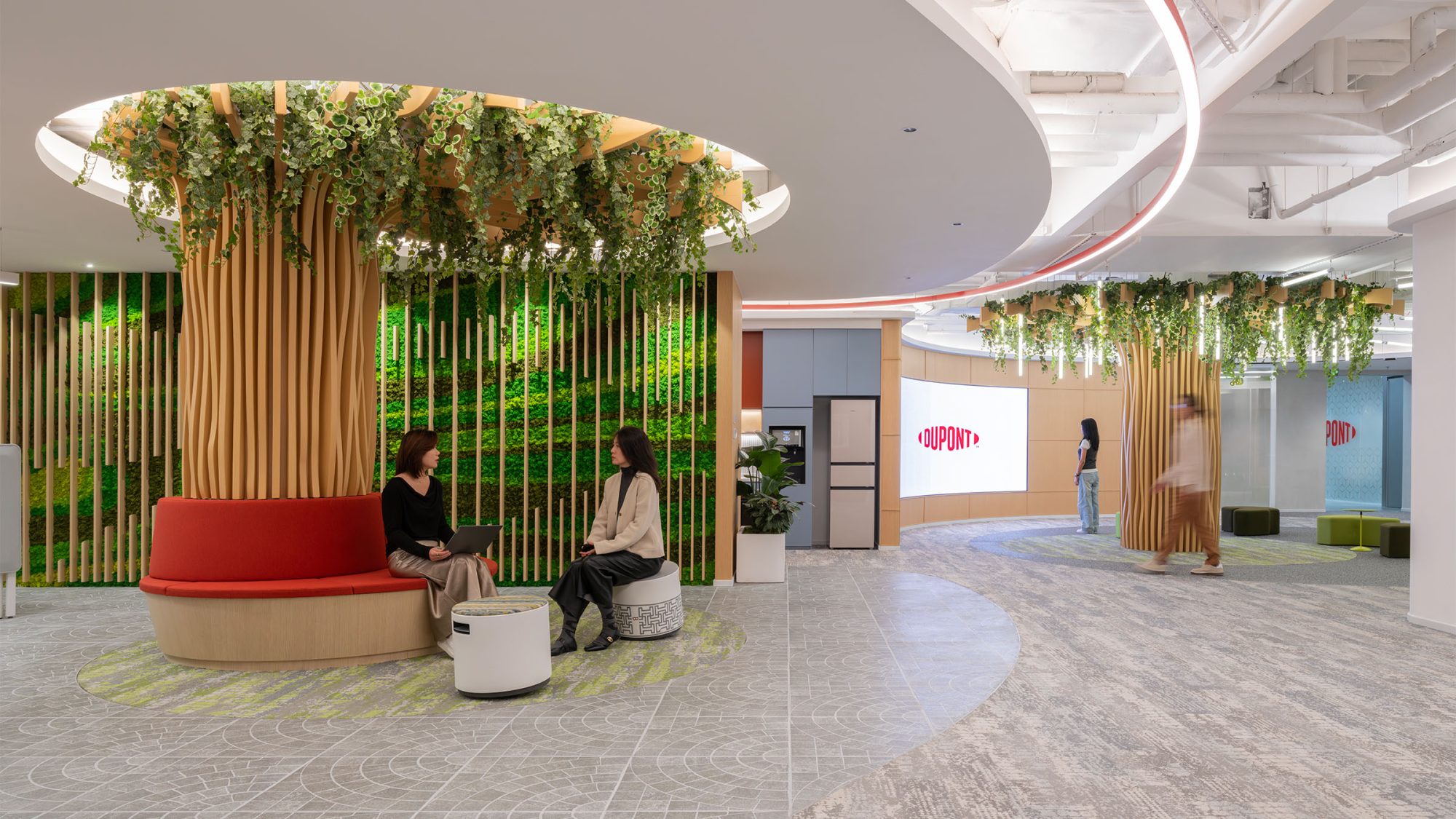
At DuPont, innovation grows from the connection between people, ideas and disciplines. We brought this philosophy to life at its Shanghai R&D Centre, by renovating the existing workplace to support future growth.
Building on a long-standing partnership, we worked with DuPont to reimagine a future-ready workplace that strengthens collaboration, supports performance and advances business ambitions.
As a leading advanced solutions provider focused on markets that shape the future, DuPont places innovation at its core, alongside a strong commitment to sustainability and digitalisation. Its existing workplace, however, no longer supported this direction. An inefficient use of space limited opportunities for collaboration and hindered more flexible ways of working.
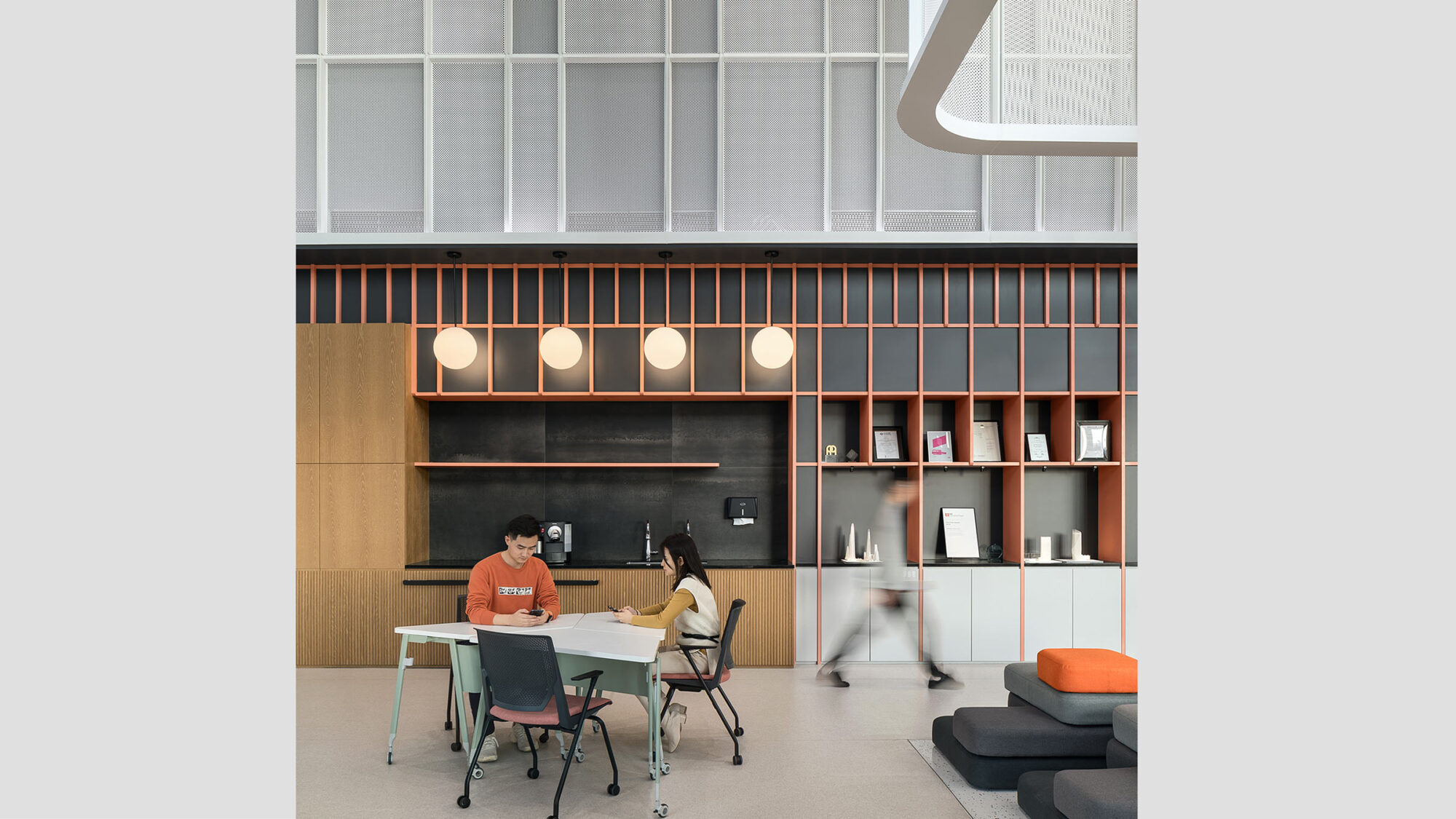
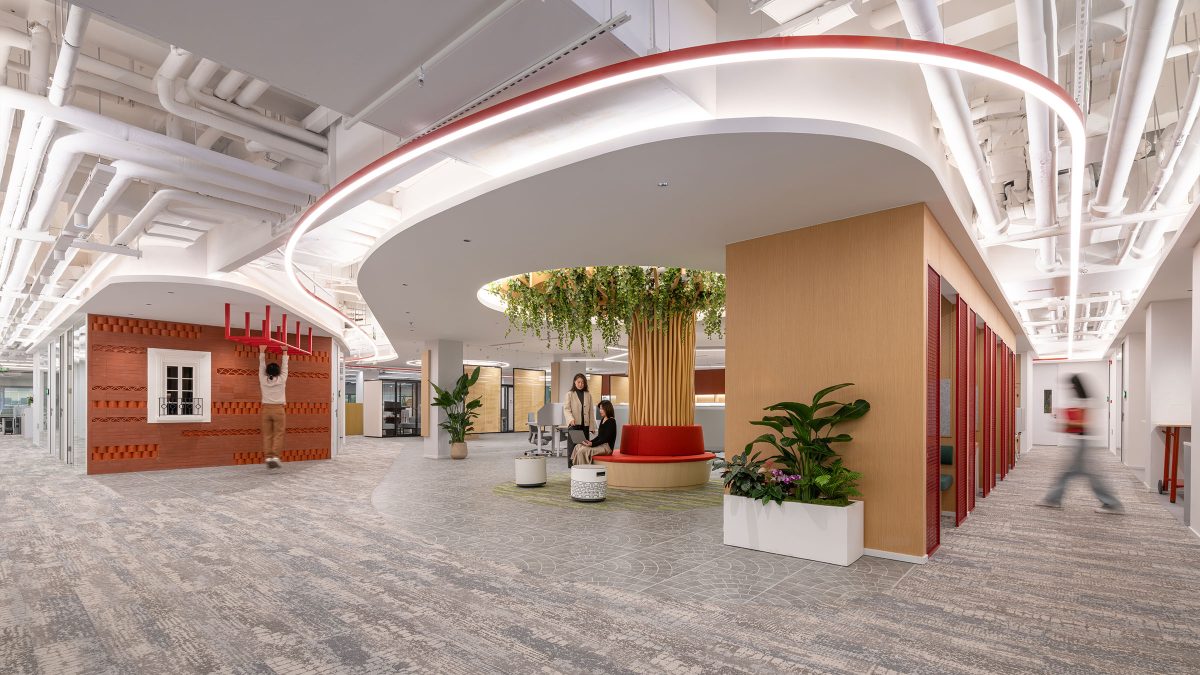
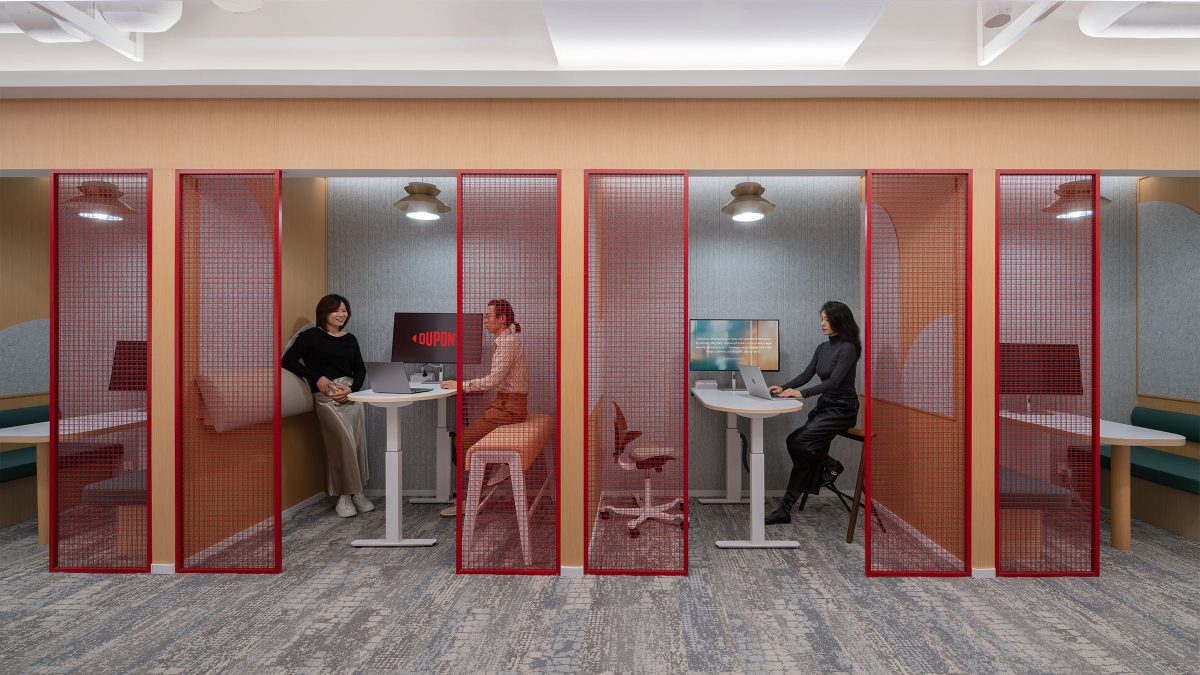
We worked closely with DuPont to rethink how the workplace could better support its operations, aligning global standards with local needs through an iterative and collaborative process. By introducing a more adaptable and varied range of settings, we created an environment that responds to different modes of work, from focused tasks to open discussions and shared problem-solving.
This shift allows people to move more easily between activities, supporting individual productivity while creating more opportunities for teams to connect. This encourages new ways of working to take hold over time.
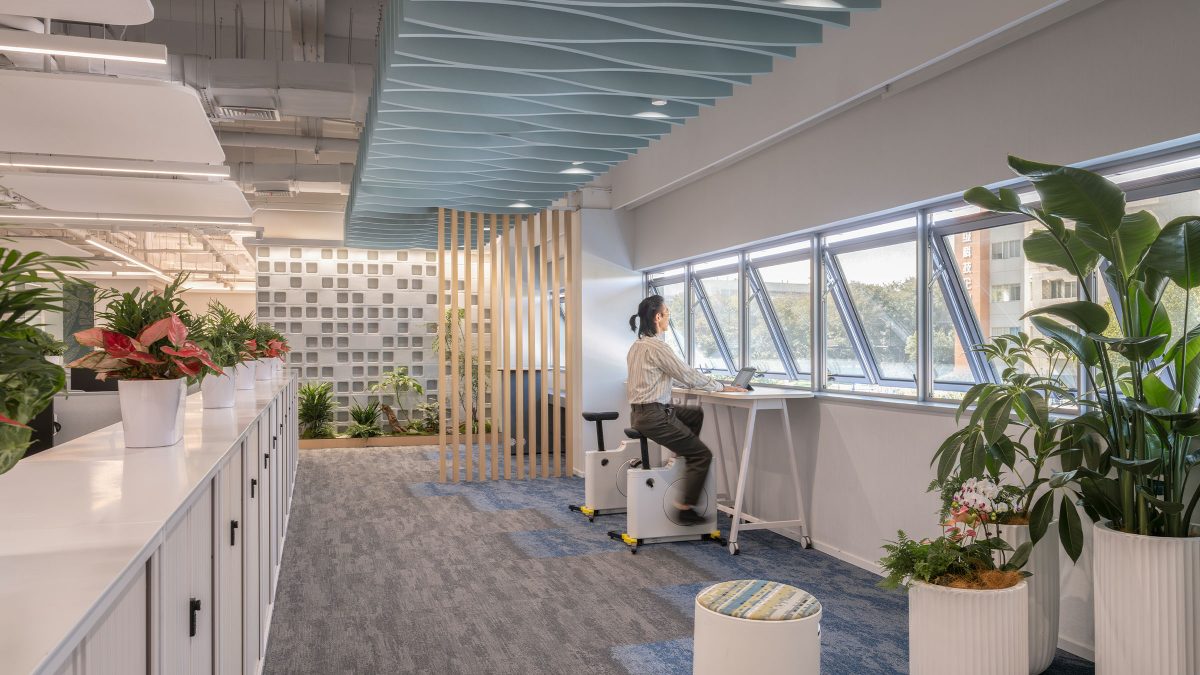
As many employees were new to flexible working, we supported the transition through a structured workplace strategy, from early analysis and engagement to post occupancy support. This helped build confidence in using the space, ensuring it continues to respond effectively to evolving needs.
The M Moser team worked closely with us to balance our global requirements with local expectations, delivering a workplace that supports both our operational needs and long-term ambitions.
DuPont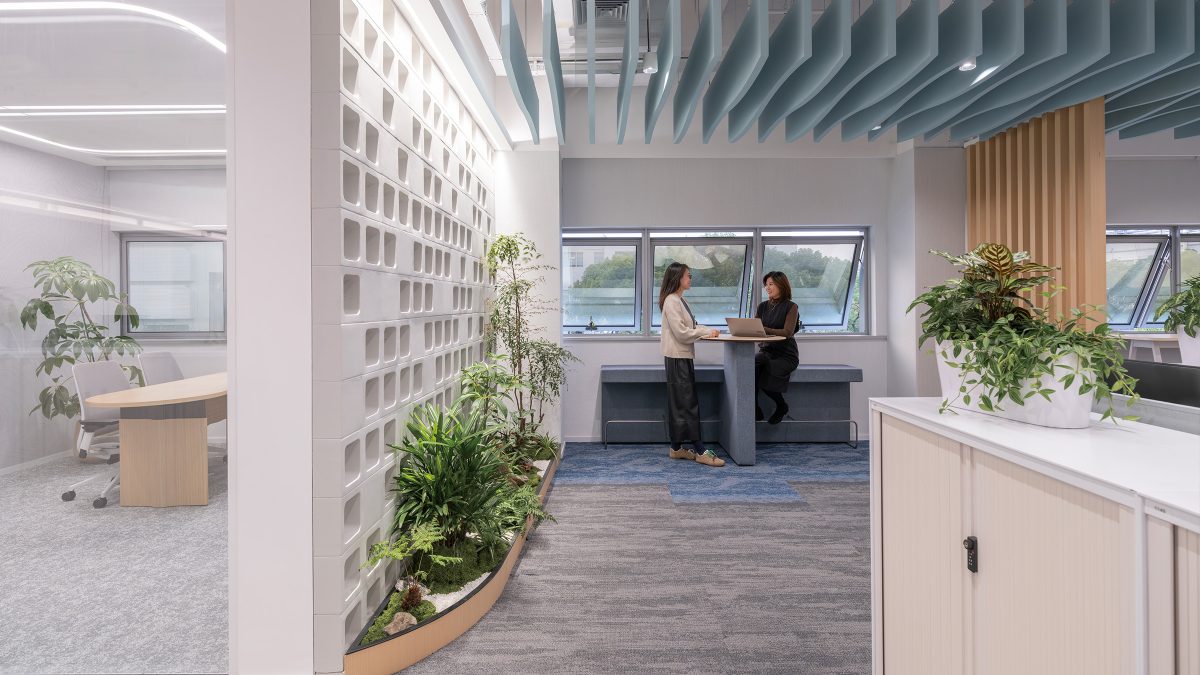
The project occupies a large, square floorplate with an open plan and a ceiling height of just 2.7 metres. While this posed a clear challenge, our team seized the opportunity to reimagine the space entirely, using its broad proportions to inform a more effective layout.
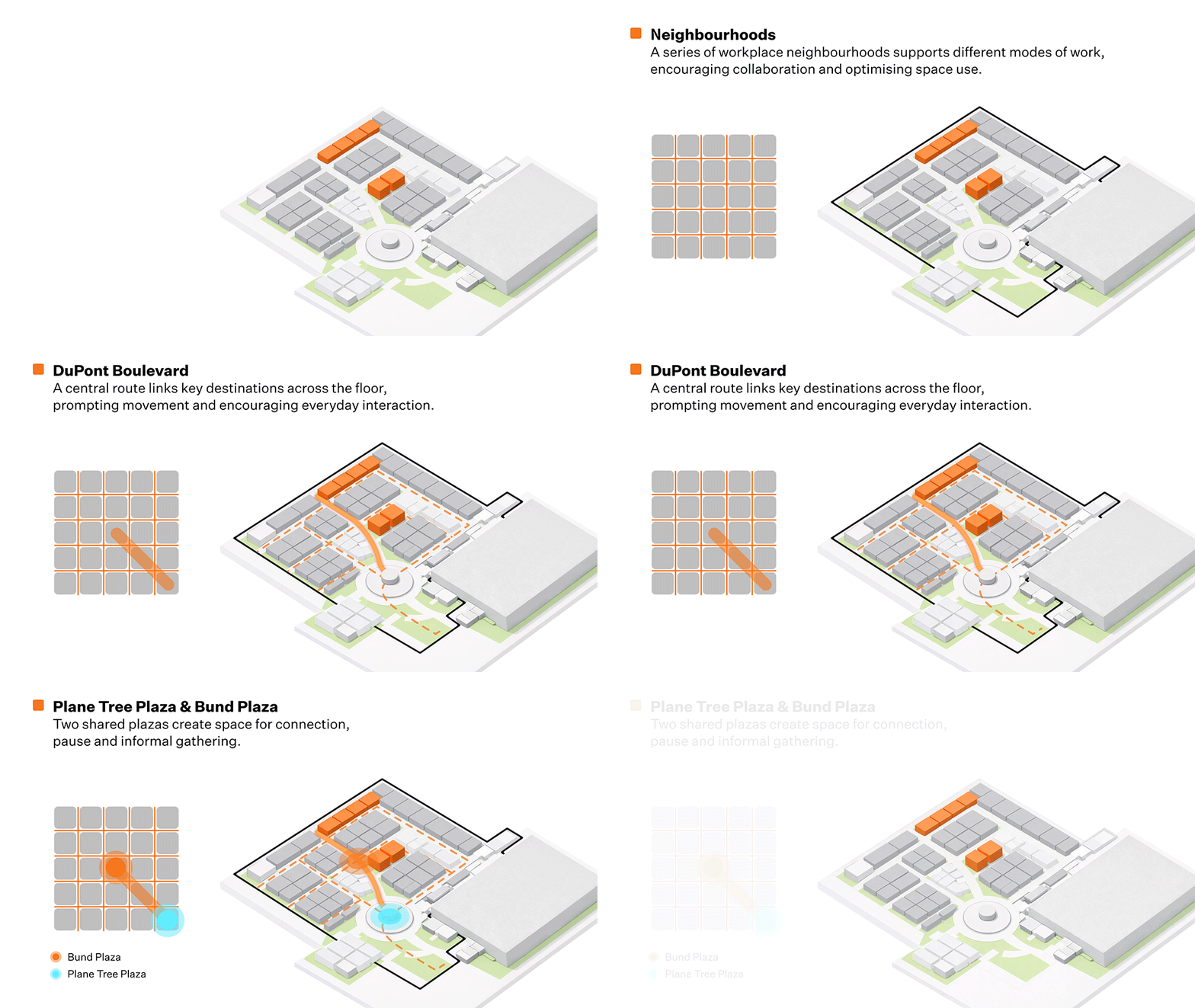
We organised the workplace into a series of distinct neighbourhoods, each with a defined role and linked through shared spaces to form a connected network.
At the entrance, a small plaza welcomes visitors and supports informal interaction. Deeper within, the plan opens into a larger employee plaza that acts as the social and collaborative heart of the workplace.
A central spine, “DuPont Boulevard,” runs through the space, connecting these settings. It is the main circulation route, establishing a clear sense of order, rhythm and flow.
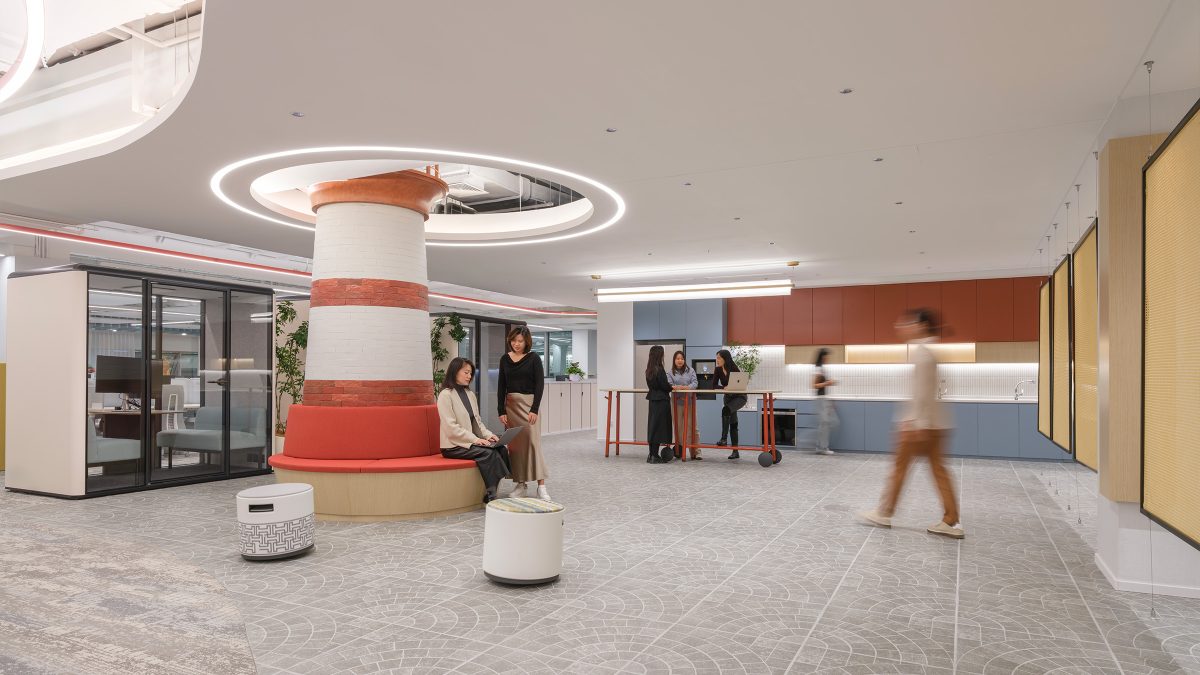
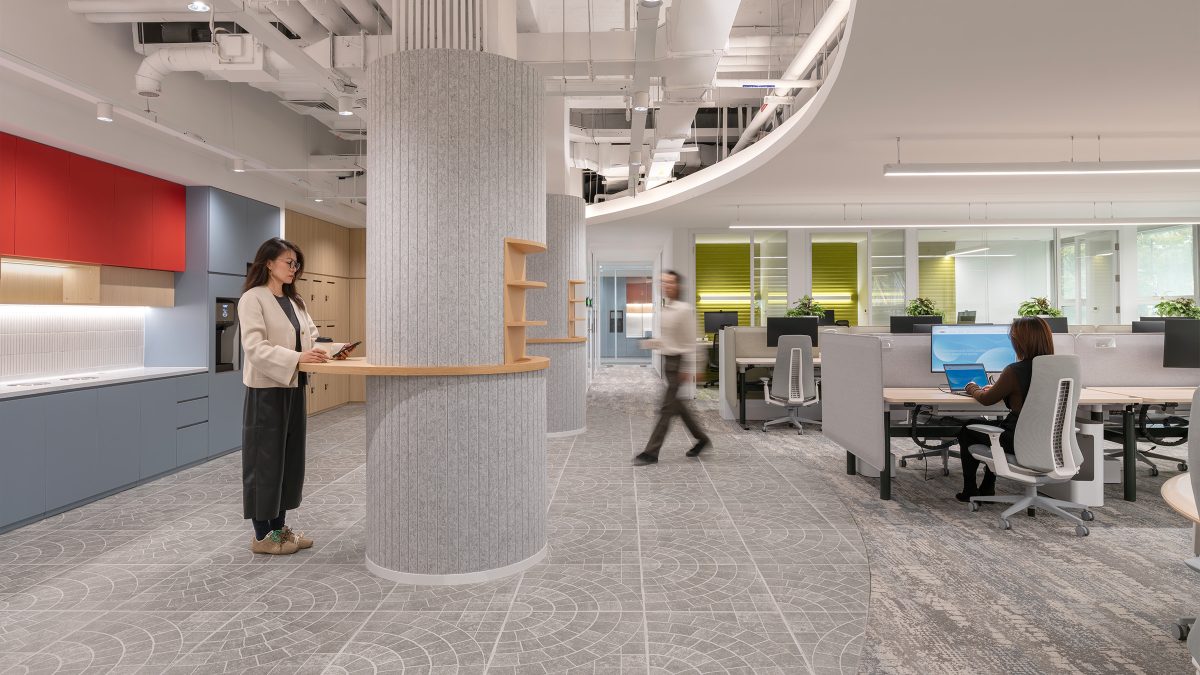
The workplace draws on Shanghai as a point of reference, bringing the city into the office experience.
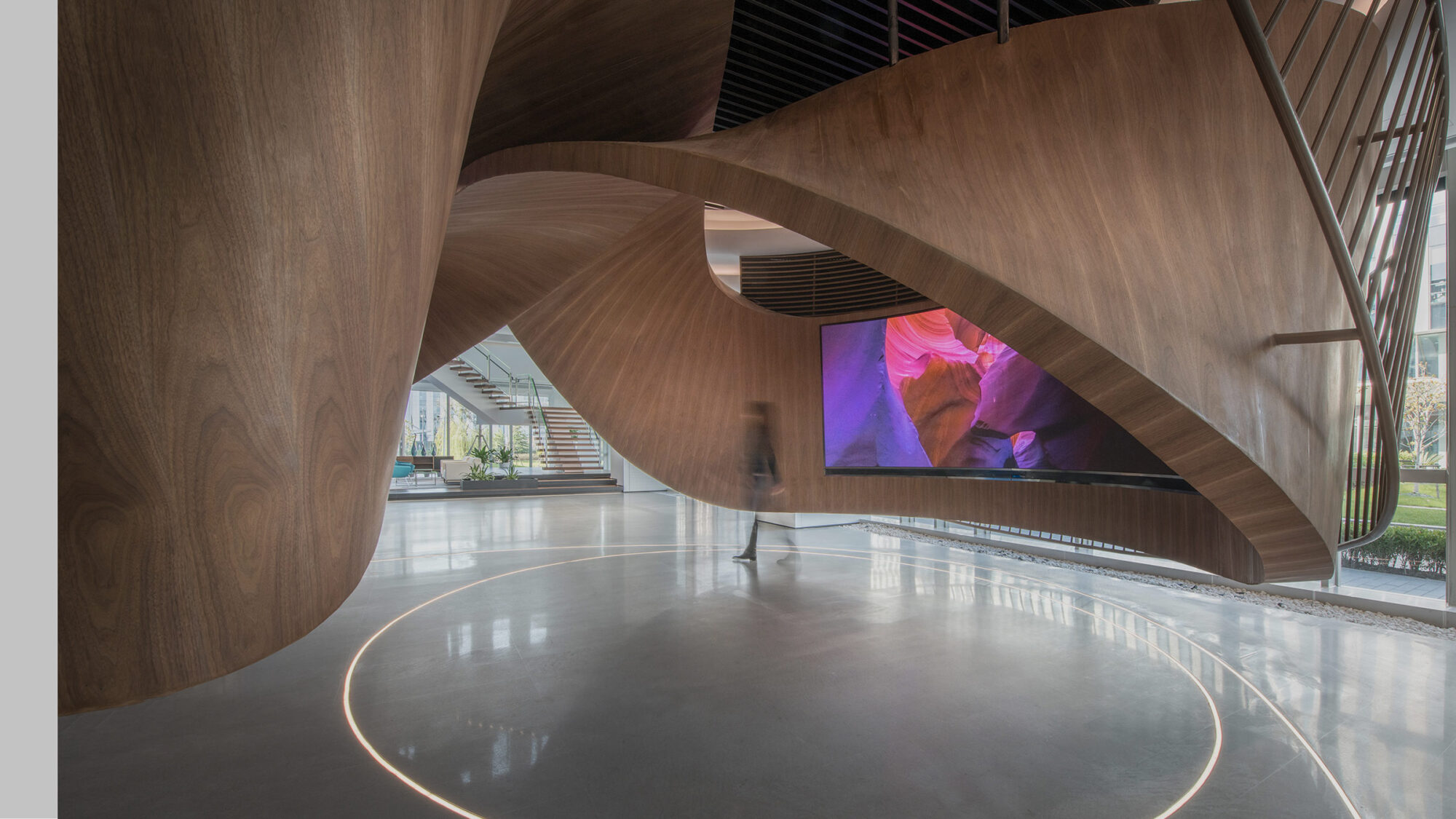
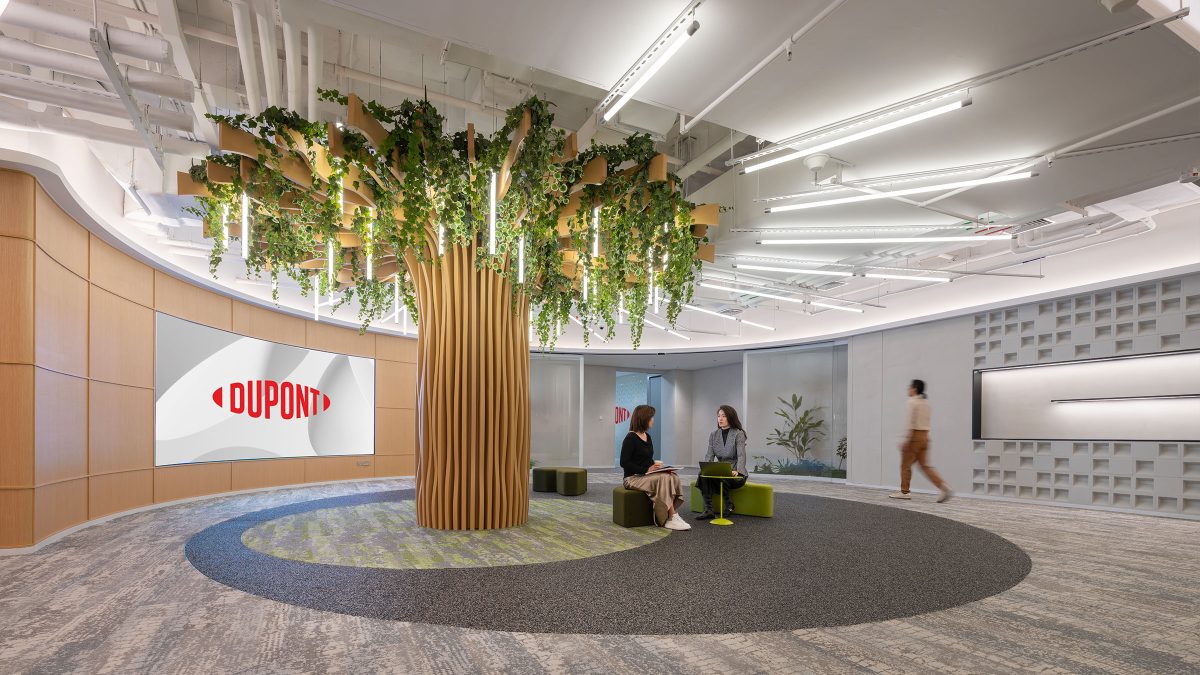
At the entrance, we transformed an existing column into a plane tree, echoing Shanghai’s tree-lined streets. From there, the workplace unfolds through a series of recognisable moments, including references to a lighthouse and the Wukang Building, which help people orient themselves and create natural points to pause and interact. Meeting rooms and quieter spaces draw on local references, from historic Shanghai to textile patterns and the Huangpu River, each adds variety and a sense of place.
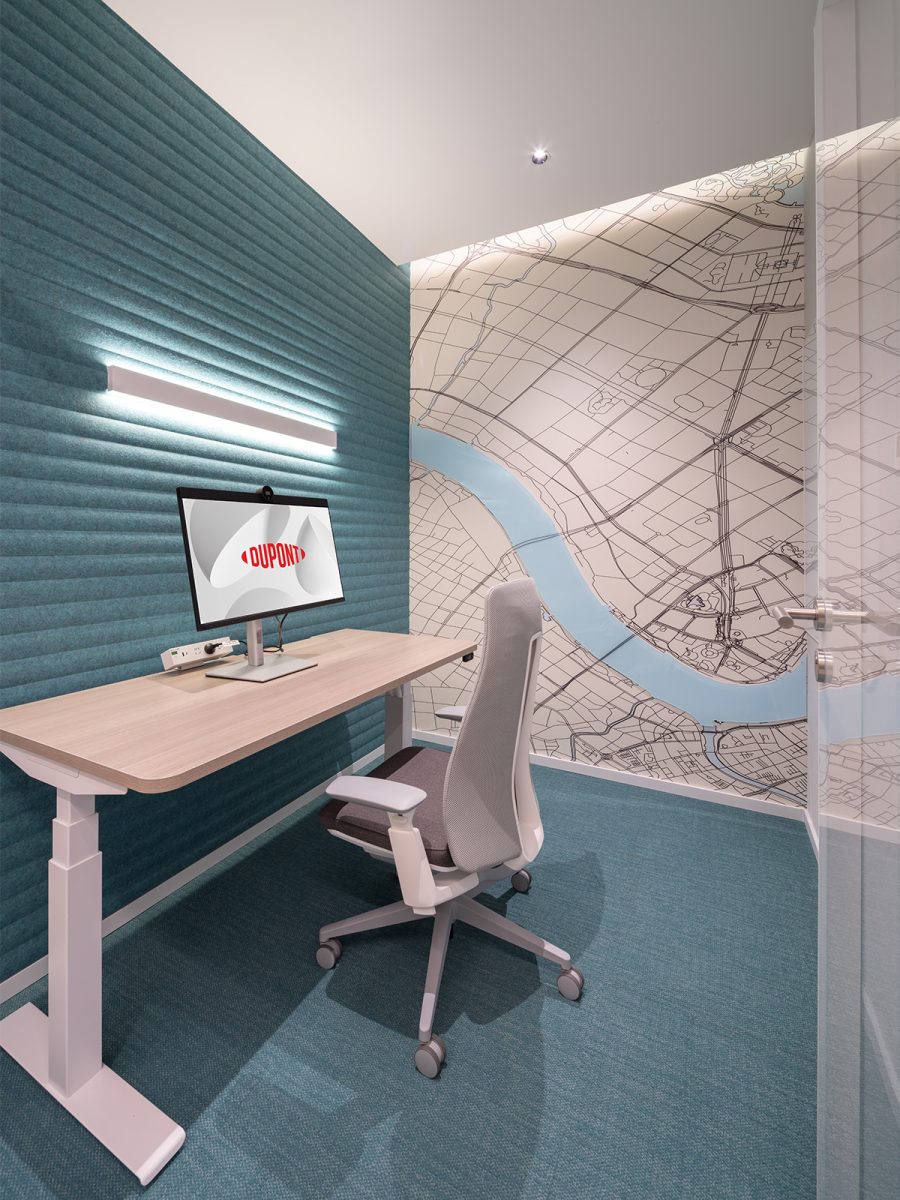
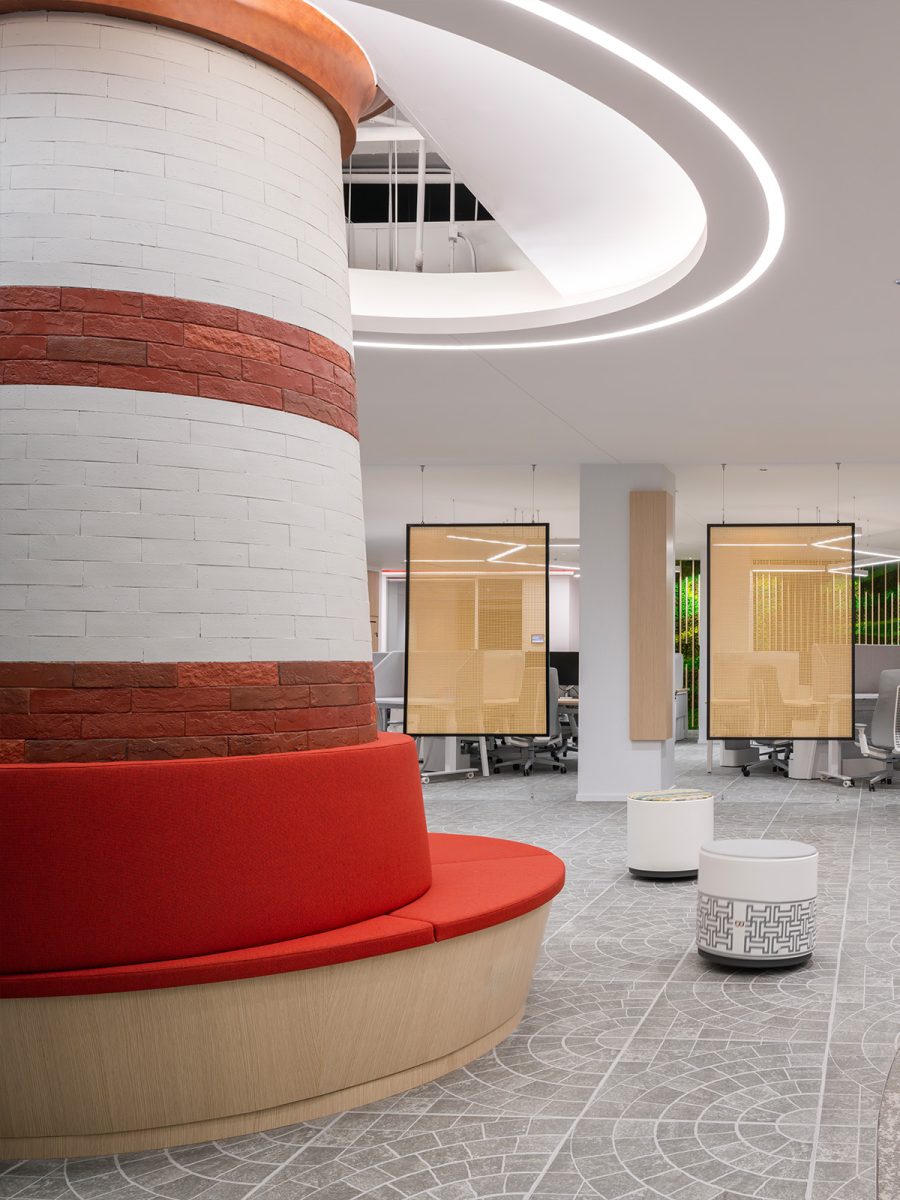
We carefully integrated these references giving the workplace a strong sense of identity while keeping it grounded in everyday use.
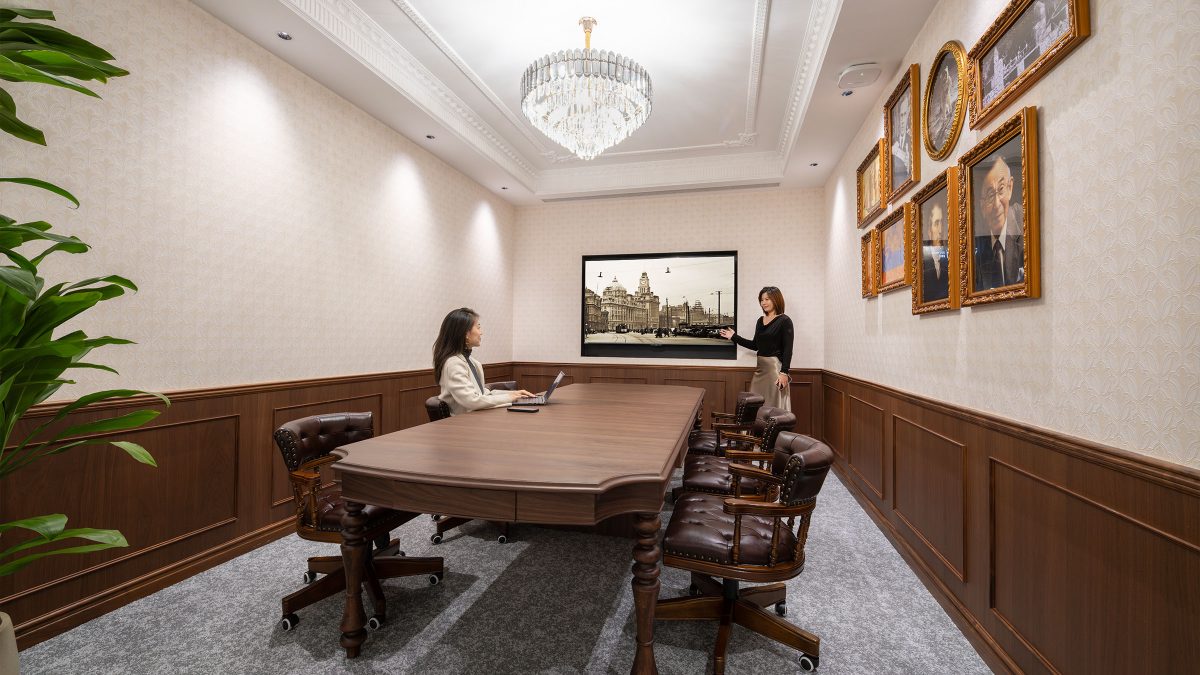
A series of targeted engineering upgrades improved how the workplace performs day to day, making it more comfortable, efficient, and adaptable over time.
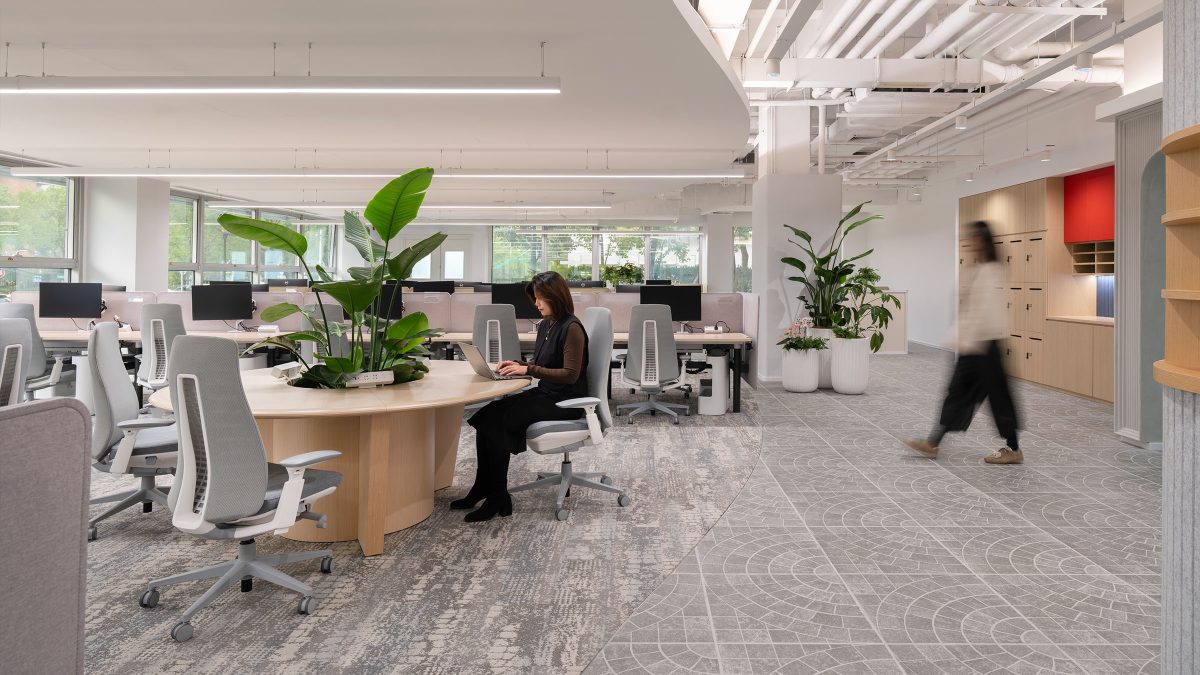
Through a considered transformation of the existing space, the project aligns workplace, performance and experience with DuPont’s broader business ambitions. It supports new ways of working and improves how teams connect and collaborate. This new Shanghai R&D Centre provides a flexible, solid foundation for continued growth and innovation.
Completed
2026
Shanghai
3,492 sq m / 37,588 sq ft
Edward Shi