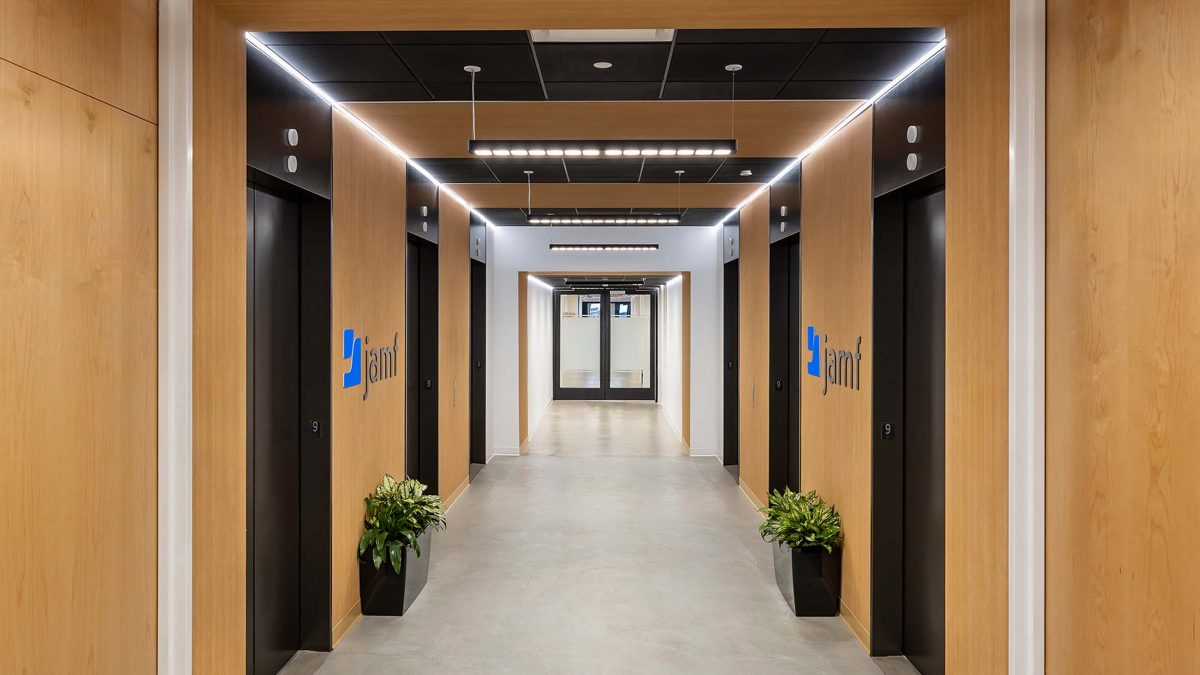

Jamf’s 22,200 sq ft Minneapolis workplace project began with a pause. The undertaking that had reached permitting years earlier had stopped as the pandemic reshaped priorities and capital plans.
When Jamf re-engaged M Moser, the request was to restart the project, refresh the finishes and avoid significant changes. The floor plan was largely set and expectations were measured, but the timing told a different story. Jamf was evolving, downsizing and rethinking how people used the office. Simply picking up where things left off no longer felt sufficient.
As design resumed, it became clear that the space needed meaning more than it needed momentum.
Several months into the restart, Jamf’s leadership took a step back. The question shifted from ‘can we finish this?’ to ‘does this truly represent us?’ That moment triggered a full design reset. M Moser paused progress and re-engaged the client through discovery sessions, workshops and town halls with the C-suite and broader leadership team.
This process reconnected the project to Jamf’s identity, culture and future ambitions. Additionally, it allowed the team to reassess assumptions made years earlier and test whether they still applied in a hybrid reality. In a short but focused sprint, the project moved from refresh to reinvention, without losing schedule control or clarity.
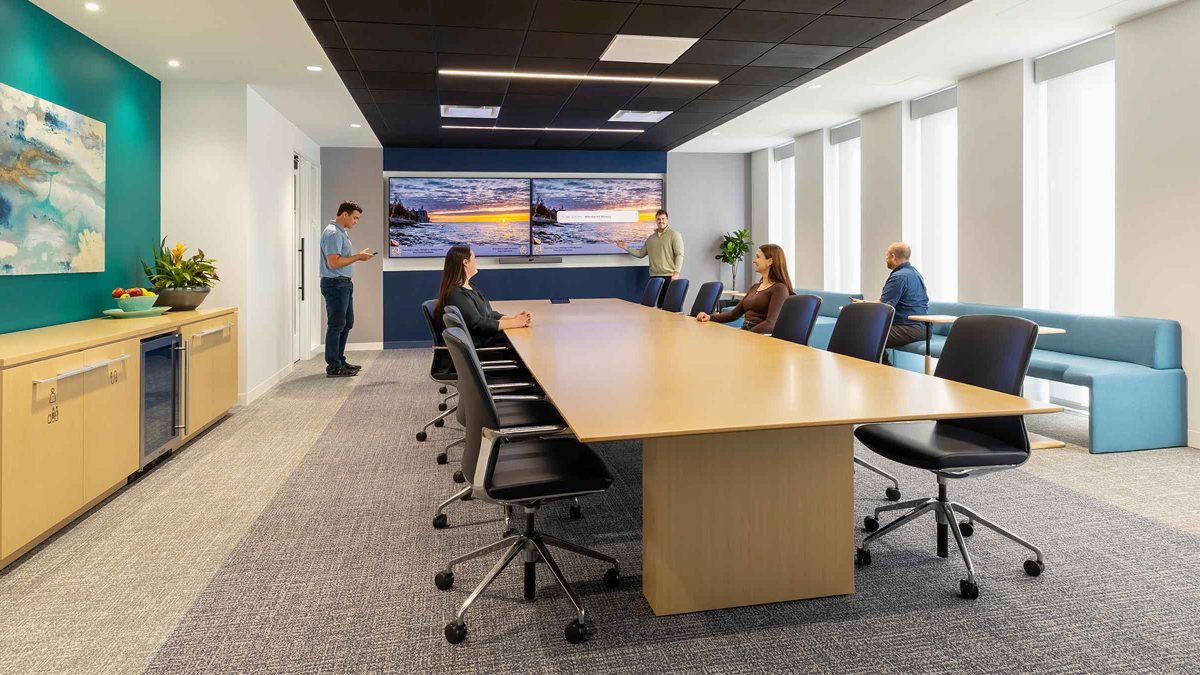
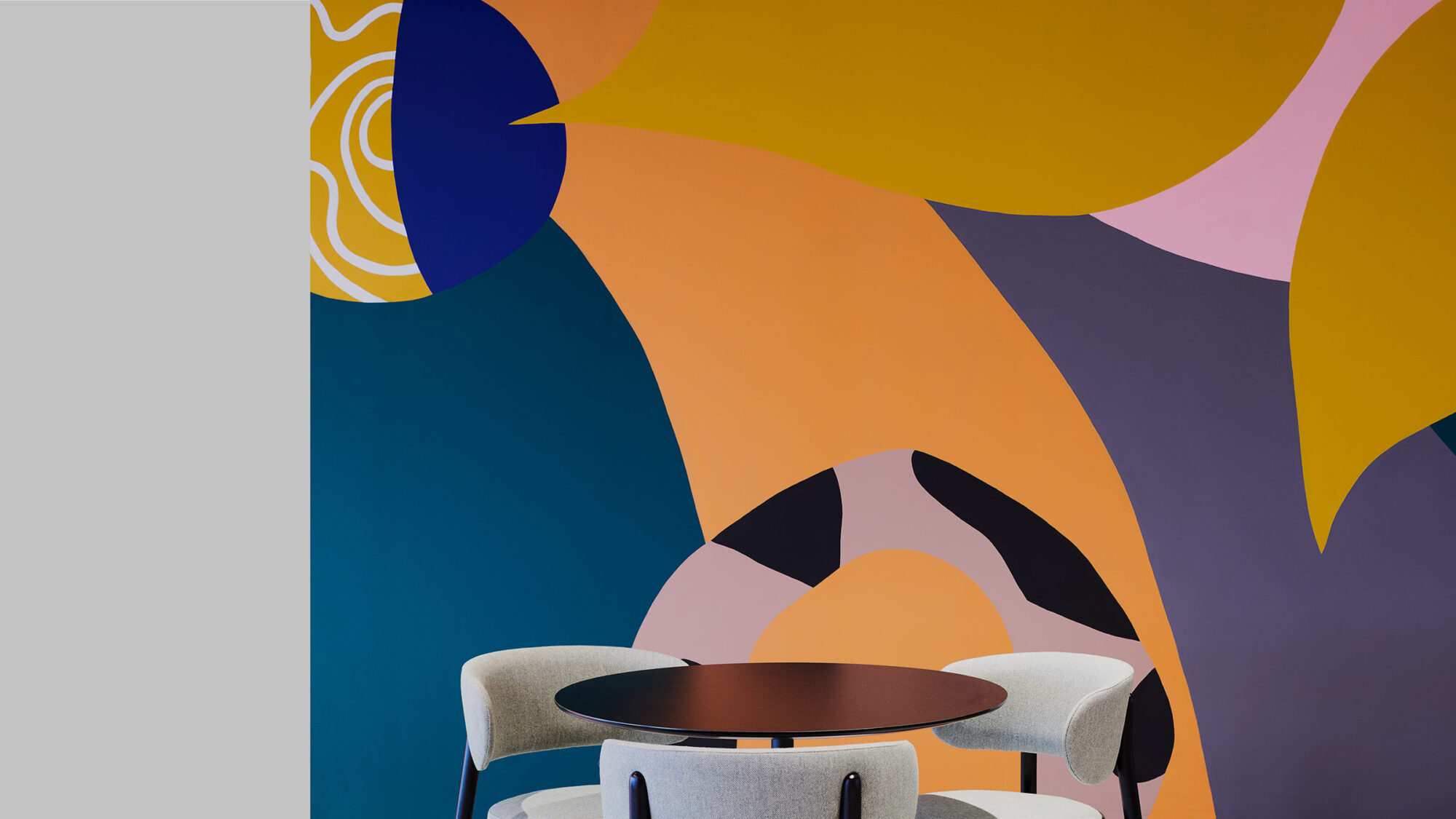
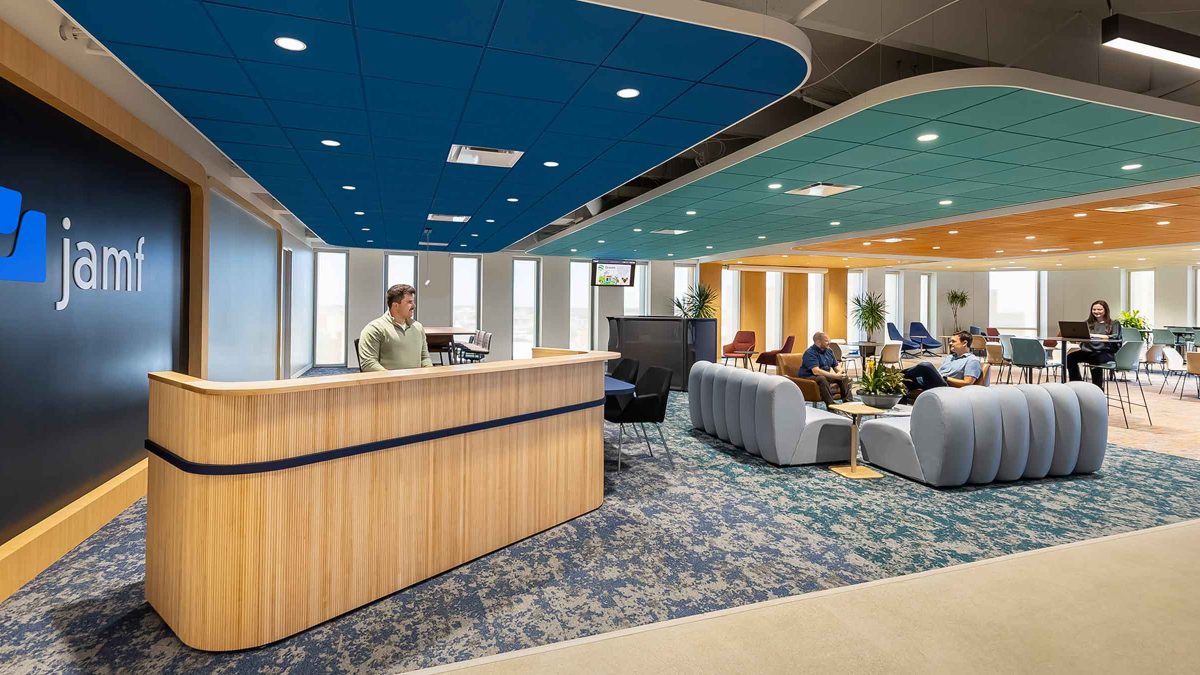
Jamf’s work sits inside the Apple ecosystem, building tools, widgets and interfaces that shape digital experiences. That insight became the foundation of our design narrative. Rather than relying on logos or literal branding, the workplace expresses the company’s identity through form, colour and movement.
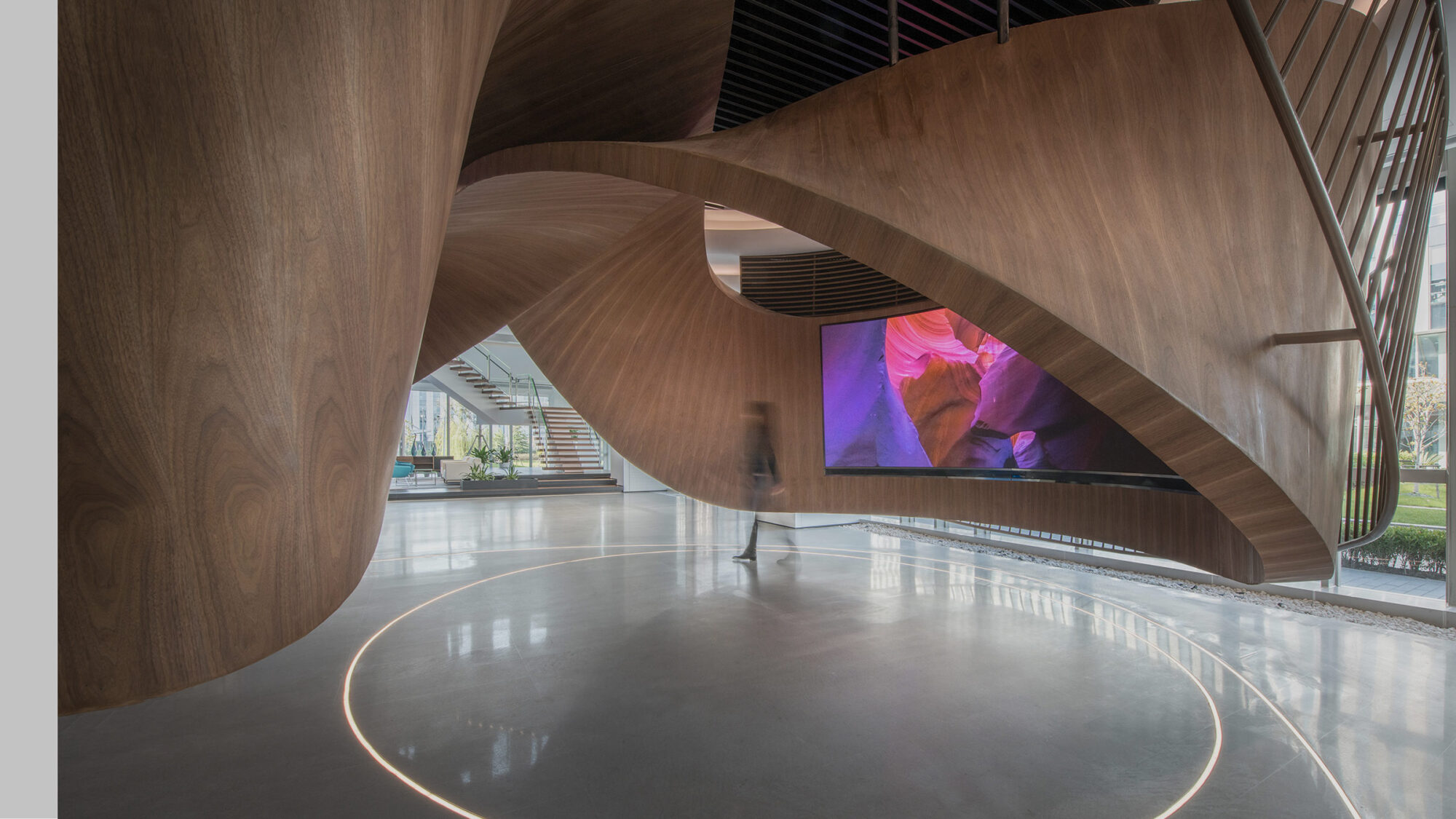
Spaces reference toggles, devices and evolving interfaces. Ceiling shapes shift. Rooms transition from dark to light. Colour gradients signal emotional and functional change. Each area is designed to evoke a feeling rather than make a statement.
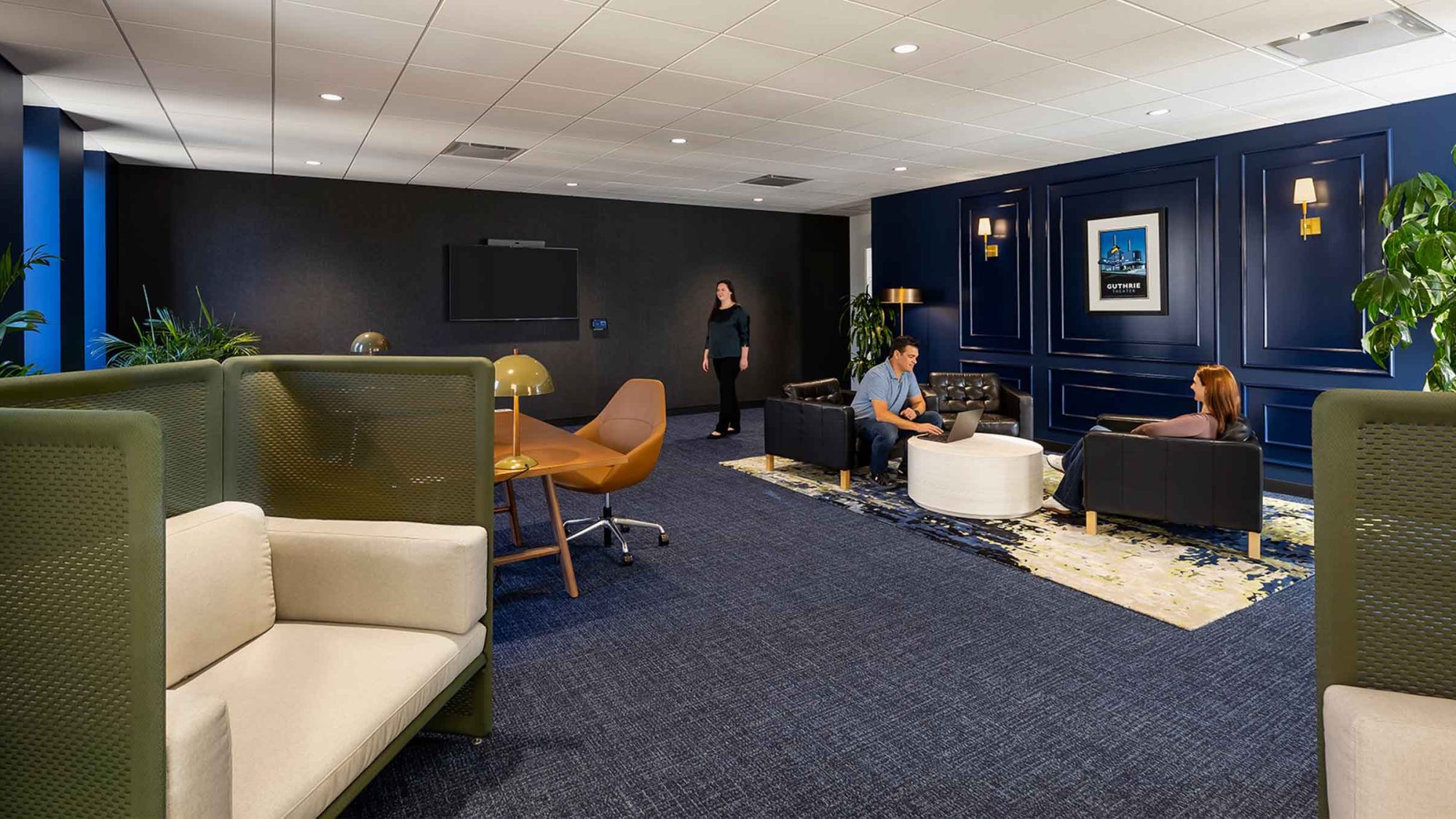
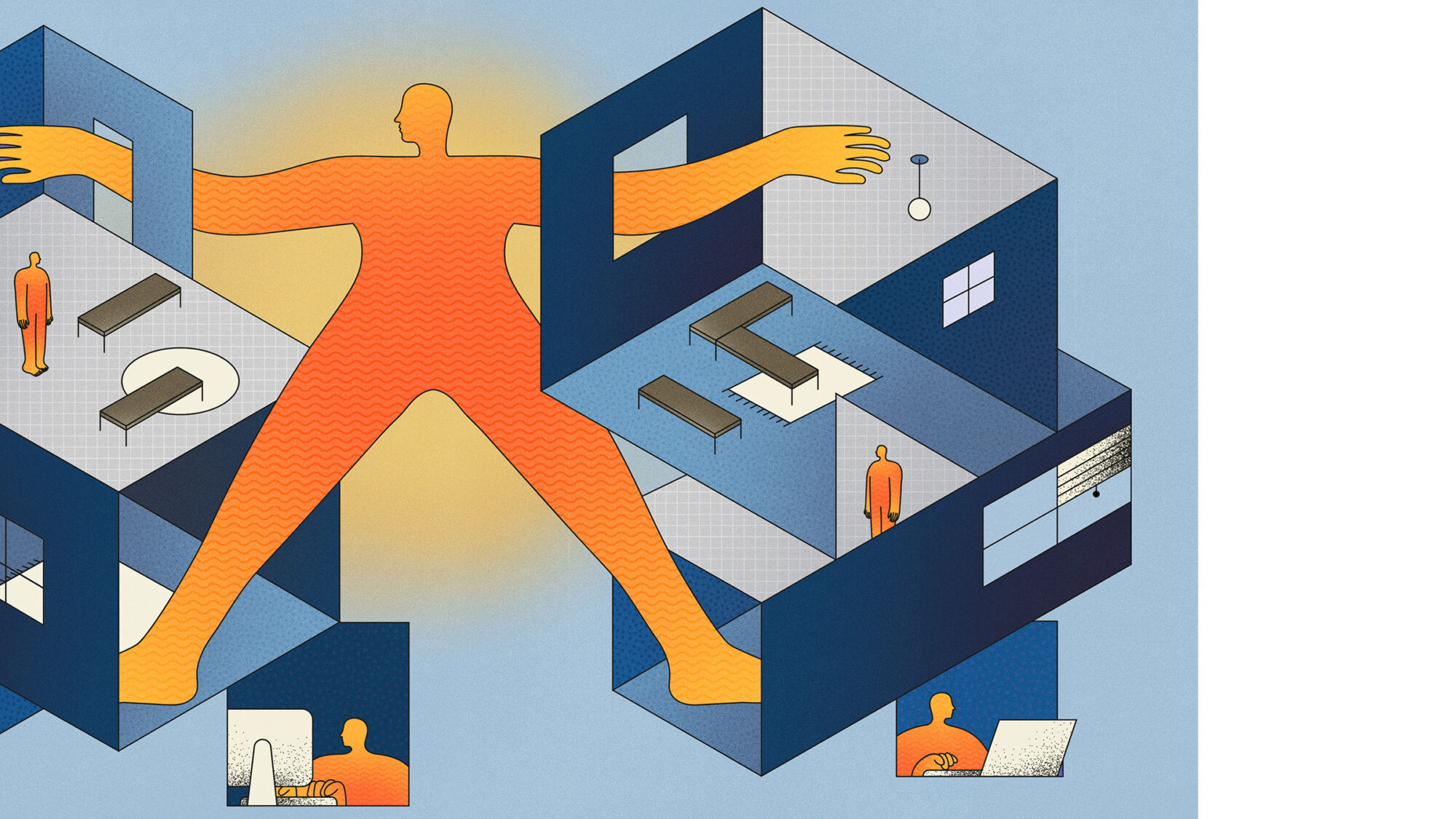
This office is not a daily desk destination, it’s a gathering place for employees travelling from other cities to collaborate, connect and align. The workplace strategy reflects this reality through a deliberate mix of spaces that range from public to private and from energetic to quiet.
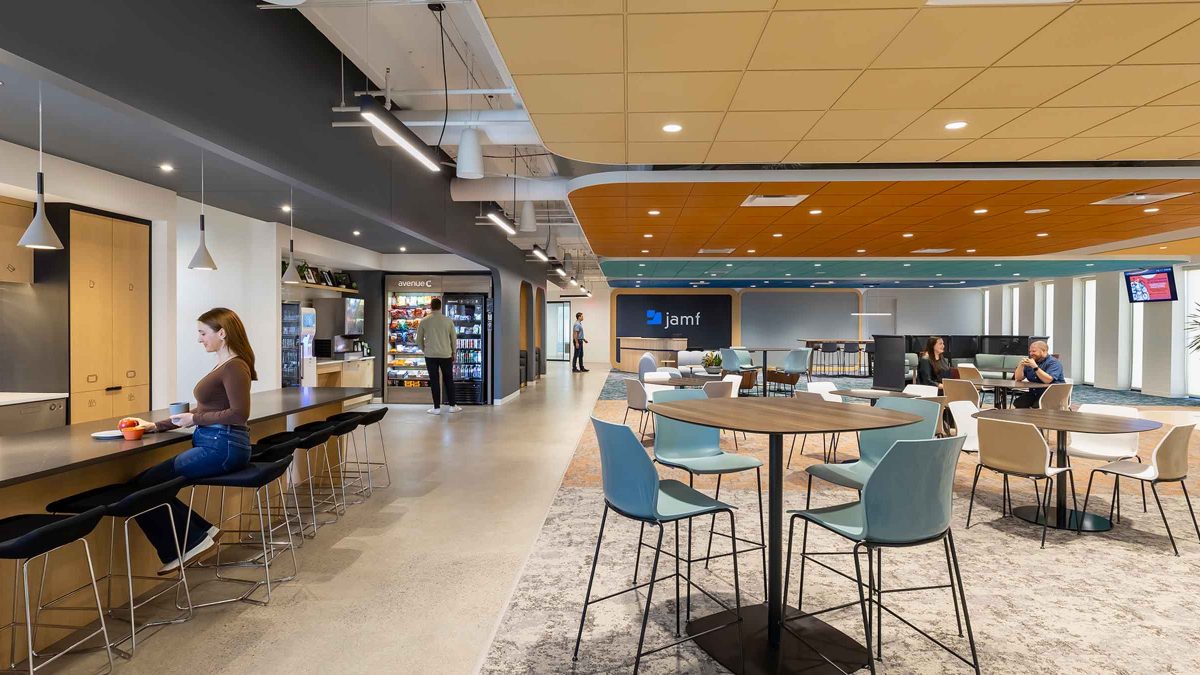
The plan encourages flow rather than hierarchy. No zone is isolated. Casual collisions happen naturally through shared paths and adjacencies. Quiet libraries, enclosed rooms and collaborative hubs coexist without friction.
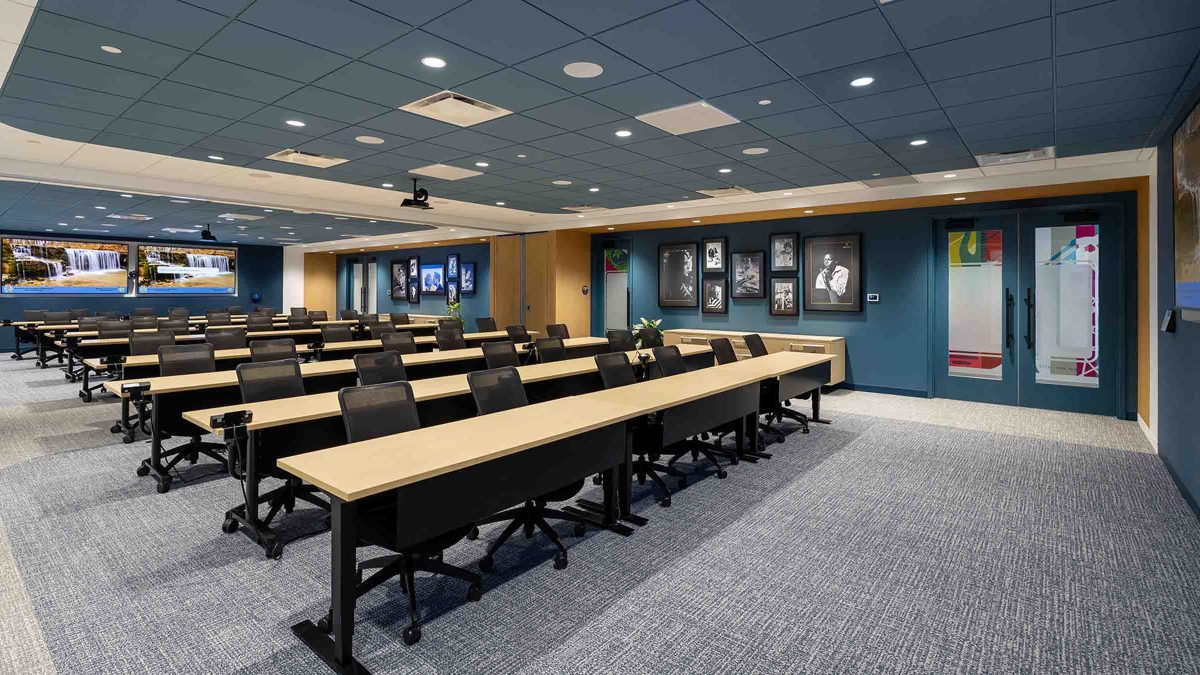
We treated neurodiversity as a design driver rather than a constraint. We considered lighting and acoustics and delivered interventions in-house. Spaces were created to support different sensory needs and working styles.
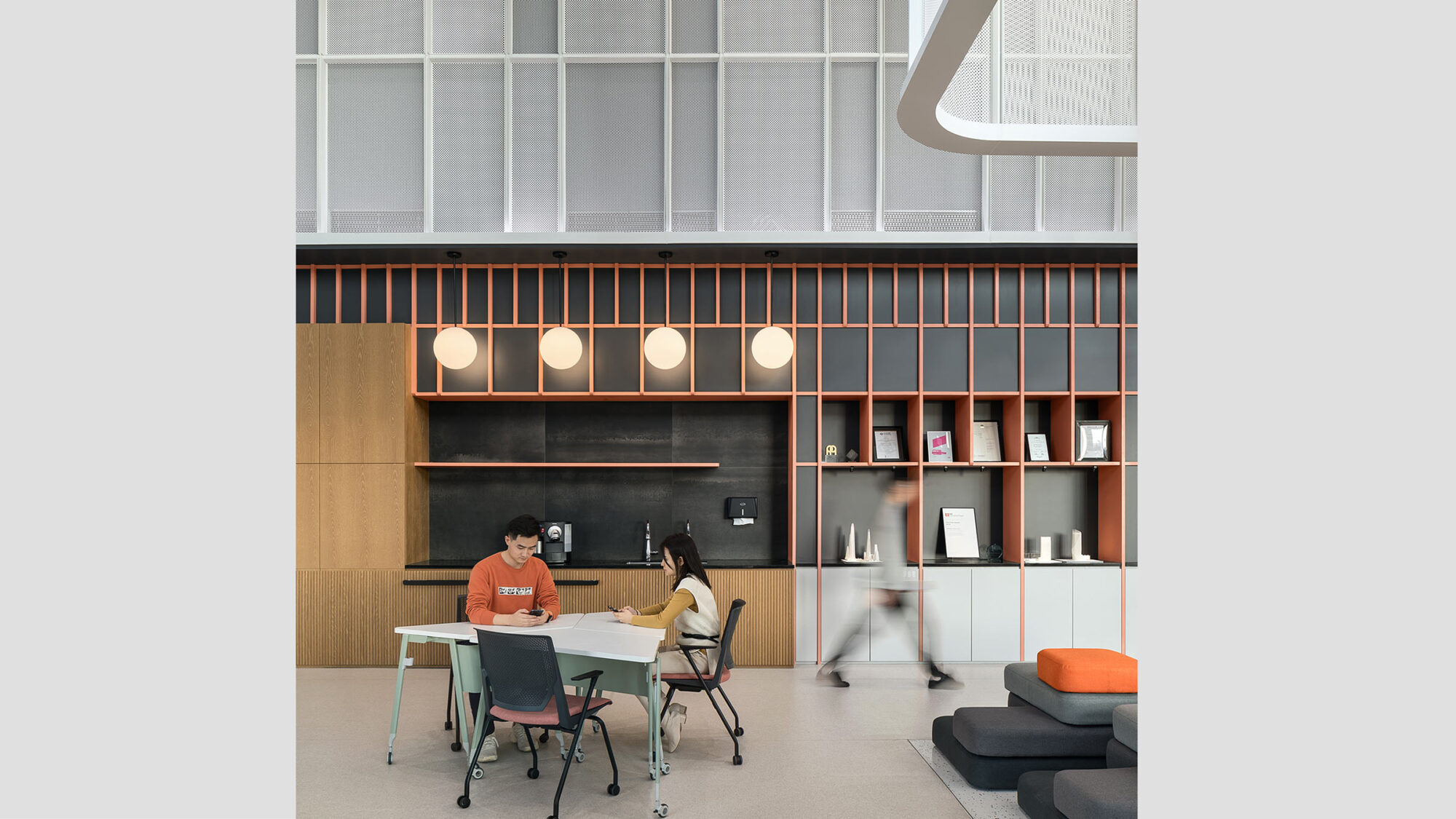
A dark, quiet library provides a focused retreat. A wellness suite welcomes anyone needing rest or privacy. Community hubs support nourishment and informal connection through Jamf’s employee wellness and amenity programs.
The budget was built for a refresh, yet the ambition had grown significantly. Our solution was rigorous value optimisation. We reinvented the details, re-specified the materials and achieved premium effects through unexpected methods.
Every decision balanced aspiration with discipline. The result was a high-design workplace delivered at landlord turnkey cost levels, without compromise to the experience or intent.
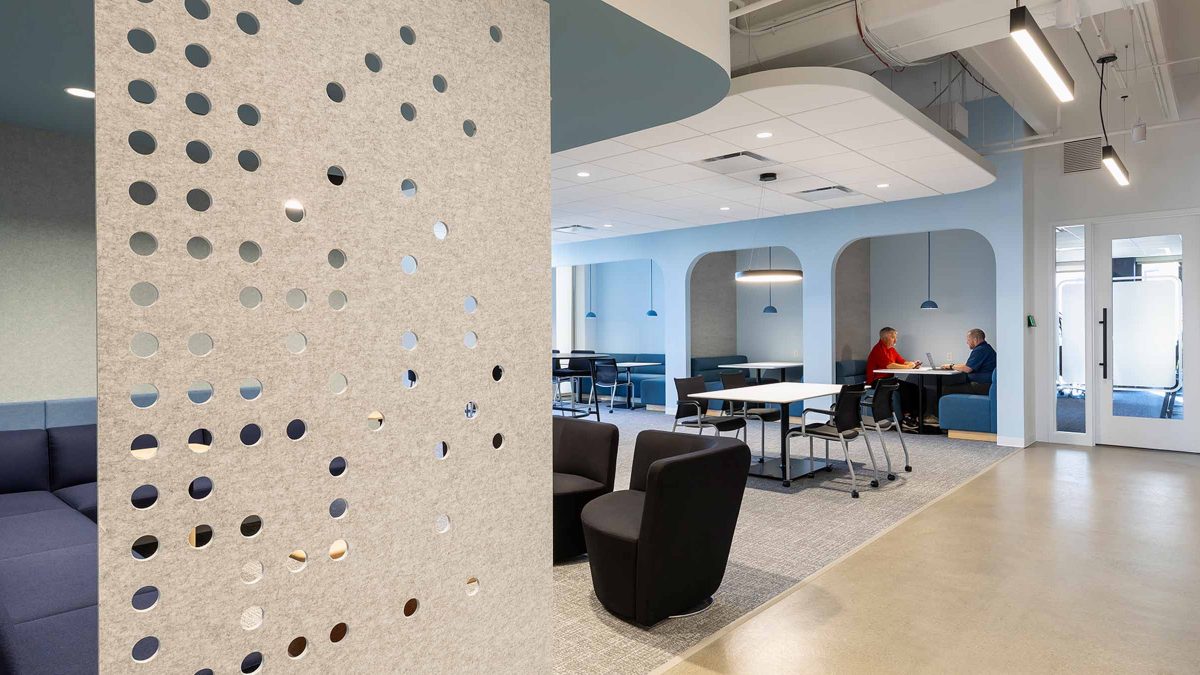
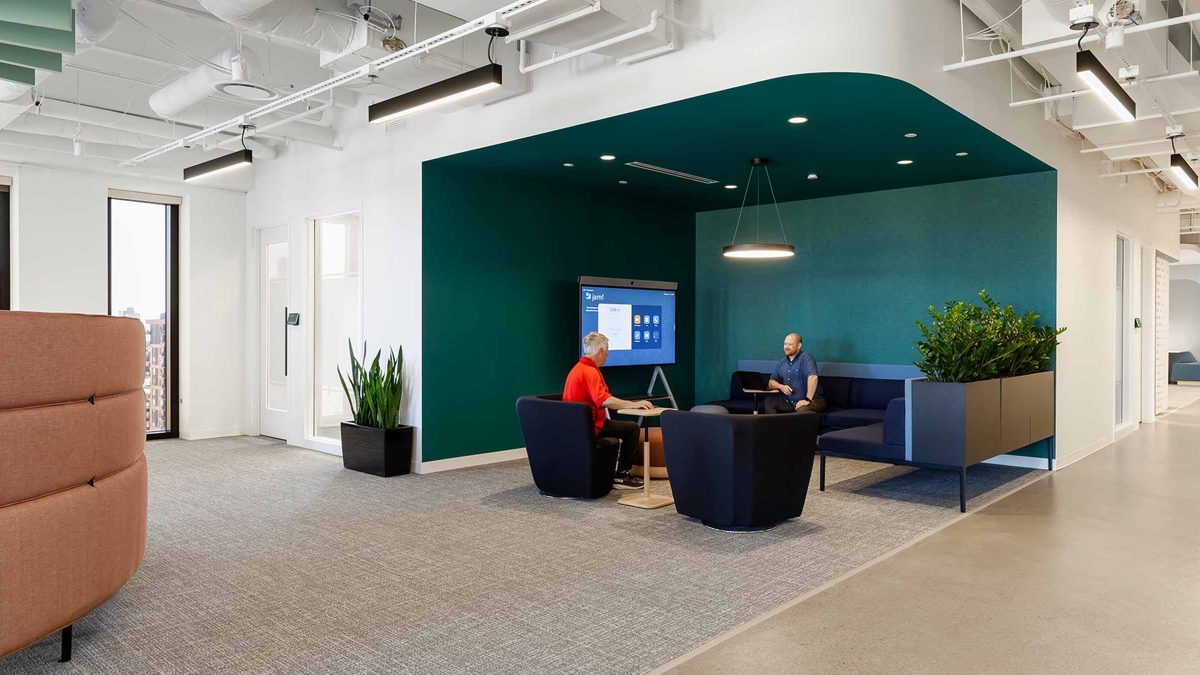
Delivered through M Moser’s integrated design and delivery model, the project benefited from early and ongoing alignment between design, engineering and construction. This process, driven by M Moser as the concept architect, anchored clear and collaborative communication and resulted in no change orders and no budget overruns.
Jamf moved from four floors to one right-sized workplace that works harder, feels stronger and reflects who they are today. What began as a restart became a transformation and proof that when vision, strategy and execution align, a workplace can do far more than support work.