
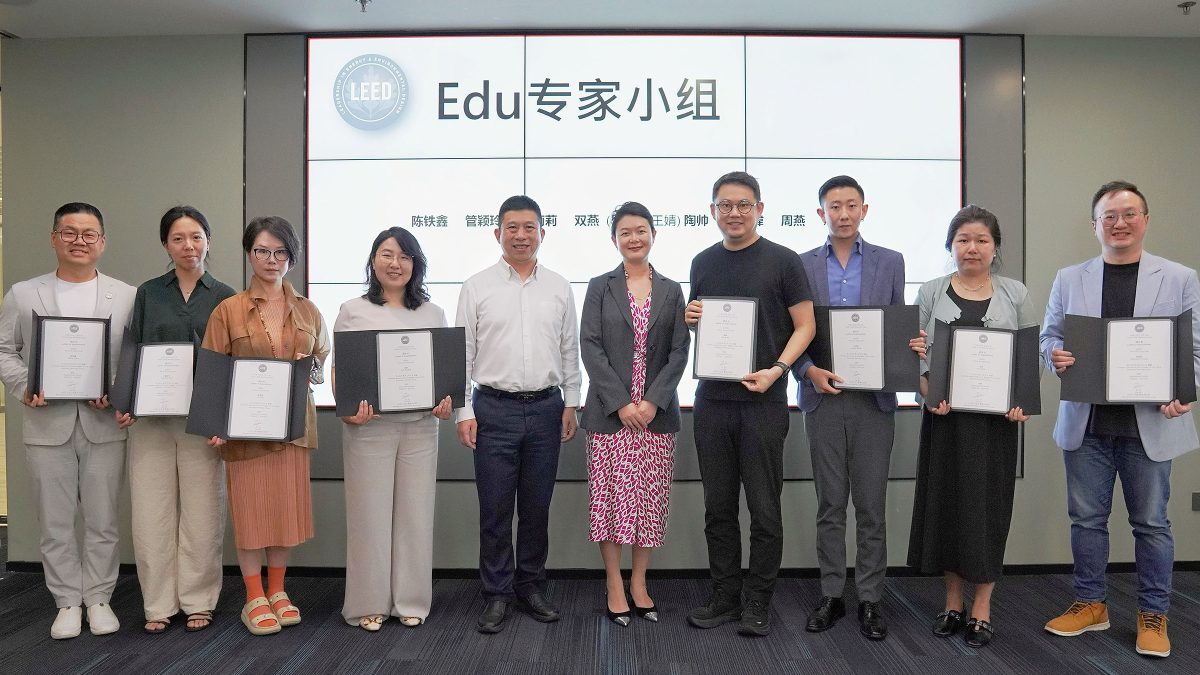
M Moser Senior Architect Jayden Wang has recently been appointed as an expert member of the China LEED Working Group and will serve on its Education Working Group.
The appointment reflects Jayden’s professional experience and commitment to creating more energy-efficient, sustainable and healthy built environments. In this role, he will draw on knowledge developed through more than three decades of M Moser’s work in China and across global markets, bringing practical project insight into industry learning and helping global sustainability standards respond more effectively to local needs and delivery realities.
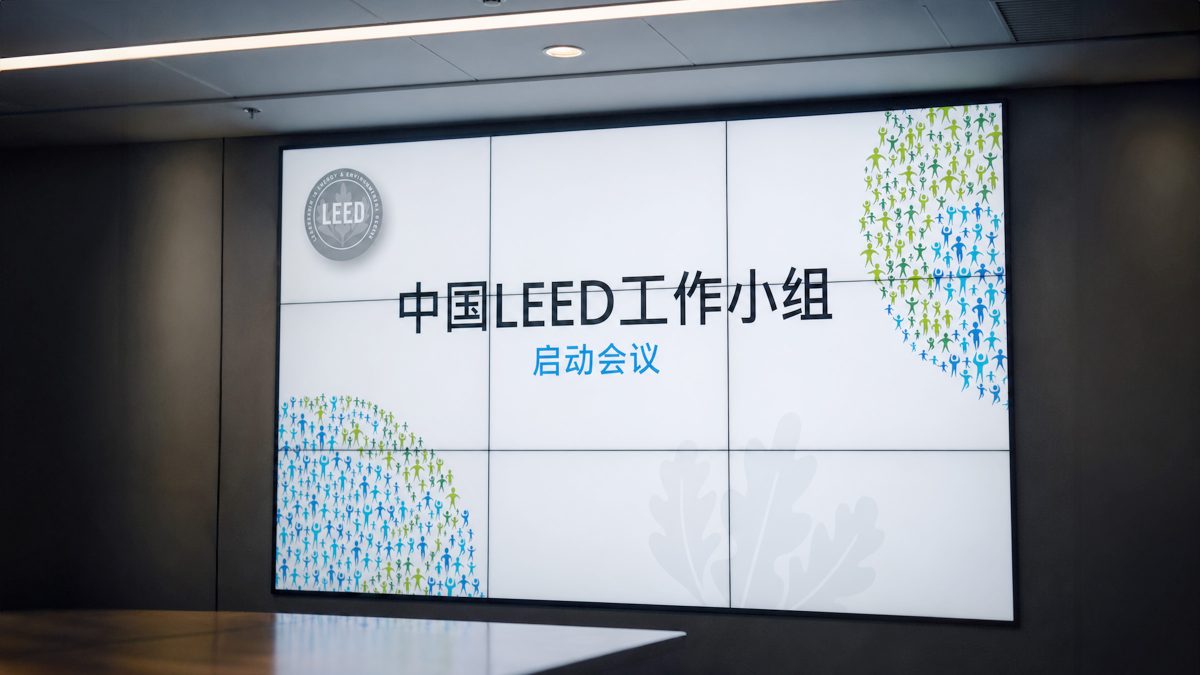 The inaugural meeting of the China LEED Working Group in Shanghai, bringing together experts from across the built environment.
 As an expert member of the Education Working Group, Jayden will support the localisation of LEED in China by reviewing how its requirements and terminology align with local regulations, technical conditions and project delivery realities.
This work will help turn global standards into clearer, more practical guidance for projects in China, while enabling knowledge developed through local practice to contribute to the continued development of LEED and sustainable building practice globally.
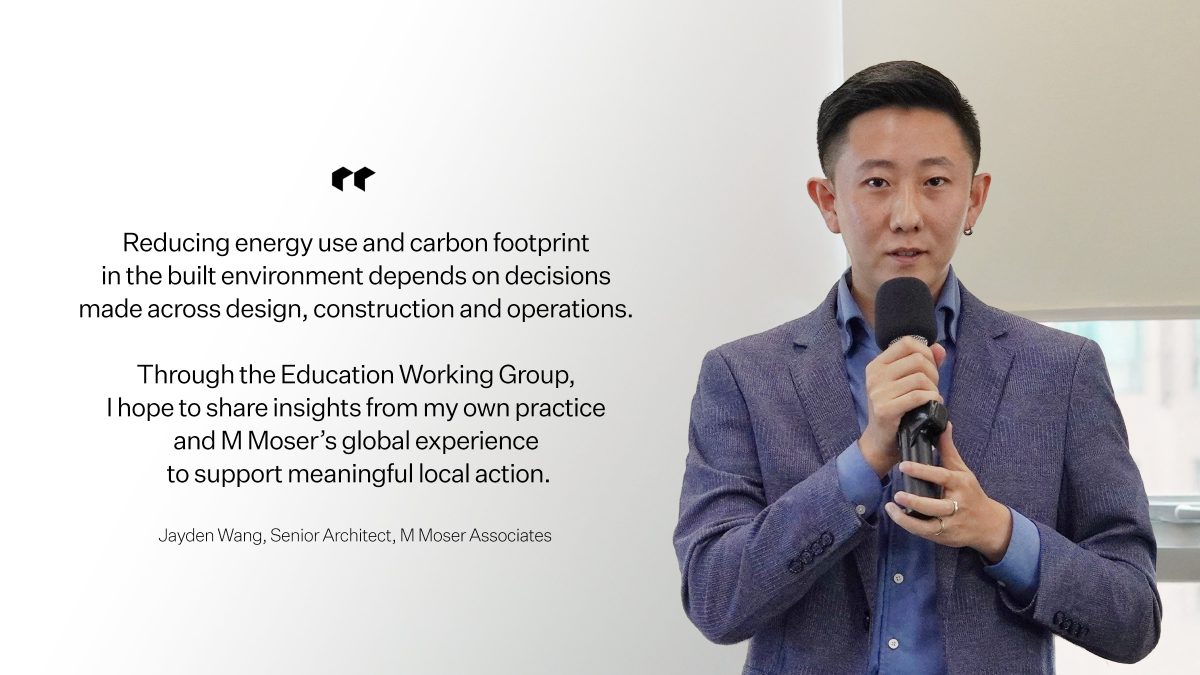
Jayden’s participation in the working group is part of our broader contribution to sustainable building in China. For more than three decades, we have worked with clients and industry partners to translate international sustainability and wellbeing standards into practical outcomes for buildings and workplaces.
During the early development of LEED Commercial Interiors in China, M Moser was involved in approximately one-third of projects in the category, helping bring global green building principles into local practice. In 2016, as we marked our 35th anniversary, GBCI recognised M Moser for reaching 100 LEED-certified projects in China, acknowledging our contribution to the country’s green building movement.
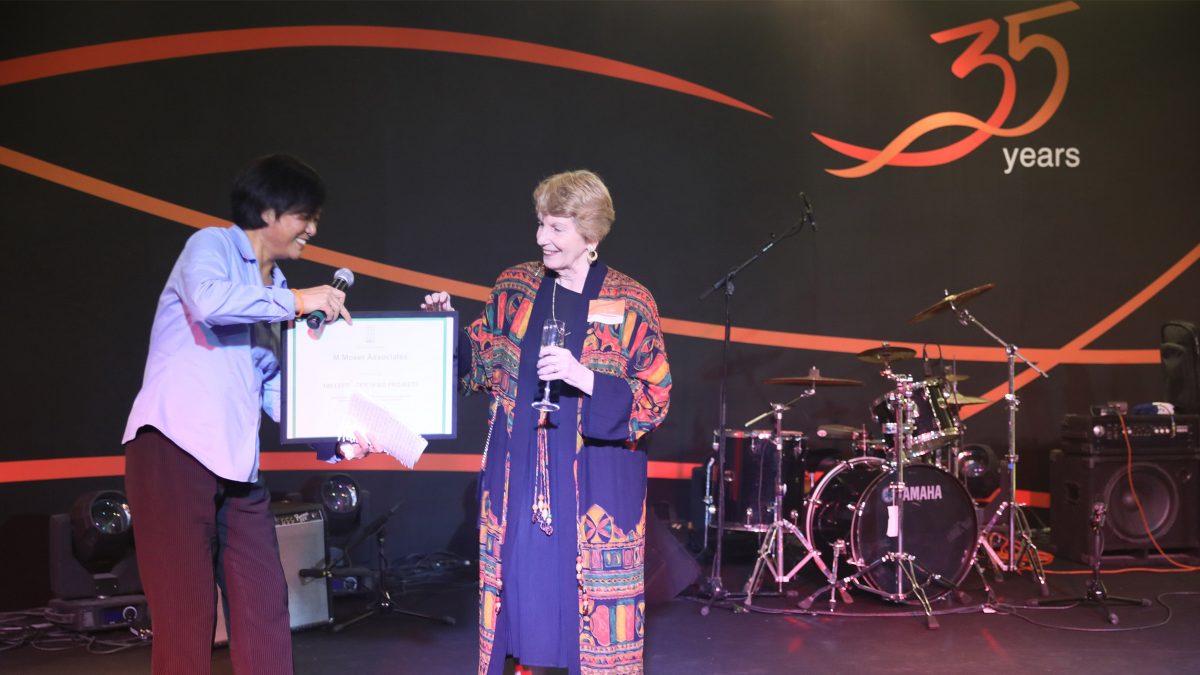 In 2016, Founder and Chairman Moira Moser accepted GBCI’s recognition of M Moser’s 100 LEED-certified projects in China.
 Other milestones include:
Certification provides a valuable framework for setting goals, guiding decisions and demonstrating progress. Its lasting value, however, depends on how effectively sustainability strategies improve building performance, support people’s wellbeing and respond to changing business needs.
By integrating Spatial Design, Engineered Environment and Project Delivery from the outset, we connect sustainability goals with user experience, operational priorities and project realities. This helps clients identify opportunities earlier, reduce energy use, improve environmental performance, manage operational risk and create healthier, more adaptable environments.
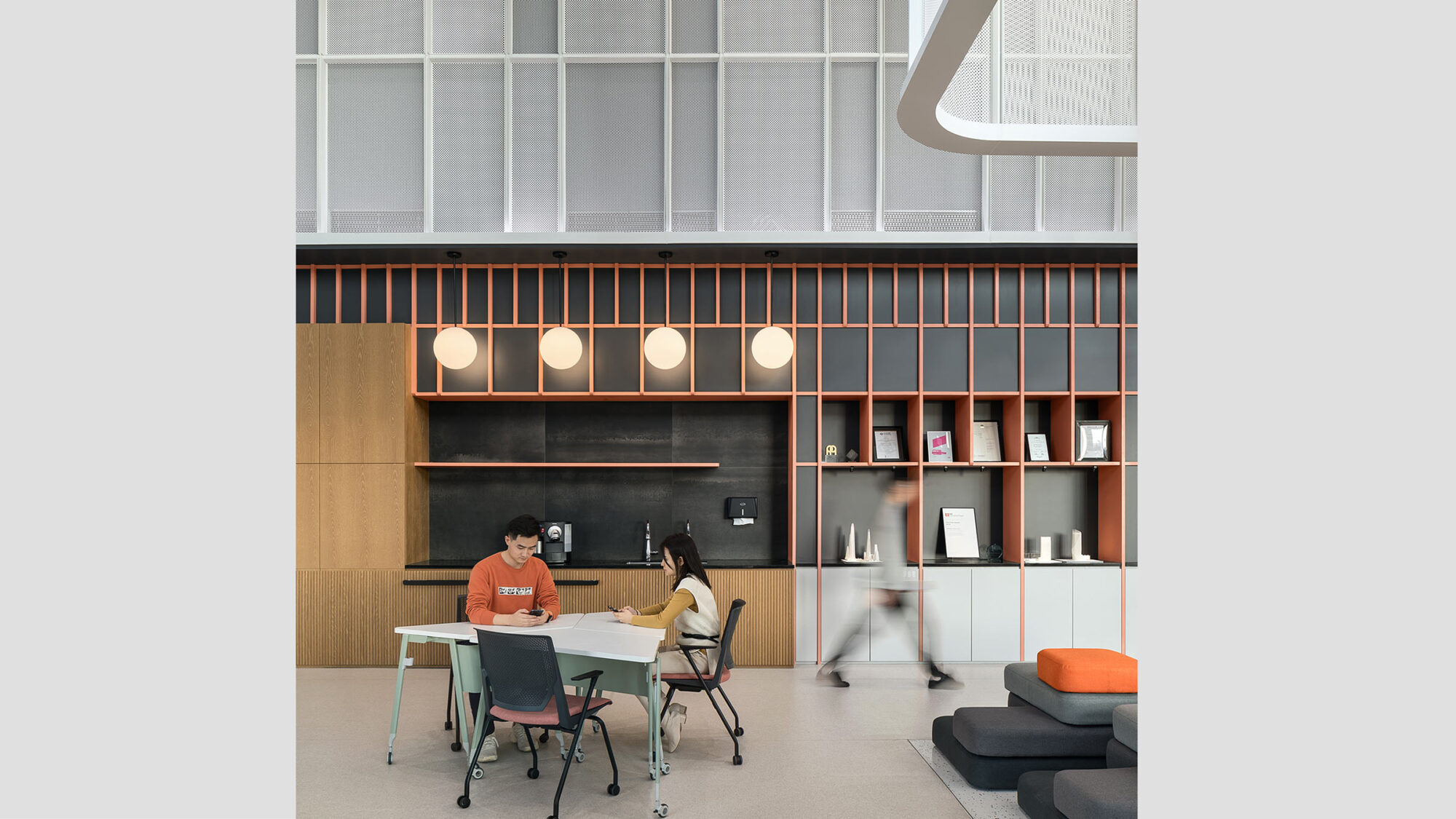
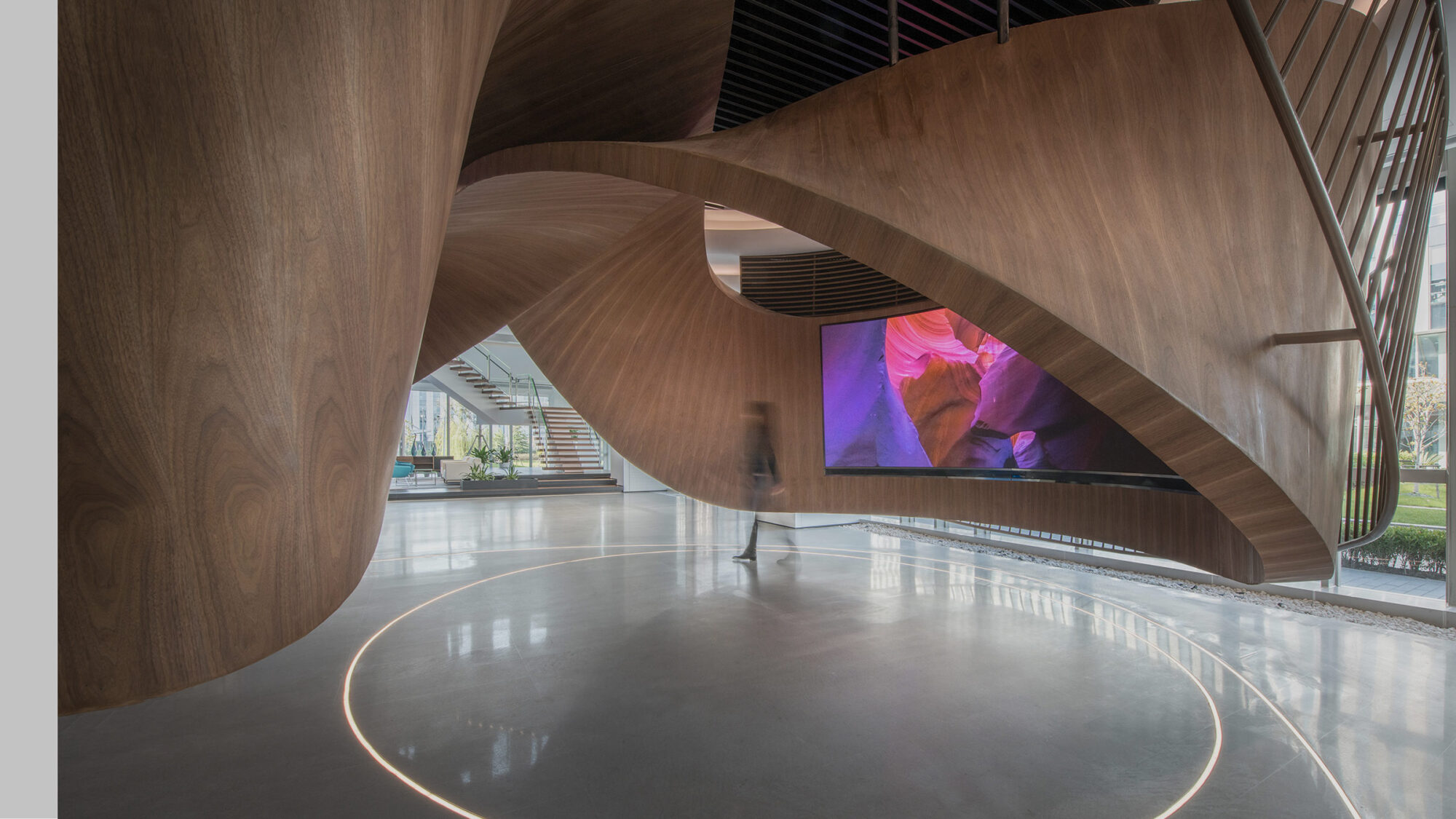
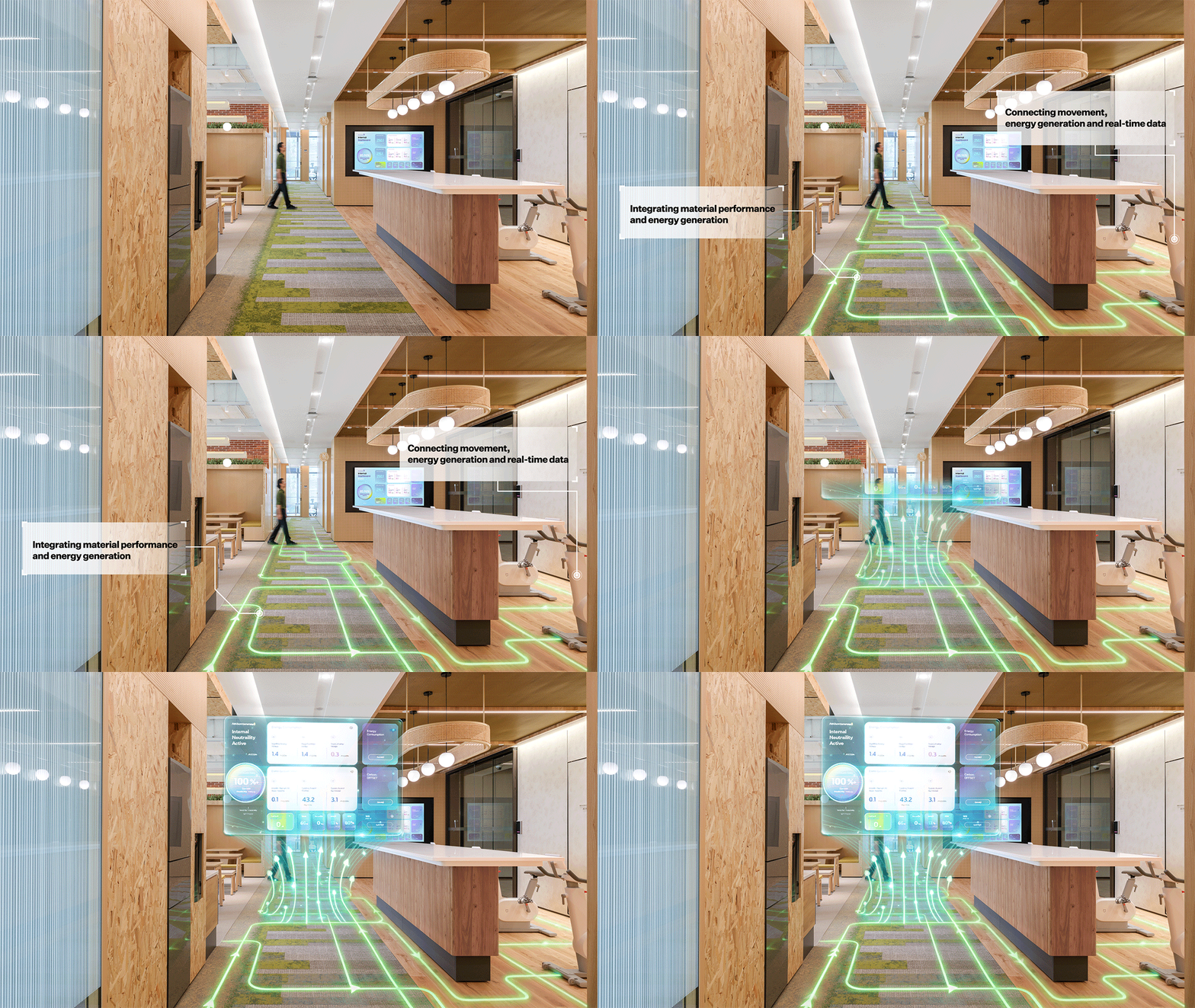 AstraZeneca, Shanghai | Integrated spatial, engineering and digital solutions reduce energy consumption while bringing environmental responsibility and wellbeing into the workplace experience, supporting lower-carbon ways of working.
 Through both project work and industry participation, we will continue to help clients apply global sustainability frameworks in ways that are locally relevant, practical to deliver and valuable throughout the building lifecycle.