

How can workplace technology help organisations improve comfort, achieve ESG reporting requirements and make better operational decisions?
At M Moser, our living labs give us a place to explore these questions in practice, testing how spaces, building systems and technology work together under real operating conditions. The portfolio management platform that connects technologies and links our living labs is mmoser.io.
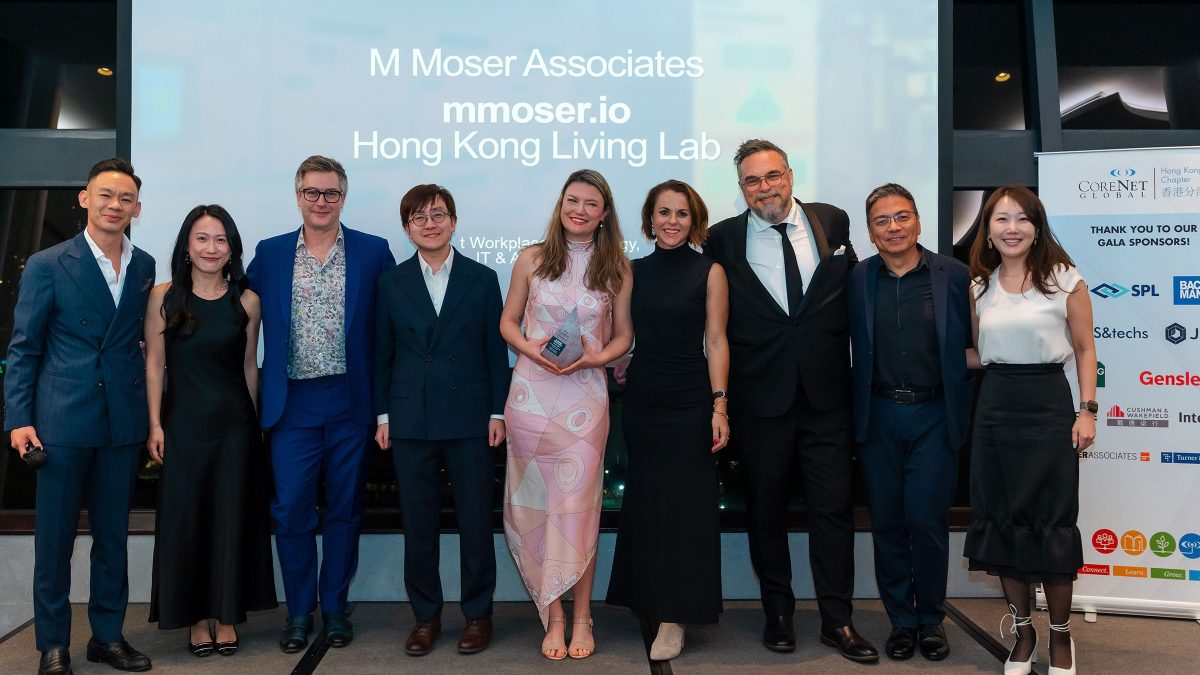
mmoser.io, exemplified through our Hong Kong living lab, was recognised with the Best Workplace Technology, IT & AV Solution award at the CoreNet Global Hong Kong Chapter Awards 2026.
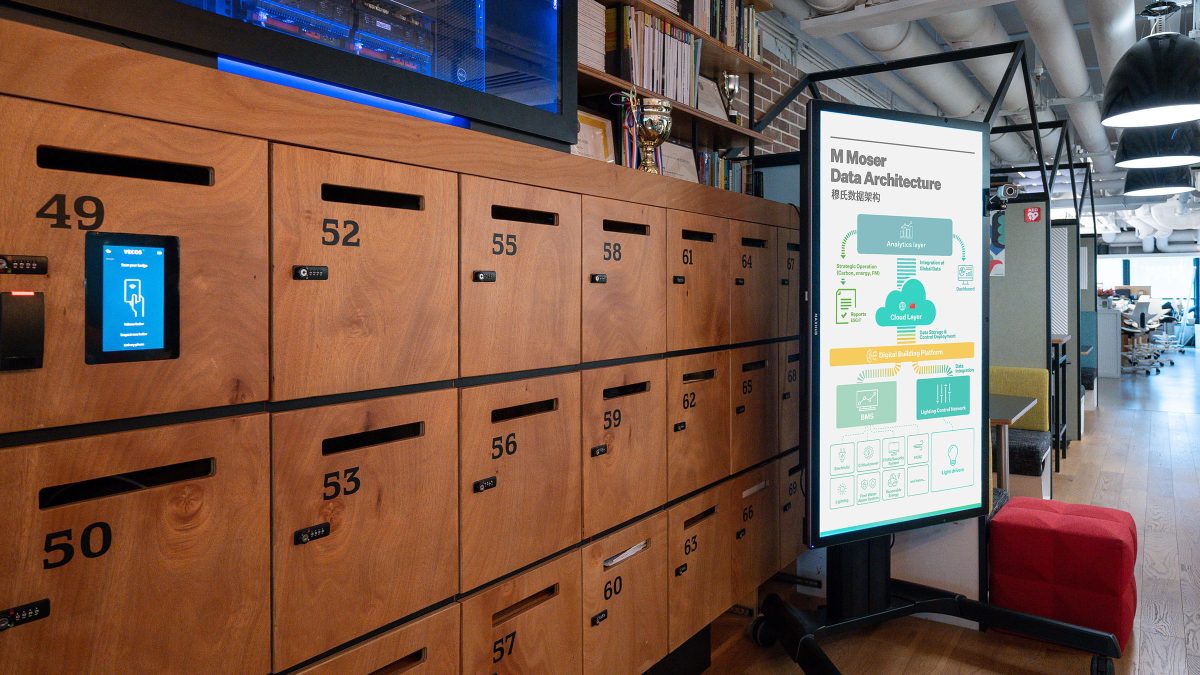
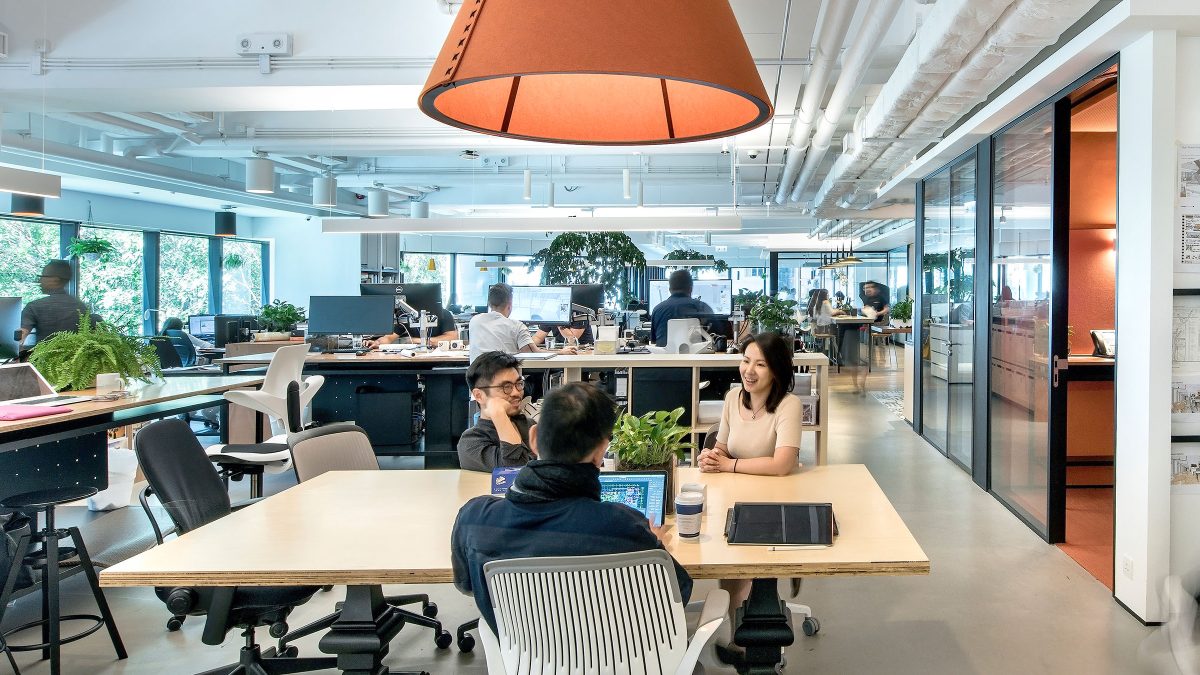
A smart workplace depends on how well technology connects with physical spaces, building systems and people’s needs. Through mmoser.io, the Hong Kong living lab brings environmental, occupancy and energy information into a shared digital framework.
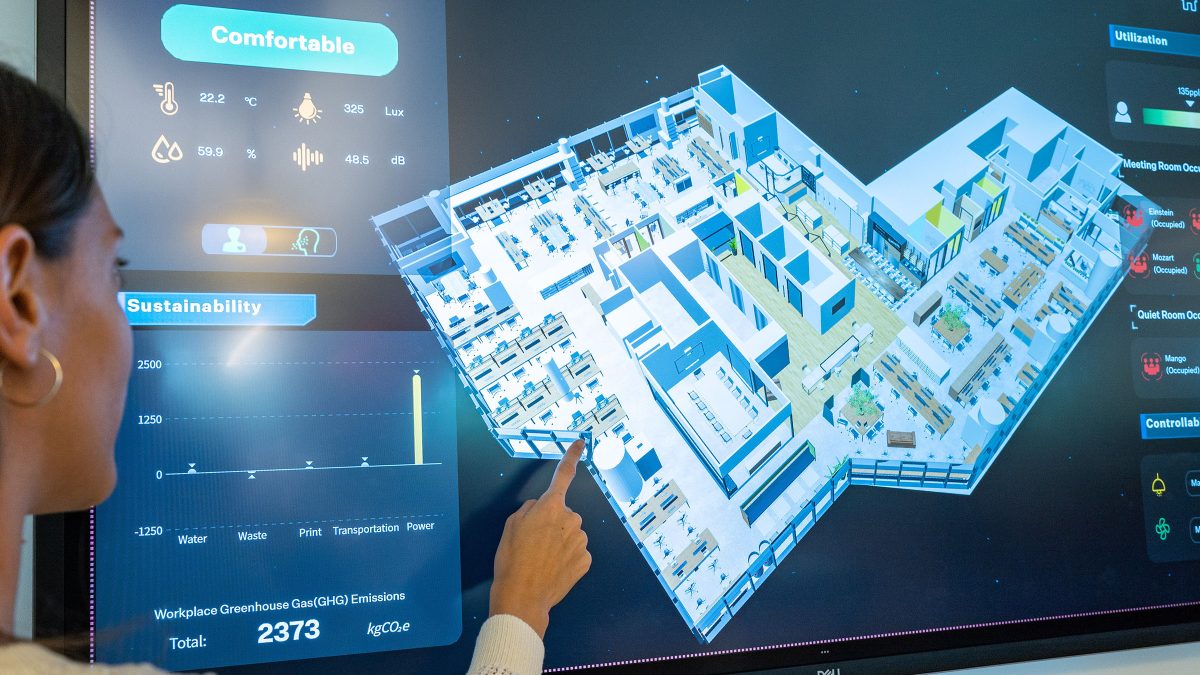
The Hong Kong digital twin maps 460 sensor data points across 20 spaces, covering temperature, humidity, light, sound, occupancy, indoor air quality and electrical consumption. Connecting readings to specific spaces and equipment helps our teams investigate practical questions: Is a busy room adequately ventilated? Does an area support collaboration work? How does energy use relate to occupancy?
Our engineering and technology teams coordinate a multitude of input sources with our physical environments. This gives the data useful context, helping teams understand conditions in each space to make more informed operational decisions, as well as better predictions for future conditions.
We also use our digital twin dataset to create end-user and facilities-focused dashboards so that our staff can see what the current conditions – in terms of occupancy, light levels, noise levels, and IAQ – are within each of the living labs, and our operations teams can quickly address issues.
The living lab helped our team investigate recurring weekend spikes in volatile organic compounds (VOCs). Comparing air-quality readings with occupancy data showed that the spikes occurred while the office was empty. Further investigation traced the source to painting works in the lift lobby outside our office.
The example shows how connected data and professional expertise work together to identify an issue and understand its cause. It reflects the wider purpose of our living labs: to test technologies, verify the use cases in daily use and refine how we apply them.
For clients, this experience helps inform decisions about which technologies to adopt (or not adopt), how to integrate them and how to assess their contribution to workplace comfort, resource use and long-term operations.
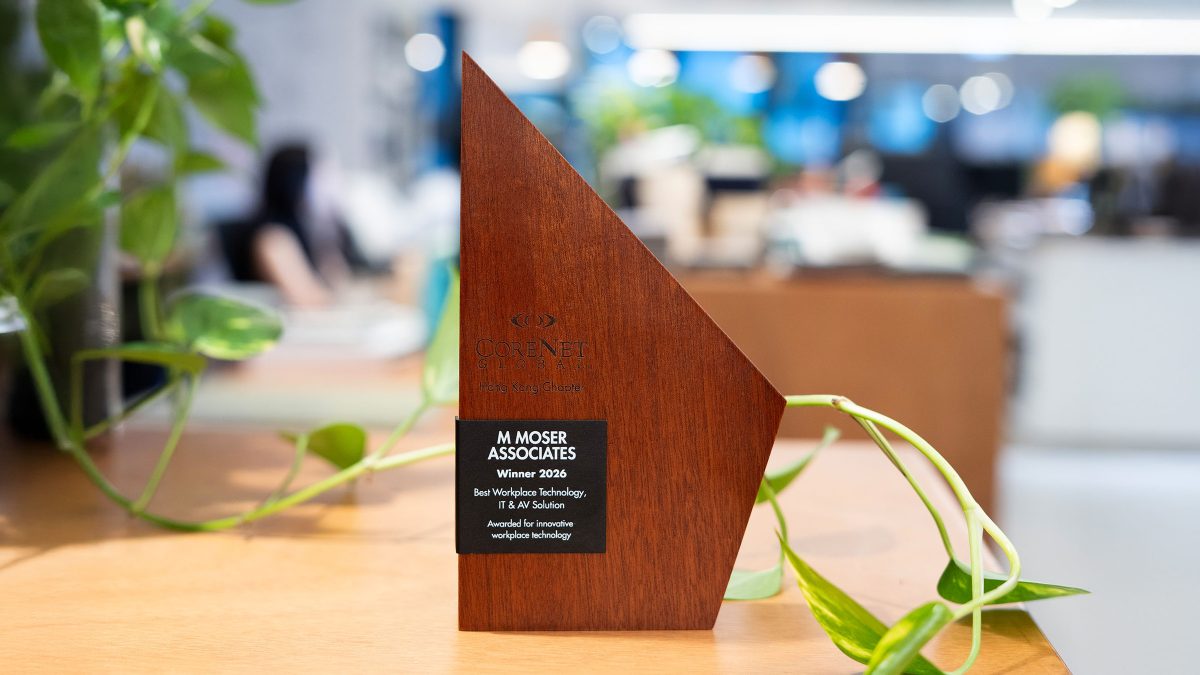
The recognition reflects our integrated approach to workplace design, engineering, sustainability and technology. By testing solutions in our own offices, we can investigate performance, understand integration challenges and refine approaches to inform our work with clients.
Thank you to CoreNet Global Hong Kong Chapter for this recognition.
