









Workplace decisions carry significant weight in San Francisco. As organizations navigate fluctuating attendance patterns, rapid business transformation, portfolio optimization and the impact of AI on how work gets done, leaders are under increasing pressure to ensure every workplace investment delivers measurable value.
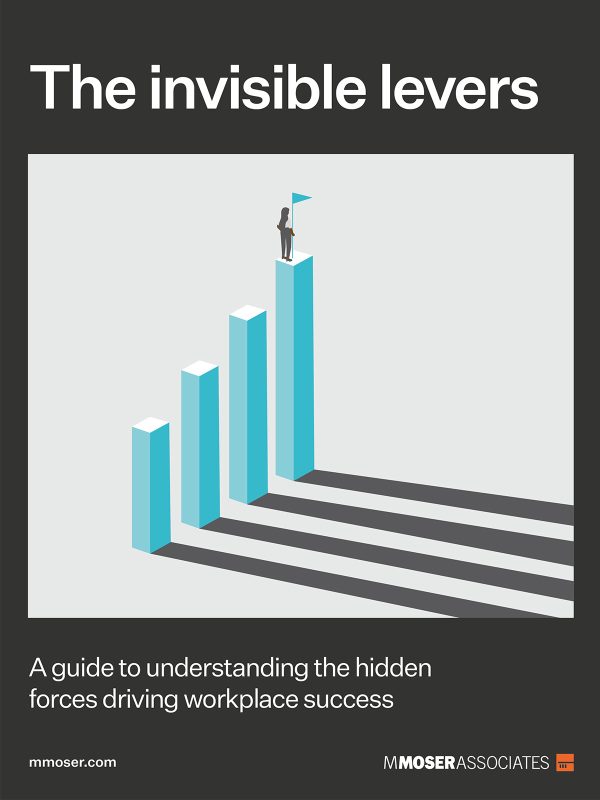
In this Q&A, Grant unpacks our newly published workplace guide, The invisible levers – a practical framework designed to help San Francisco leaders navigate complexity, accelerate decision-making and turn their workplace into a driver of business performance.
If you’re rethinking your San Francisco workplace strategy, this conversation offers a path forward.
San Francisco companies operate in an environment defined by constant change. Technology cycles move quickly, business priorities evolve rapidly and many organizations are still reassessing the role their workplace plays in attracting talent, supporting innovation and creating business value.
What I’ve seen repeatedly is that workplace projects struggle because of forces that aren’t openly discussed: complexity, indecision, value trade-offs and post-move uncertainty.
The invisible levers names those forces. It gives Bay Area leaders a framework for aligning workplace strategy with business goals, helping them make better decisions about their real estate, employee experience and long-term workplace investments.
The guide focuses on four forces that quietly shape workplace success:
Embracing complexity
The interconnected relationship between workplace strategy, technology, sustainability, culture, operations and business performance.
Turning indecision into momentum
Overcoming governance challenges and decision bottlenecks that can slow progress and increase project risk.
Leading with value
Moving beyond trends and assumptions to focus on measurable business outcomes.
Building for what comes next
Creating workplaces that can adapt as business needs, technologies and workforce expectations continue to evolve.
These levers apply across nearly every San Francisco workplace project, whether it’s a headquarters repositioning, a portfolio consolidation or a new workplace designed to support growth and innovation.
San Francisco organizations are balancing more variables than ever before. Hybrid work, AI adoption, evolving team structures, sustainability goals and real estate optimization all influence workplace decisions simultaneously.
The challenge is that these factors don’t operate independently. Decisions about workplace design affect culture. Technology impacts collaboration. Sustainability influences long-term operational performance.
The guide explores how unmanaged complexity creates friction, but when aligned early, it becomes a strategic advantage.
Many Bay Area organizations are asking a fundamental question: what should the workplace actually do for the business?
Leading with value means moving beyond conversations about amenities, trends or aesthetics and focusing on outcomes.
Instead of asking, What should we include? we ask:
What will improve innovation, collaboration, talent attraction, employee experience and portfolio performance?
That means:
For San Francisco organizations, where workplace decisions are often tied directly to growth, innovation and talent strategy, value-led thinking has become essential.
If your workplace no longer reflects how your organization operates, that’s often the first signal that change is needed.
Many companies are navigating questions around portfolio optimization, hybrid work, AI readiness, talent attraction and long-term flexibility. The challenge is knowing where to start.
The four invisible levers provide a framework for making those decisions with greater clarity and confidence.
Whether you’re evaluating your San Francisco office footprint, repositioning an existing workplace or planning for future growth, the guide offers practical insights drawn from global headquarters, technology companies and high-performance workplace environments.
Contact our San Francisco team to learn more.