
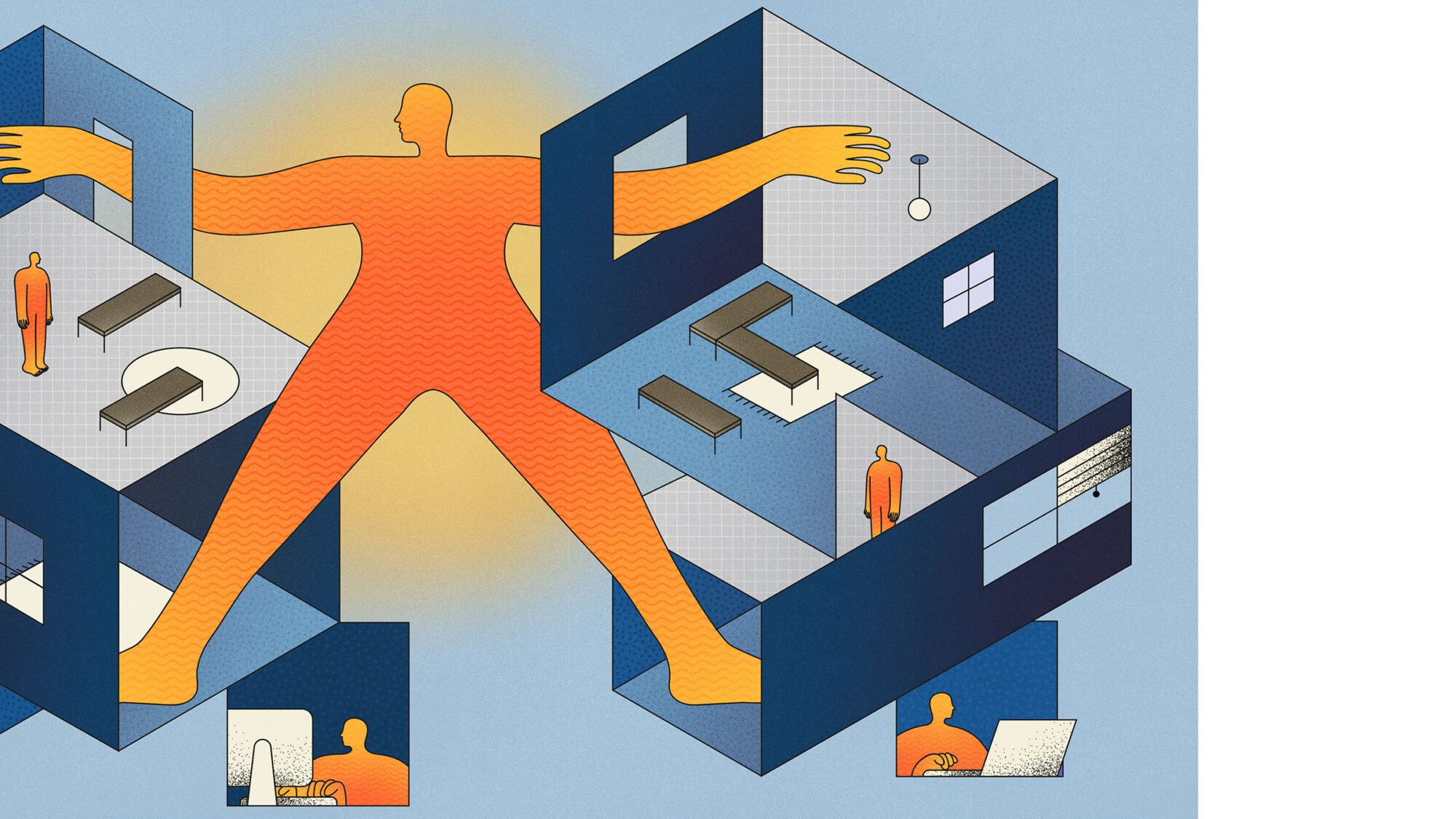

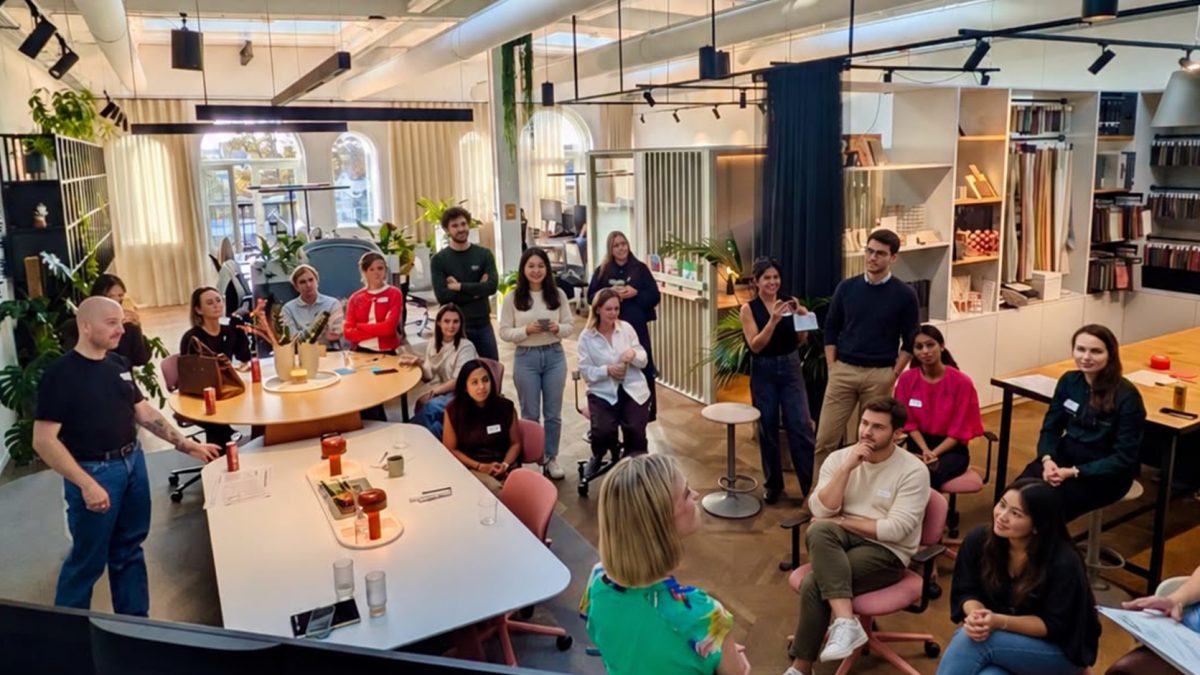
At a CoreNet Young Leaders workshop I facilitated in our Amsterdam office, the cubicle made an unexpected appearance. If people spend more of their day directing AI agents and checking their work, enclosed desks might make a comeback.
Yet the same technology could take on routine tasks and leave more time for people to develop ideas together. One future suggested more private space; another suggested more conversation. Both seemed plausible.
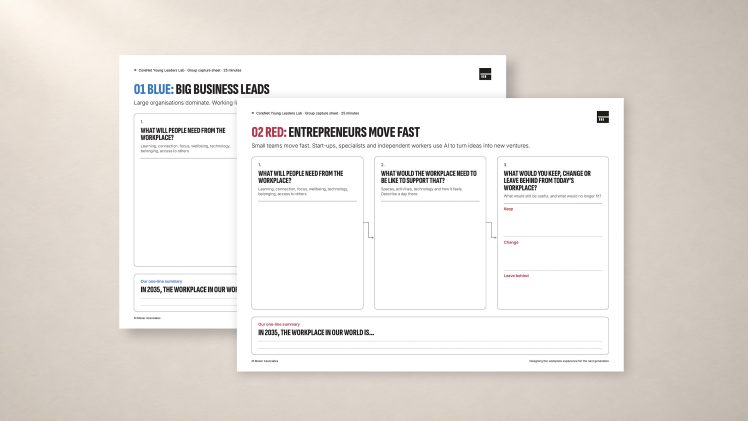
Our scenarios were adapted from PwC’s Four Worlds of Work, which asks two questions about the future: whether business consolidates or fragments, and whether people prioritise the individual or the collective.
Our Blue World is led by large organisations that set the pace through ambitious targets and constant flows of data. In Red, start-ups and specialists use AI to compete with much bigger businesses. Green keeps large organisations influential, with their impact on people and the planet shaping everyday decisions. Yellow belongs to co-operatives and neighbourhood networks that organise around fairness and shared purpose.
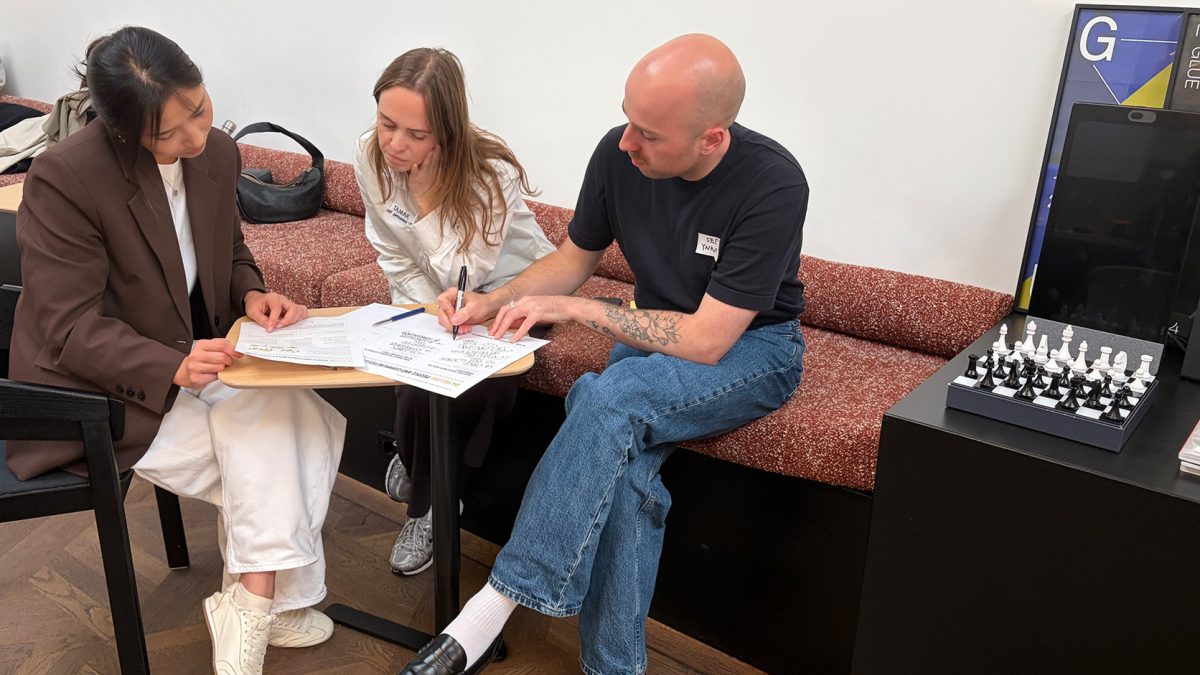
Each group took one world and decided for itself what mattered most within it.
My goal was to keep competing possibilities alive long enough to understand what people really wanted from them. Working through the practicalities could then reveal a different, more useful response. This is an important part of our workplace strategy work with clients at M Moser.
In Blue, AI raised questions about the work between colleagues as well as the work between people and machines. Someone might use AI to generate initial options, then bring them to a table with colleagues to challenge assumptions and contribute different perspectives. Later, they might need uninterrupted time to interrogate the results.
These activities could coexist within a day. Understanding their sequence would help determine the balance of private settings, shared project areas and places for analogue discussion. A team could trial both, looking at where interruptions hinder review and where working together improves an idea. That would give a business more useful evidence than assuming AI will simply reduce its desk count.
Participants also imagined environments responding to biometric information, with lighting and sound adjusting to the individual. A practical starting point could be giving people greater control over those conditions, then testing whether optional sensing adds value. That keeps the ambition alive while establishing what people actually need.
There are already companies exploring the relationship between wellbeing and performance. For a client in Dubai, leadership described a competitive culture that employees also found inspiring. Conversations with employees established that recovery after intense work mattered too. The business explored sleep pods, coaching spaces and even oxygen tanks as part of its ambition to support high performance.
But extended personalisation also brings responsibilities. A business needs to explore the purpose with employees, explain what information would be collected and who could see it, and give people choices about participation. People should understand the benefit and be able to decide how much they share. The response will depend on the culture, trust and benefit to both parties.
Yellow looked beyond the organisation. Participants imagined charity-run coffee bars, resources shared with nearby schools and employee-led exchanges of knowledge and skills.
An existing event space could give that ambition a practical starting point. A local partner might run workshops or community events at agreed times, with a programme shaped around its needs. Success would include activities the partner could otherwise struggle to accommodate and benefits participants could describe. Attendance alone would tell only part of the story.
Public access also creates obligations around security, staffing, cost and liability. A defined area with suitable access and an agreed operating arrangement could make sharing viable. A landlord might be better placed to coordinate provision across several tenants. These decisions belong in the brief before anyone promises to open the doors.
Childcare presents another opportunity to rethink the scale of a response. A permanent crèche is a substantial commitment, and commuting with children will not suit every parent. A professionally operated holiday club could use a suitable meeting suite on selected school-holiday days. The priority would be relieving a specific care gap, with space and service considered together.
Green explored responsibility across the life of a workplace. That includes what an organisation already has and the stories it chooses to carry forward.
In M Moser’s Amsterdam office, repurposed piano pieces reflect the building’s musical heritage. For HFW, a law firm with shipping and aviation clients, we used salvaged ship and aircraft components as sculptures. Both turn an object’s previous life into part of the workplace’s identity.
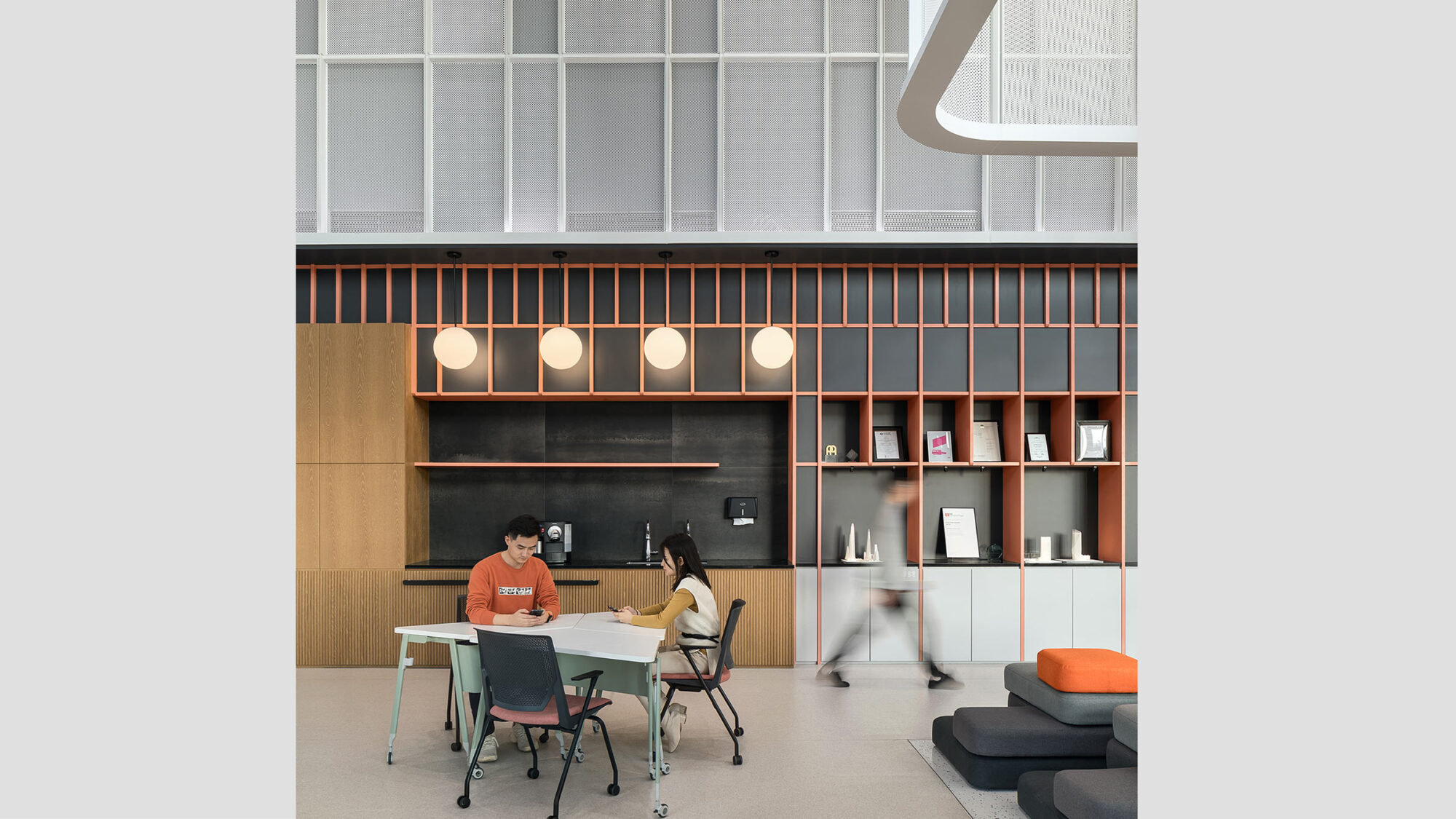
Visible reuse can give a space character, but scale matters too. In our London studio’s tea point, approximately 45% of the furniture was reused from the former office or storage, along with around 30% of the joinery. The appliances were reused as well. To reduce transport for the move, some of us even carried the joinery ourselves between the two nearby offices!
The starting point is an early inventory. Sustainability specialists and practical designers can assess what can be retained, refurbished or adapted while layouts and specifications remain open. Understanding removal, storage and programme requirements early gives reuse a realistic place in the project.
Items an organisation cannot use might have another life with a business, school or community group that needs them. New elements can also be designed for later adaptation and separation, with fixings that allow components to be removed and reused.
Reuse becomes more achievable when those decisions are made before the new design assumes everything will be bought afresh.
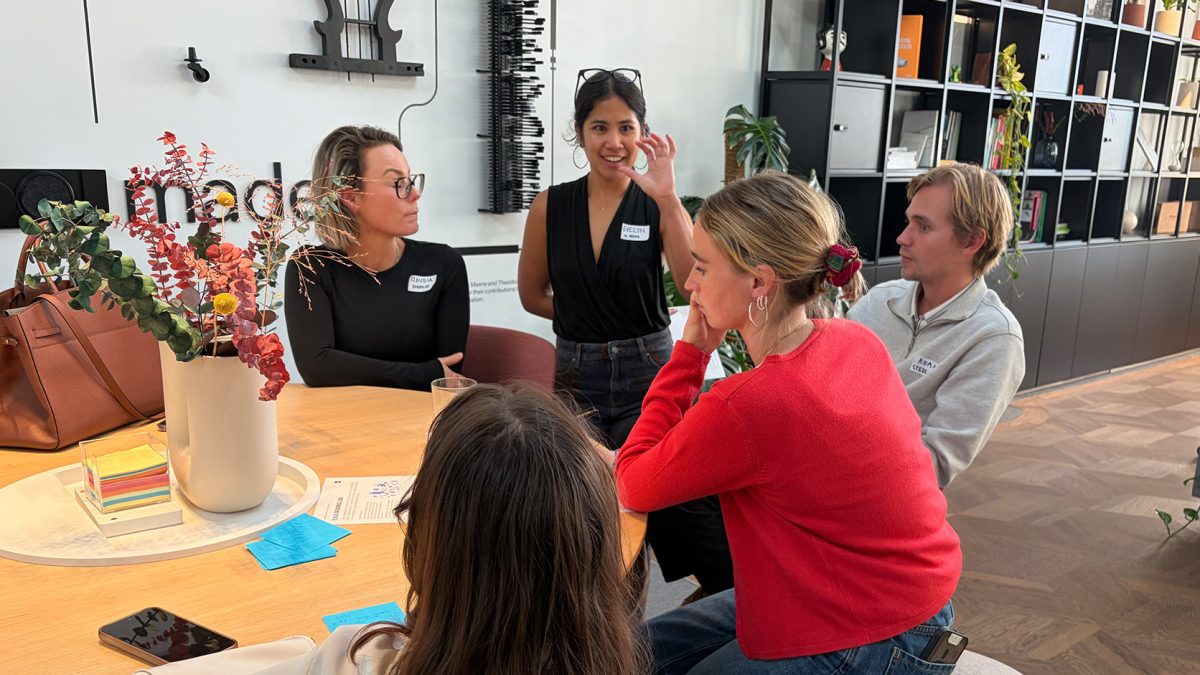
Speed shaped the Red World. Participants imagined teams and ideas changing quickly, alongside an immersive pitch room where clients could experience a proposal.
But a dedicated, expensive installation could quickly become a liability in a business defined by churn. Establishing the experience needed opens up alternatives: adaptable settings and portable technology might deliver it with less fixed investment. Other needs may justify dedicated space, such as unfinished work, confidential equipment or specialist acoustics. Flexibility needs to be selective.
Adaptability depends on people understanding what they can change and feeling confident to do it. Everyday adjustments need to be intuitive, with facilities support for larger adaptations. The brief therefore needs to consider behaviour, autonomy and operations alongside the physical design.
Our design for LinkedIn’s Workplace Design Laboratory in Silicon Valley shows how infrastructure can support wider experimentation. Removable panels, modular rooms and an overhead power and data grid accommodate testing, with user feedback informing decisions before wider implementation.
An adaptable workplace needs both an easy way to make a change and a clear understanding of who can make it.
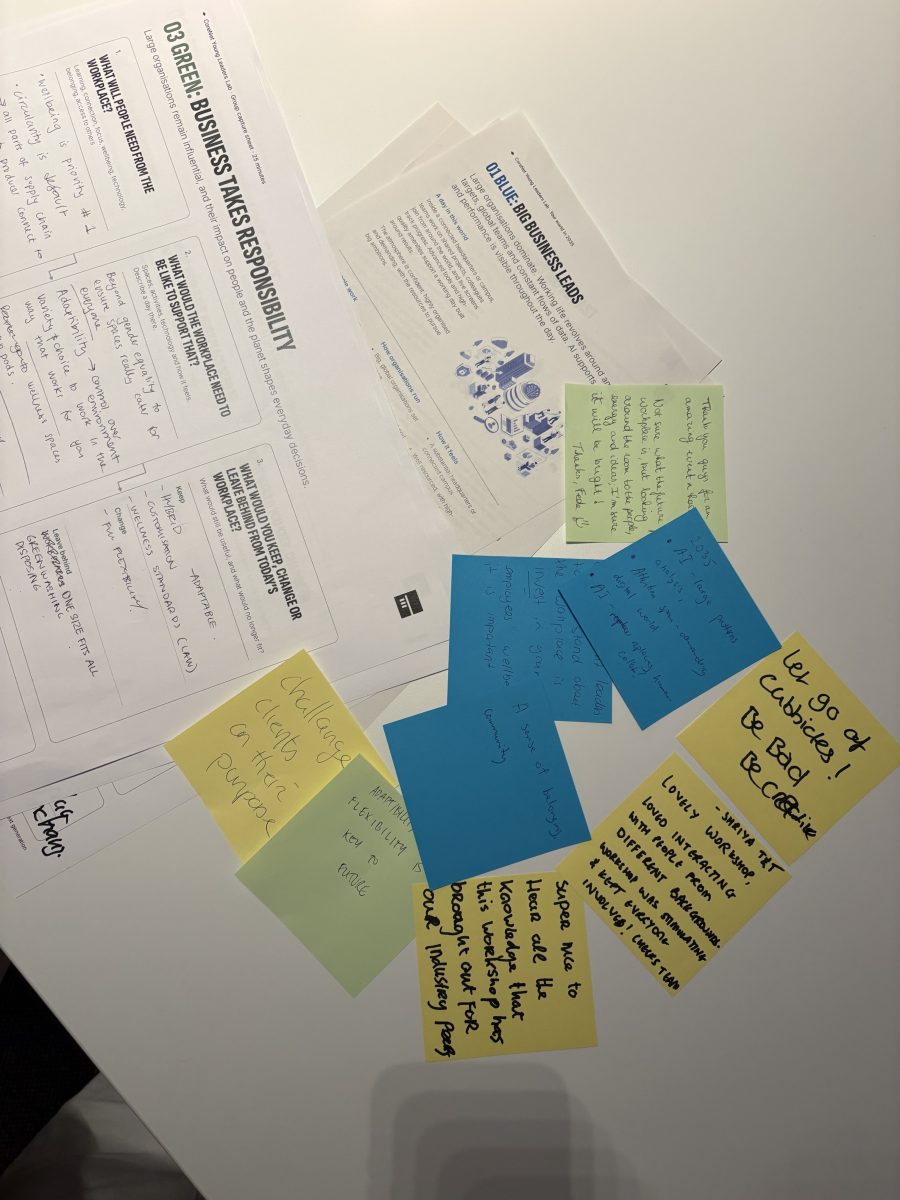
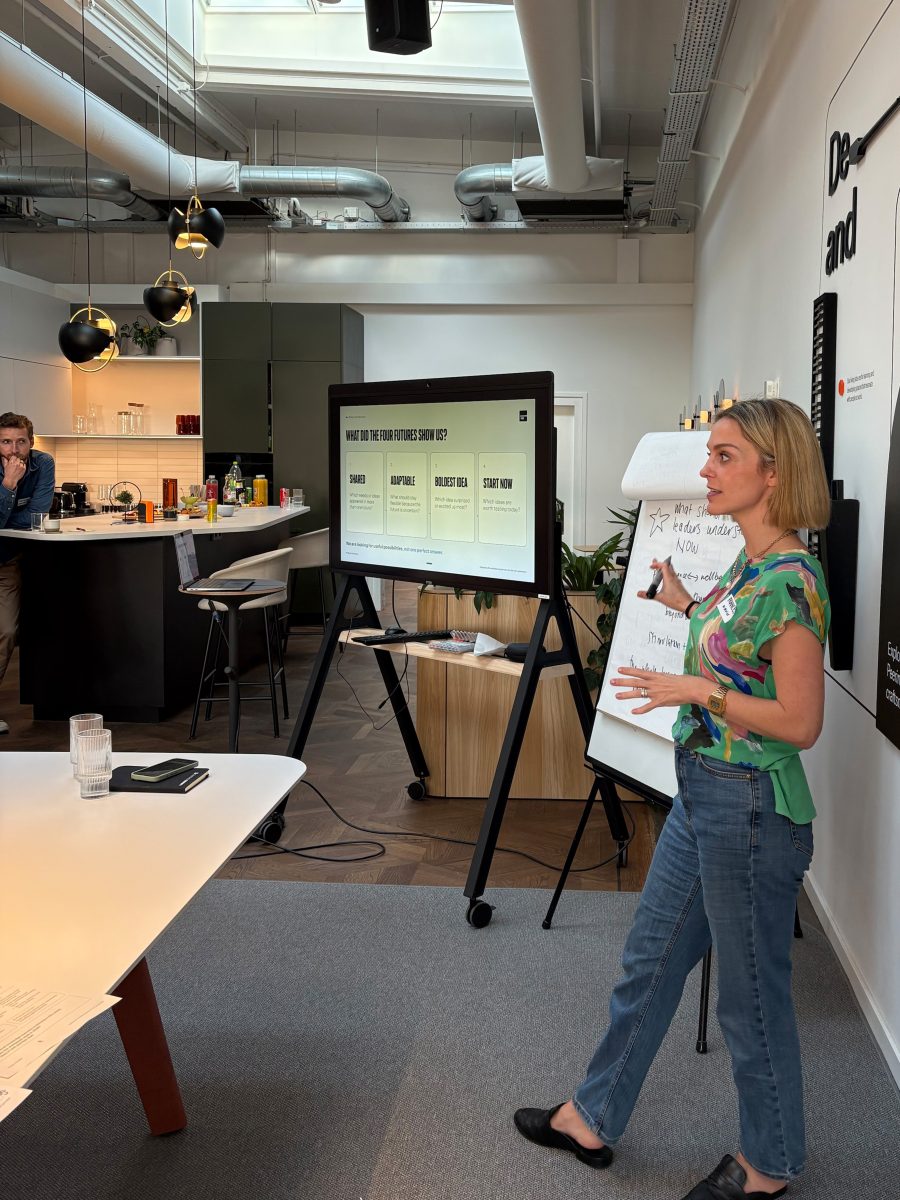
We know that there is so much uncertainty and change, yet some of the fundamentals of the human experience remain the same across all the worlds. People spoke of connection, meaning, productivity, and fulfilment in work.
Frances Gain - Associate Director, Workplace Strategy & TransformationI want client conversations to leave room for ideas whose practical form is not yet clear. They can reveal priorities that a familiar list of rooms easily miss. Constraints then give us something specific to work with and a reason to find another way.
At M Moser, workplace strategists explore those priorities with leaders and employees, then develop them with designers and specialists in sustainability, engineering and delivery. Together, we turn competing possibilities into a brief with clear priorities, workable options and decisions about investment. We do this ourselves: our Living Labs extend that approach into our own workplaces, where our teams test settings and technologies and learn from their use.
We help clients pursue ambitious ideas without committing to their first imagined form. Bringing the right expertise into the conversation early lets us preserve what matters and design workplaces that clients can afford, operate and keep adapting.
With thanks to CoreNet and the group of Young Leaders who joined us.
Associate Director, Workplace Strategy and Transformation
