



Do the same principles that help AI startups innovate faster help workplaces perform better?
Artificial intelligence is transforming how organisations build products, make decisions and scale. Yet while enormous attention is focused on algorithms, data models and computing power, far less attention is given to the environments where innovation actually happens.
The reality is that breakthrough ideas are rarely created in isolation. They emerge through collaboration, experimentation, focus and rapid iteration. The workplace plays a larger role in that process than many realise.
For AI startups moving from seed funding to Series C growth, the challenge is creating an environment that can evolve alongside the business, support increasingly complex teams and accelerate the speed at which ideas become reality.
Interestingly, the most successful AI startups and the most effective workplace strategies operate according to the same principles. Both are built as systems that learn, adapt and improve over time. Those principals are remarkably consistent:
This article explores what each of these principals looks like in practice and why they matter just as much for workplace strategy as they do for AI companies.
One of the defining characteristics of successful AI companies is that they treat innovation as an ongoing learning cycle rather than a finished outcome. Models are deployed, tested, refined and improved. Feedback becomes fuel for the next iteration.
The best workplaces follow the same logic. Rather than being designed once and left unchanged for the next decade, they become living systems that continuously evolve based on how people work, collaborate and perform.
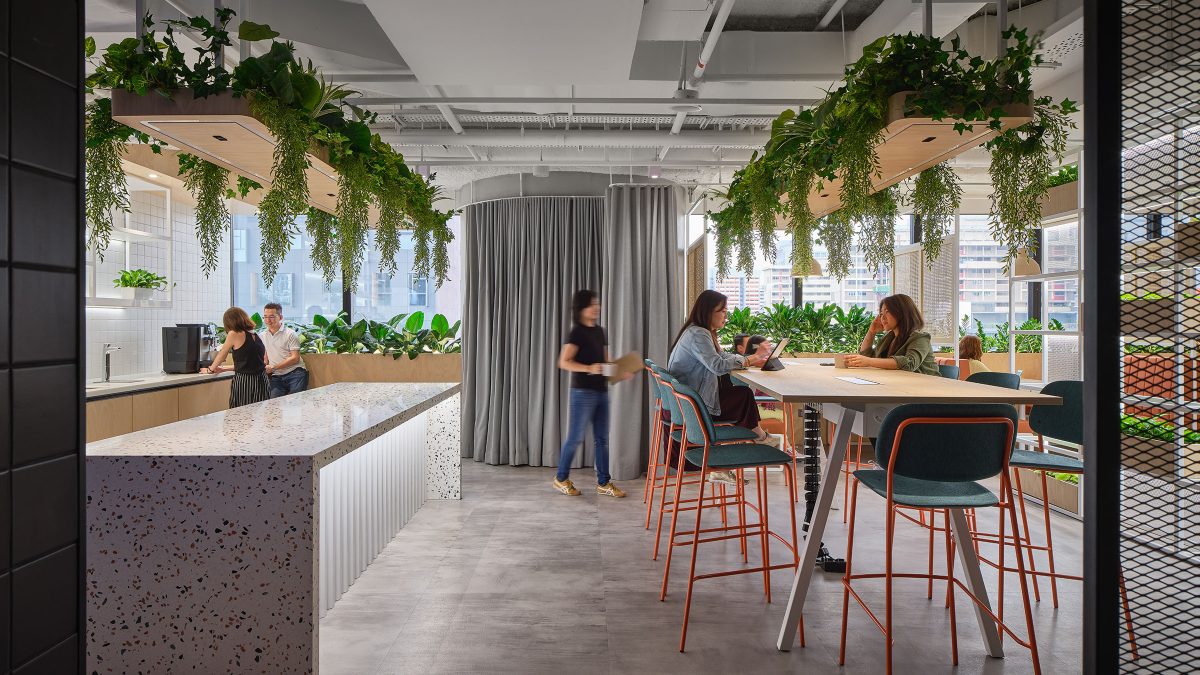
At M Moser, our own workplaces function as living labs where new ideas, technologies and strategies are tested, measured and refined. Real-world performance informs future improvements, creating a continuous feedback loop between workplace experience and business outcomes.
What is a living lab?
At M Moser, our workplaces function as living labs, office environments designed to continuously gather insights about how people use space, collaborate and perform. We use these insights to improve workplace effectiveness over time rather than relying on one-time design decisions.
Traditional workplace projects often follow a fragmented design and delivery process. Strategy is separated from design. Design is separated from engineering. Engineering is separated from construction. Every handoff introduces delay, risk and the potential for misalignment. For fast-growing technology companies, that friction becomes expensive.
AI startups rarely operate this way. Engineers, product managers, designers and data scientists work together from day one because speed depends on removing barriers between disciplines.
The same thinking applies to workplace design and delivery. Our integrated teams bring strategy, architecture, interior design, engineering and construction together, reducing delays, improving decision-making and allowing organisations to move at the speed their businesses require. As organisations scale, this ability to move quickly becomes a competitive advantage.
Why is integrated workplace design and delivery important for technology companies?
Integrated workplace design and delivery reduces delays between planning, design and construction. By aligning all disciplines under a single team, M Moser helps tech companies accelerate project timelines, improve decision-making and reduce risk during periods of rapid growth.
Most venture-backed AI startups do not spend years perfecting a product before releasing it. They typically:
The workplace benefits from exactly the same mindset.
Instead of waiting until design is complete to validate decisions, we help organisations prototype concepts through test fits, digital twins, mock-ups and pilot environments. This approach allows teams to identify issues earlier, build confidence faster and make smarter decisions before significant investments are committed.
For organisations navigating uncertainty, experimentation and trial is often more productive than attempting to predict every future need.
What is workplace prototyping?
Workplace prototyping uses test fits, mock-ups, pilot spaces and digital twins to evaluate workplace concepts before full implementation. It helps organisations reduce risk, validate assumptions and improve workplace performance.
AI companies optimise using data. Increasingly, workplaces do too.
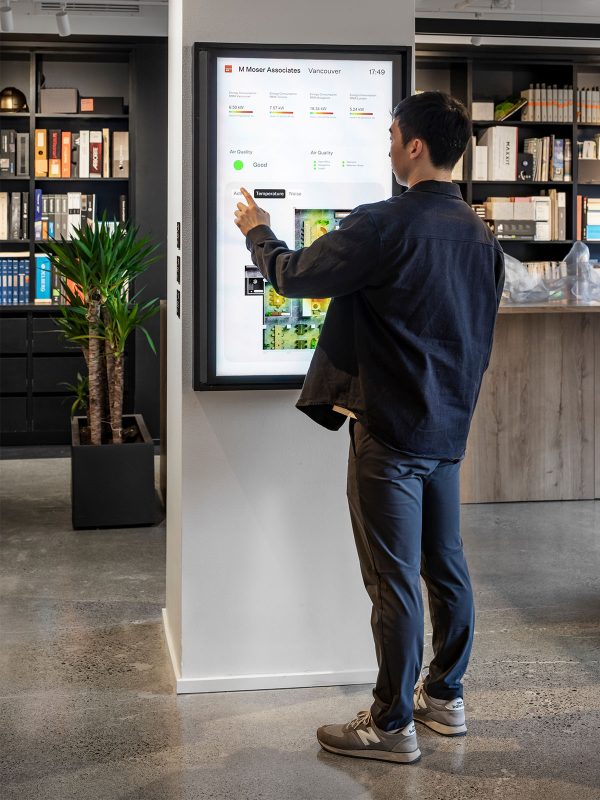
Utilisation analytics, environmental monitoring, occupancy trends and employee feedback are helping organisations understand how space contributes to business performance.
The conversation is shifting to ‘how effectively is our space supporting our people and business’.
Sam Farhang, Director, M Moser AssociatesThe most successful workplace decisions combine quantitative data with human insight to create environments that support productivity, innovation, wellbeing and culture.
How can workplace data improve business performance?
Workplace data helps organisations understand how employees use space, where collaboration occurs, how occupancy patterns change and which workplace features contribute to productivity, engagement and business performance.
Perhaps the biggest lesson AI startups teach is that evolution is continuous and today’s solutions rarely work forever. For example, the workplace requirements of a ten-person startup bear little resemblance to those of a company preparing for an IPO. Growth isn’t linear, and workplace strategy shouldn’t be either.
Seed stage
Small teams need flexibility, affordability and speed. Coworking spaces, shared environments and highly adaptable layouts often make the most sense.
Series A
As headcount grows, the workplace begins to communicate identity. Culture, recruiting and hybrid work become important considerations.
Series B
Collaboration, mentorship and operational structure become increasingly important. Workplace design starts supporting team performance at scale.
Series C and beyond
Larger organisations require highly sophisticated environments capable of supporting governance, multiple business functions and long-term portfolio planning.
The challenge is creating a workplace strategy capable of evolving alongside future growth.
When should a startup invest in workplace strategy and design?
Most startups benefit from workplace strategy before major growth milestones such as Series A, Series B or significant hiring expansions. Early planning helps organisations avoid costly relocations and create environments that scale with the business.
The organisations leading the next generation of innovation are building systems designed to learn and adapt. The workplace should be no different.
An adaptable workplace is one that’s designed to evolve alongside the business. Through flexible planning, modular environments and resilient infrastructure, it can respond to changing teams, technologies and business priorities without requiring major capital investment or disruptive renovations.
Just as AI companies rapidly prototype, test and refine their products, we are helping leading organisations apply the same thinking to the workplace. Test fits, mock-ups and pilot environments enable teams to validate ideas, learn earlier and make smarter decisions before significant investments are committed.
Static systems have expired. Adaptation creates the real advantage.
Nabil Sabet, Group Director, M Moser AssociatesAs the world’s AI economy continues to accelerate, companies will increasingly need environments capable of supporting experimentation, collaboration, deep focus and continuous evolution.
Now the question is, is your workplace able to evolve as quickly as the business it supports?
Discover how leading technology companies create workplaces that learn, adapt and evolve alongside the business. Explore our Tech workplace playbook for practical strategies to build environments designed for continuous change.