

A conversation with our New York leadership for International Women’s Day
Leadership in our industry is often measured by output, visibility, decisiveness, speed and resilience under pressure. But rarely do we pause to ask what sustains the people carrying that responsibility.
This International Women’s Day, under the theme Give to Gain, we wanted to ask what giving really means in leadership. What do women leaders consciously choose to give: energy, trust, vulnerability, clarity and what do they gain in return? And perhaps more importantly, what must be redesigned in our systems of leadership so that success does not come at the expense of wholeness?
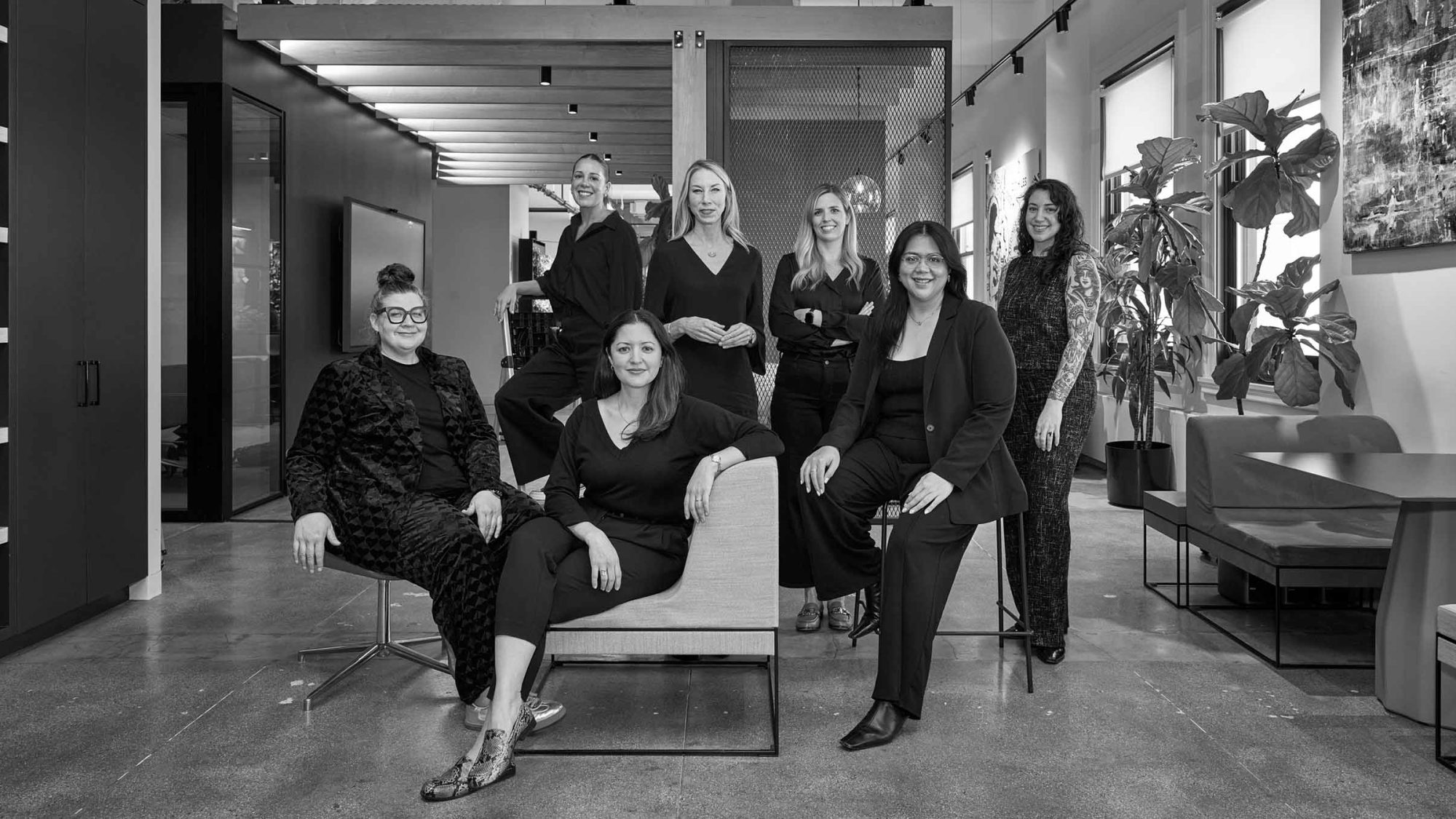
For this conversation, we brought together five of our female senior leaders:
Raquel Sachser, Director
Tesia Walsky, Associate Director – Design
Abbey Melsheimer, Associate Director – Brand Experience
Kate Balfour, Associate Director – Design
Lydia Husni, Senior Associate – Integrated Design Delivery
Together, they lead across design, delivery and brand experience, shaping projects across New York’s fast-moving workplace landscape, as well as the systems and standards that define how we show up for clients and for each other.
When women are supported to lead as whole humans, everyone gains, teams, businesses and the spaces we design.
Raquel Sachser, DirectorQ: When you think about the phrase ‘Give to Gain,’ what does it mean to you as a leader, not in theory, but in practice?
A: It means intentionally investing my time, attention and expertise in others so the whole team grows together. Earlier in my career, I was more protective of what I knew. I thought holding onto knowledge was how you advanced, and for a time, it worked. But real leadership requires a different mindset. Now, I share openly, coach intentionally and create space for others to step forward. What I’ve gained in return is trust, stronger teams and shared success, which is far more powerful than individual recognition. Kate Balfour
Q: Many leadership models still reward visibility and constant output. What’s one outdated expectation of leadership you’ve had to unlearn?
A: One outdated expectation I’ve had to unlearn is that effective leadership requires constant visibility and perpetual busyness. For a long time, being overwhelmed, always ‘underwater’ and rarely taking time off, was seen as proof of dedication. But drive shouldn’t come at the expense of wellbeing. I’ve learned that I’m not effective when I’m burned out. To lead well, I need clarity, patience and kindness toward others and toward myself. Rest is essential. I’ve also had to let go of the belief that a leader must always have the answers. My strength is inseparable from my team’s strength. When I create space for their expertise instead of carrying everything myself, we operate more sustainably and far more successfully. Raquel Sachser
Q: How has your understanding of who you are, as a person, shaped how you lead teams today?
A: Two things have shaped how I lead. My values and the boundaries I’ve set around them. Early on, I realized that if I didn’t define what growth meant for me, as a person, not just as a professional. I would spend my career reacting to other people’s expectations. So I became intentional about asking: How does this help me grow? What will this allow me to give back later? That lens guides most of the decisions I make. Understanding those limits has helped me stop trying to please everyone or do everything. It’s made my choices more deliberate, protected me from burnout and allowed me to focus my energy where it has real impact. When I’m clear and grounded in that way, I can lead my teams with far more intention and sustainability. Tesia Walsky
Q: Burnout is often treated as an individual issue. From your perspective, where do systems, not people, fail leaders most?
A: Isolation. Burnout often happens when work is structured like a solo sport, when someone is ‘owning’ a project but effectively operating alone, moving through deliverables like a checklist without real collaboration. In our industry, the pressure is real, with tight schedules, high visibility and major stakeholders. But I’ve seen that when work is truly team-based, even the most demanding projects feel different. There’s camaraderie. Shared ownership. A sense that you’re in it together. That collective momentum reduces anxiety and makes the pressure more sustainable. Of course, personal habits matter (sleep, health, boundaries). But structurally, burnout decreases when leaders aren’t isolated decision-makers carrying everything themselves. When it feels like a team sport, resilience increases across the board. Lydia Husni
Q: What’s one boundary you’ve designed into your leadership practice that protects your energy and your effectiveness?
A: I’ve designed resisting the urge to jump in and solve everything myself. In design, we’re trained to generate ideas, fix problems and prove our value through output. Early in my career, that meant doing more, stepping in faster and carrying as much as I could. But leadership amplifies that instinct. Suddenly, you’re holding not just your own workload, but your team’s as well. I realized my energy has a capacity. If I spend it all ‘doing,’ I leave nothing for guiding. So now my boundary is I coach more than I fix. I offer direction, context, and support then create space for others to solve, grow, and build confidence. That shift protects my energy and strengthens the team for the long term. Abbey Melsheimer
Q: If leadership were a system, like a workplace, what’s one thing you’d redesign over time to make it more sustainable?
A: If leadership were a system, I’d redesign it around clarity, the equivalent of strong signage and wayfinding in a workplace. Everyone should understand their role, their impact and how to navigate decisions without supervision. To me, real success is when my team can operate confidently without me in the room. If I’m the bottleneck, the system isn’t sustainable. Leadership should create direction and trust, so people can find their own way and move forward without waiting for permission. Tesia Walsky
Q: What does ‘being a 100% person’ look like for you right now and how is that different from earlier in your career?
A: It means not compartmentalizing who I am. Earlier in my career, it felt like I had to perform a certain version of myself at work and to lead in ways that were rewarded, even if they didn’t fully align with who I was outside the office. Now, it’s much more integrated. My values, purpose and behavior are consistent across both spaces. I don’t separate them. It also means trusting my instincts. If something doesn’t feel right, even if it looks right on paper, I’m willing to speak up. We all bring different lived experiences to the table, and honoring that perspective is part of showing up fully. Abbey Melsheimer
Q: What’s something you stopped doing, even though you were ‘good’ at it, because it no longer served you or your team?
A: One thing I’ve stepped back from is managing day-to-day project organization, even though it’s something I’m very good at. As I’ve grown in my career, I realized my value is better used at a higher level. I’ve transitioned that skill into organizing project pursuits, aligning cross-functional teams and supporting more complex efforts. I also focus on helping team members build their own organizational skills, so the capability lives beyond just me. Kate Balfour
Q: For women stepping into leadership roles now, what’s one mindset shift that makes everything else easier?
A: Let go of imposter syndrome. Many women quietly believe they arrived in leadership by timing or luck rather than merit. If you’re in the role, you earned it through expertise, judgment, resilience and hard work. Leadership doesn’t necessarily get easier; it changes. Your impact shifts from tangible output to direction-setting, supporting others and shaping long-term outcomes. It’s an infinite game, not a checklist. When you trust that you belong, everything becomes lighter. You don’t need to know everything; you already have what got you here and the ability to learn the rest. Raquel Sachser
Q: How can organizations better support women leaders beyond policies through culture, expectations and trust?
A: Create cultures where women feel genuinely safe to speak, not just expected to perform. Too often, women in leadership feel they must overprove their value to be heard. Support shows up in everyday behaviors like encouraging open dialogue, normalizing questions and making it safe to say, ‘I don’t know.’ When curiosity is rewarded instead of judged, stronger conversations happen. Even something as simple as clarifying jargon or assumptions can shift the tone of a room. When leaders model transparency and create space for learning, women don’t feel pressure to have every answer before they speak. That trust builds confidence and confidence builds better leadership. Lydia Husni
At M Moser, we believe sustainable leadership and accountable design go hand in hand. When teams are clear, supported and empowered, better decisions follow and better workplaces are built.
If you’re planning a workplace transformation in New York or beyond, we’d love to start a conversation. Reach out to our team to learn more.
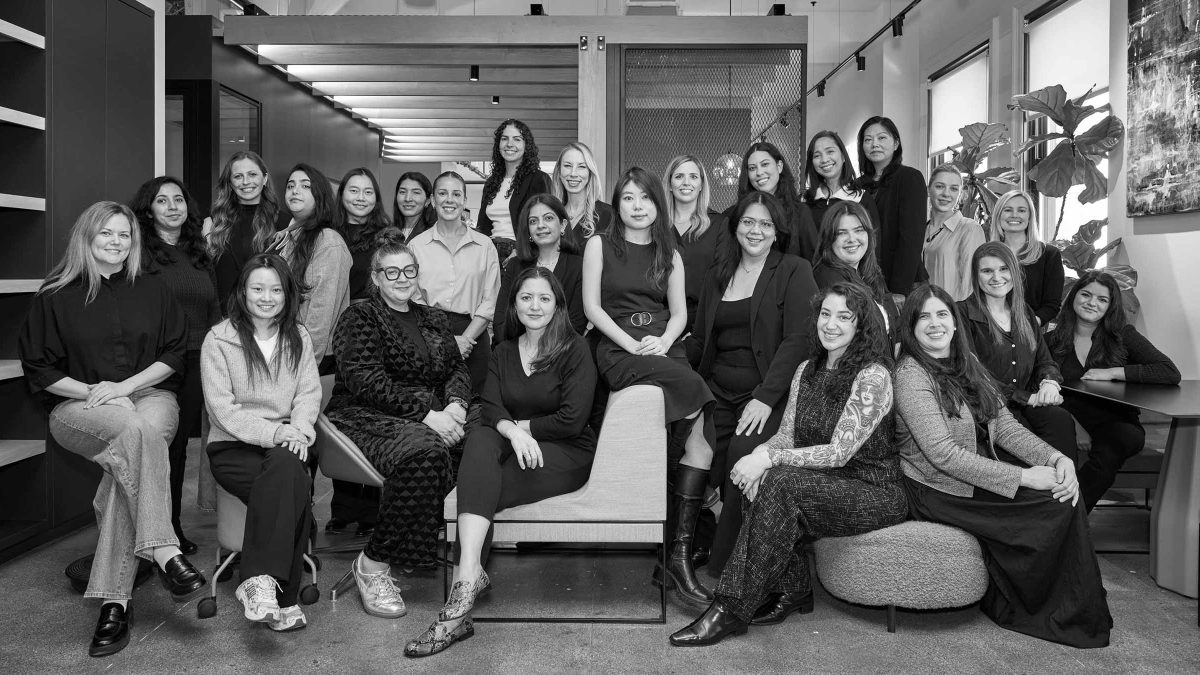 The women of M Moser New York.