

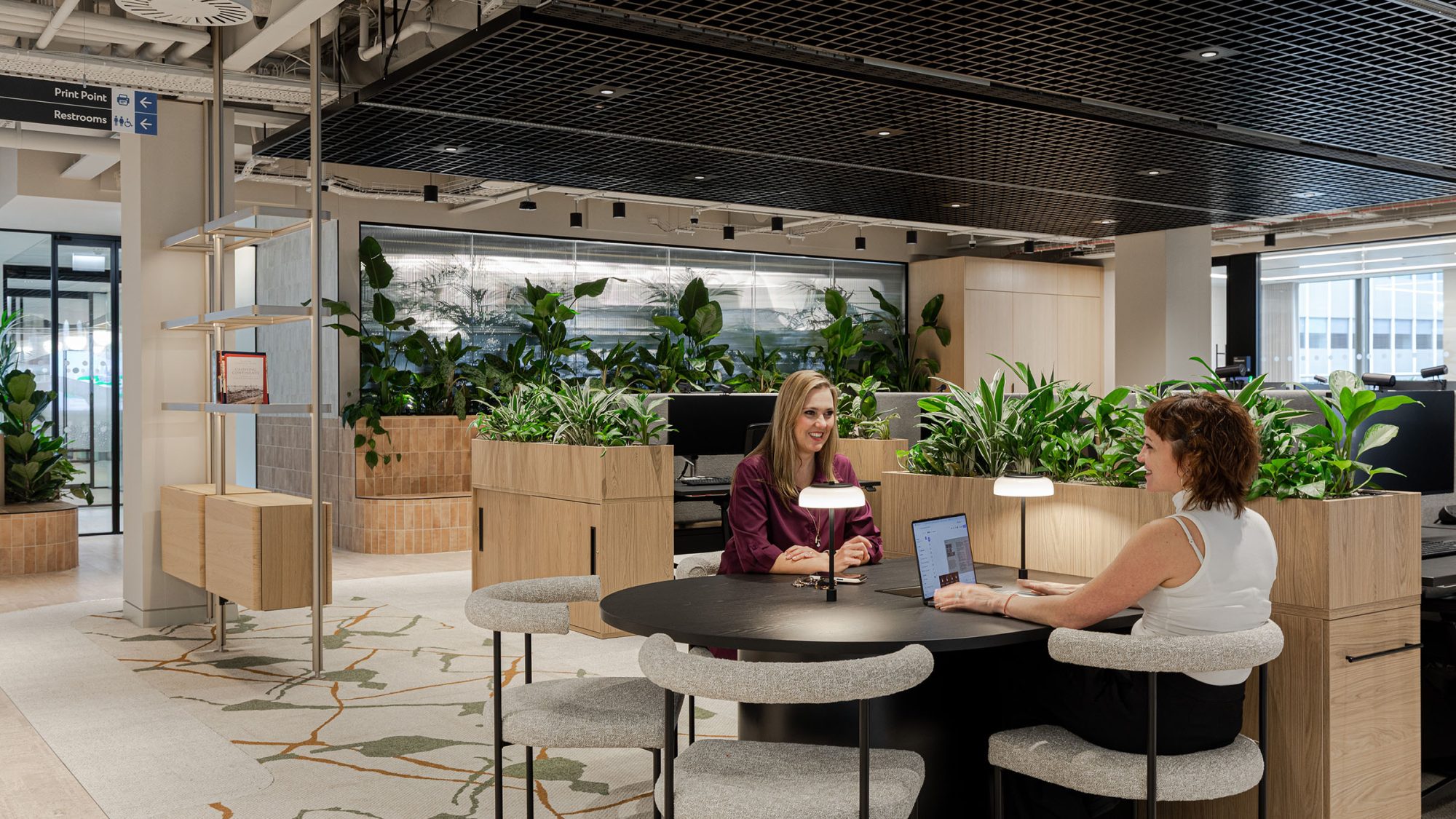
Global bank Standard Chartered reviewed its London headquarters to ensure it provides the optimum working environment to deliver its strategy.
The strategy focuses on providing differentiated cross-border capabilities and leading wealth management expertise to corporate, institutional and affluent clients.
After an initial strategy phase, we were appointed to lead the design and act as Principal Designer on the transformation across eight floors.
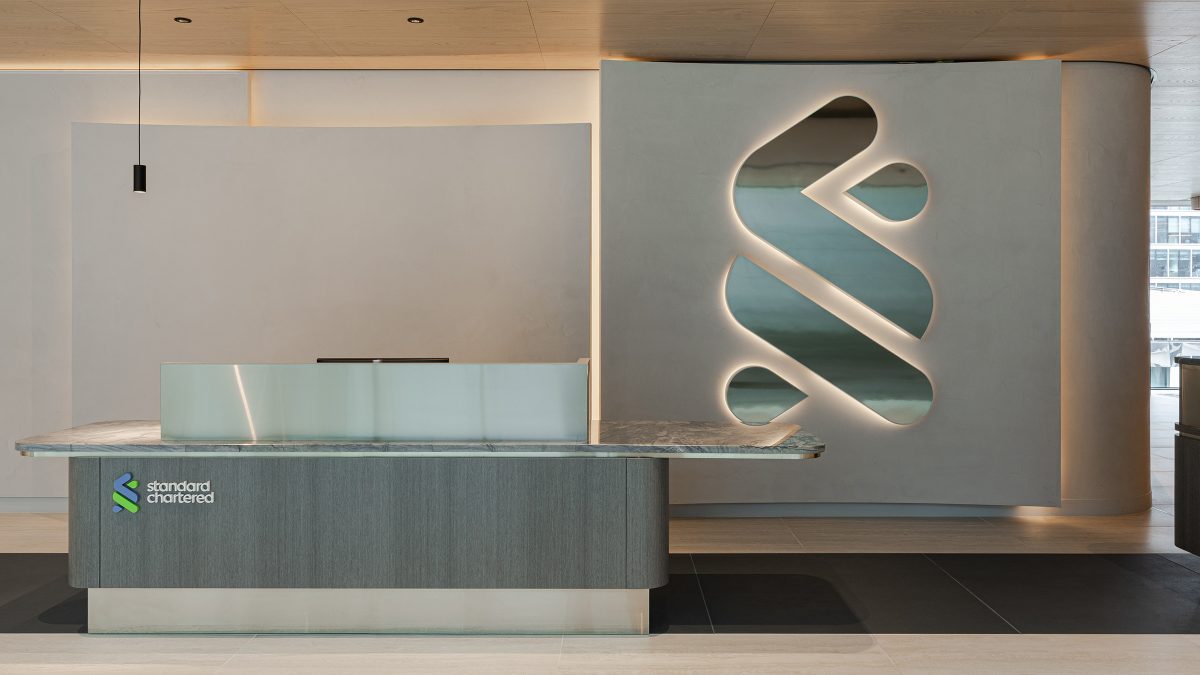
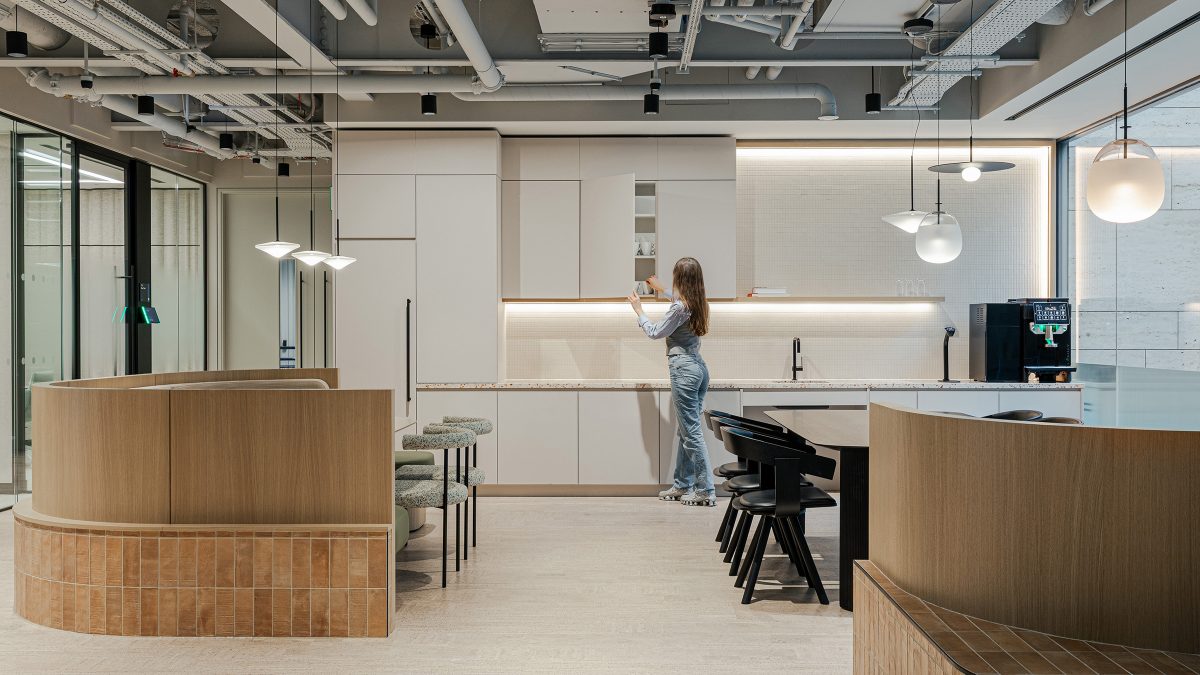
As flexible working became established, collaboration became even more central to how Standard Chartered teams used the space, rendering a legacy desk-based layout increasingly restrictive. Therefore, our brief was to evolve the headquarters to support a broader range of colleague and client interactions.
This meant challenging the typologies set out in the existing guidelines and working with the client’s business units to define work settings aligned to future ways of working and projected headcount.
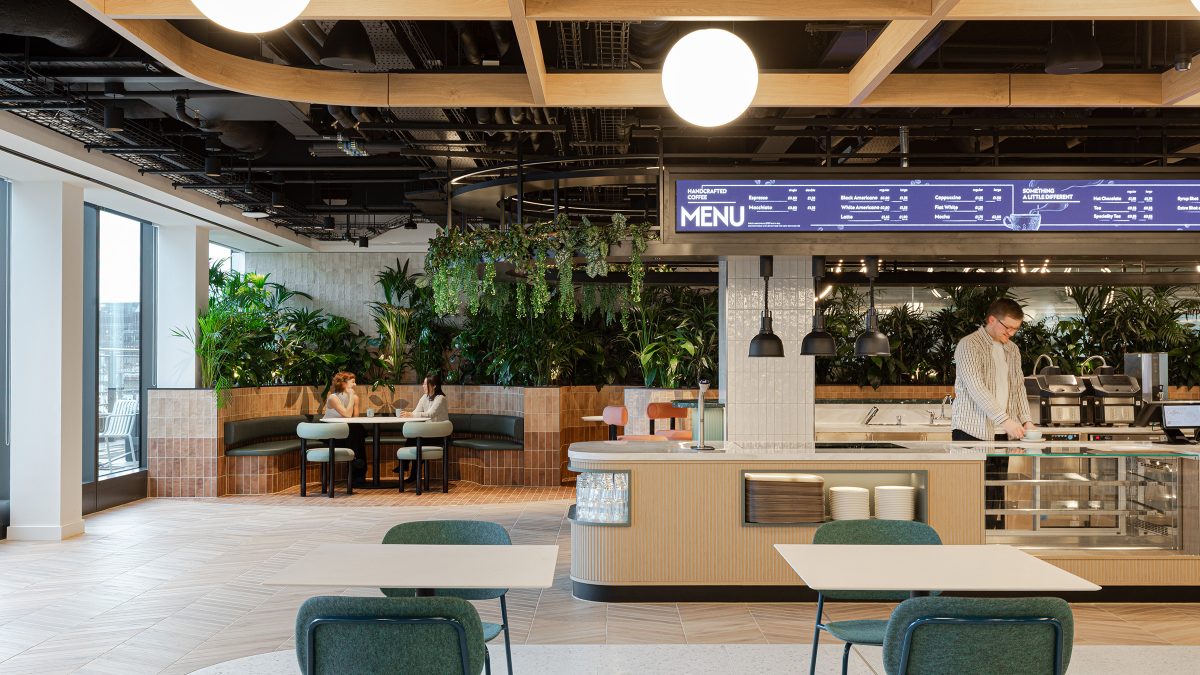
To set a clear direction for change, we worked with the business to define how the building needed to perform. A data-led workplace strategy guided decision-making and built consensus, informed by engagement with more than 50 senior leaders across executive, functional and trading teams.
We explored the impact of change through workstyle analysis, adjacency modelling and scenario testing. This process confirmed that the desk-based model no longer aligned with emerging patterns of use.
The new strategy prioritised shared activity and choice. It rebalances the workplace from 70% task-based settings to 40% collaborative and social environments.
This made it possible to optimise the headquarters square footage without disrupting day-to-day operations.
As the project progressed, sustained leadership became critical. We provided single-point accountability across an eight-floor programme delivered in phases over three years.
We integrated specialist disciplines through a clear governance structure. Our team acted as the central interface between the client, project managers, contractors and landlord team. This continuity supported informed decision-making and helped the client manage risk.
To update the as-built information, the team carried out detailed laser surveys of the existing structure. This enabled full coordination of building services, reducing the risk of rework and programme delays. On completion, the client received a comprehensive as-built digital model to support ongoing maintenance and streamline future works.
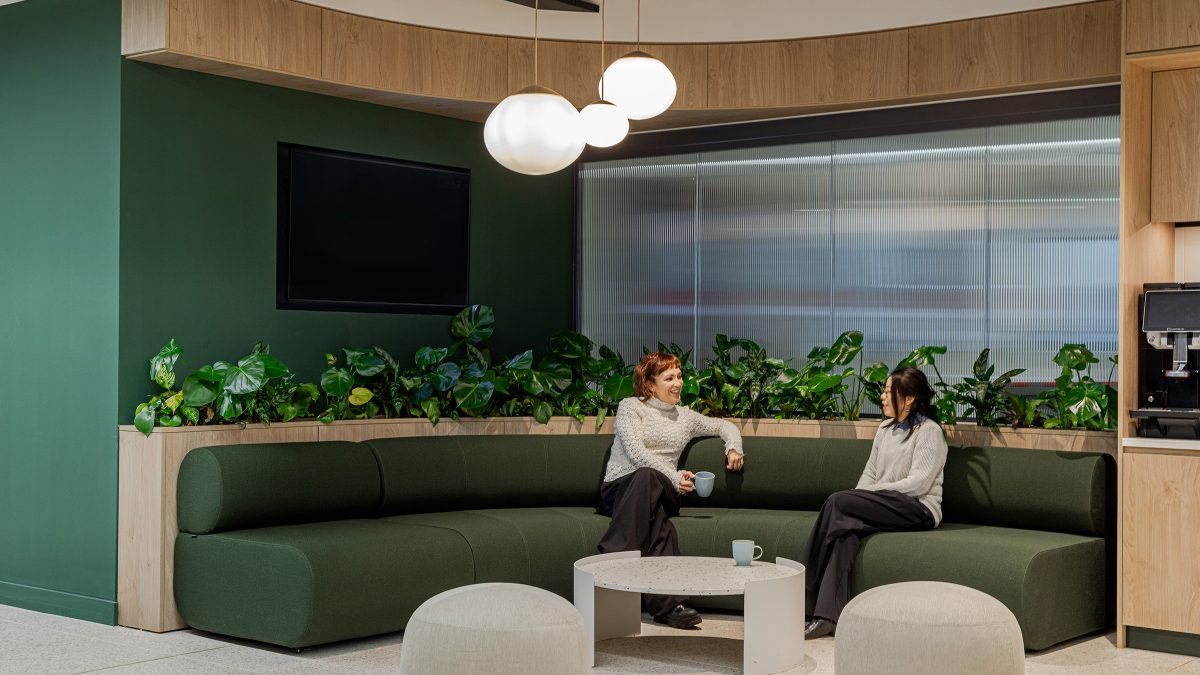
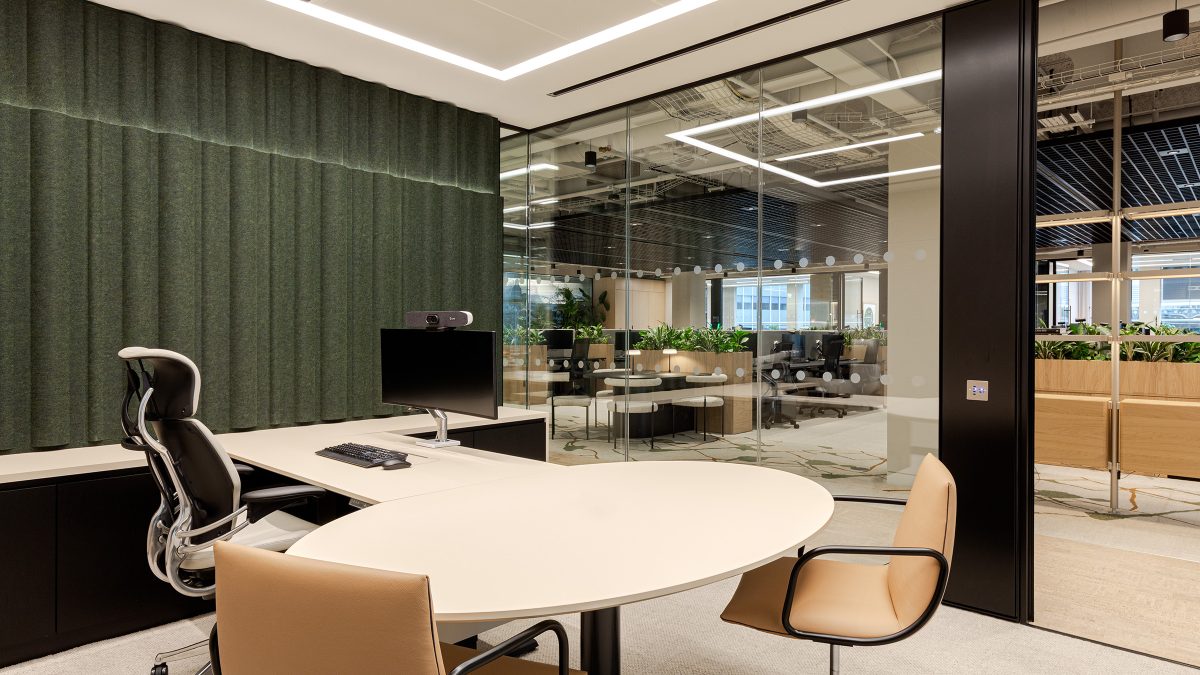
Throughout the programme, approximately 1,200 staff, including live trading teams, continued to work on site. We shaped construction sequencing through close collaboration with the client, project managers and contractors, using design input to guide decisions around floor coupling, acoustic separation and adjacencies.
This approach enabled works to progress above, below and alongside occupied floors with reduced operational impact.
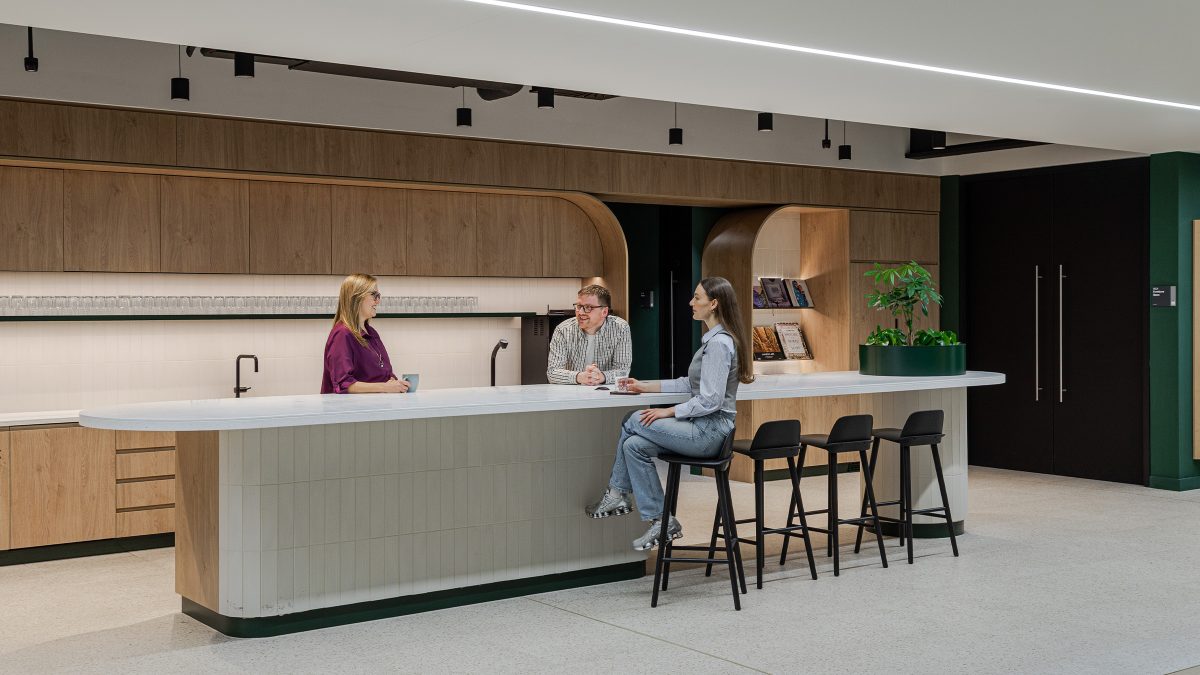
We led coordination between tenant and landlord teams while the landlord conducted works in parallel, managing approvals and resolving overlaps to ensure shared spaces came together seamlessly.
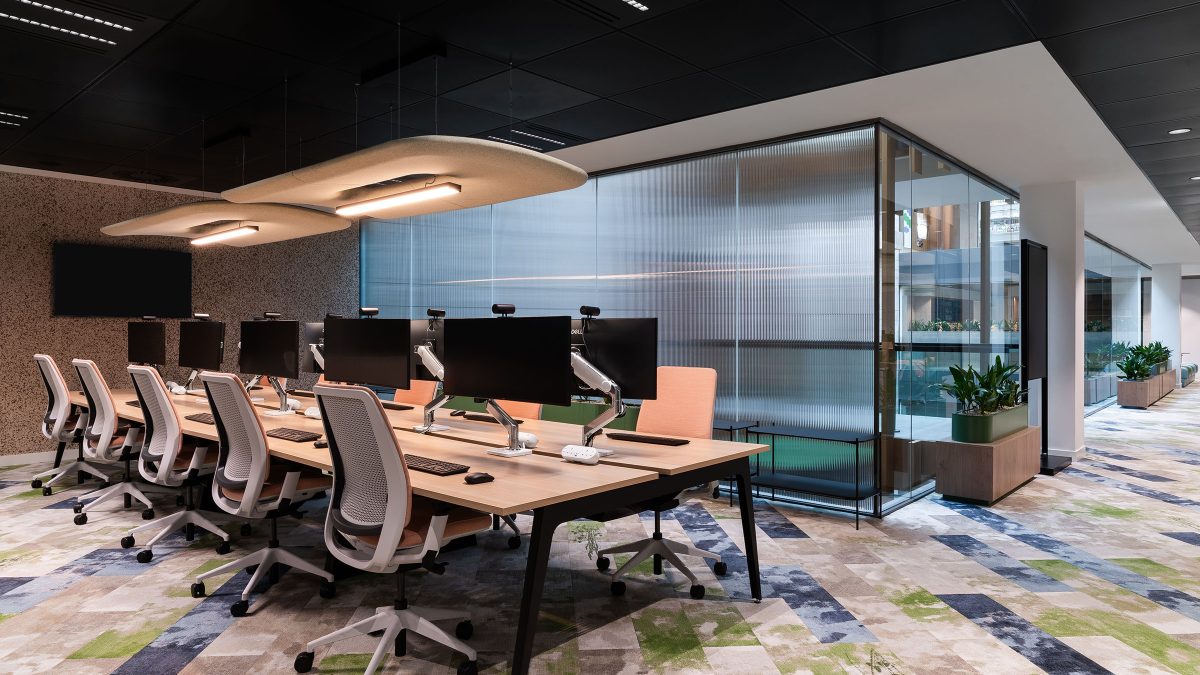
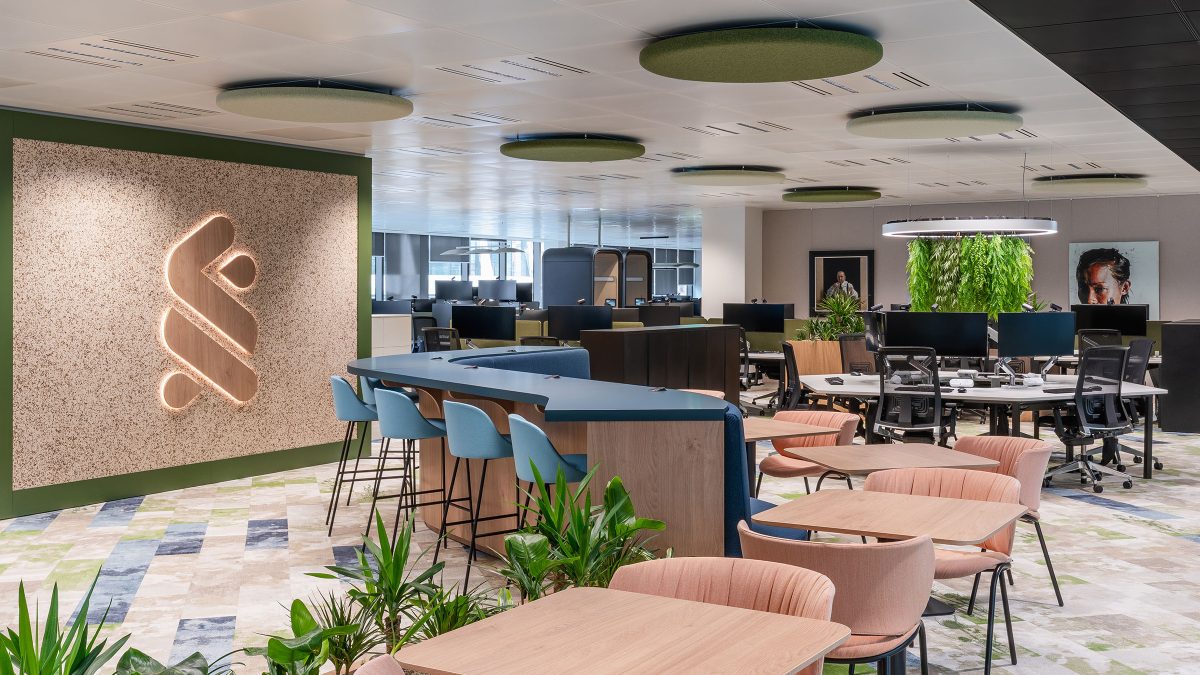
From the outset, we established a single project-wide design framework to maintain coherence. Consistent standards for spatial planning, materiality and detailing ensured continuity across all eight floors.
We applied a set of repeatable elements, including joinery typologies, spatial proportions and shared amenity layouts, across different functions. This approach supported the phased delivery without compromising design quality.
Regular site inspections, mock-ups and targeted reviews with specialist consultants and subcontractors safeguarded design integrity over time.
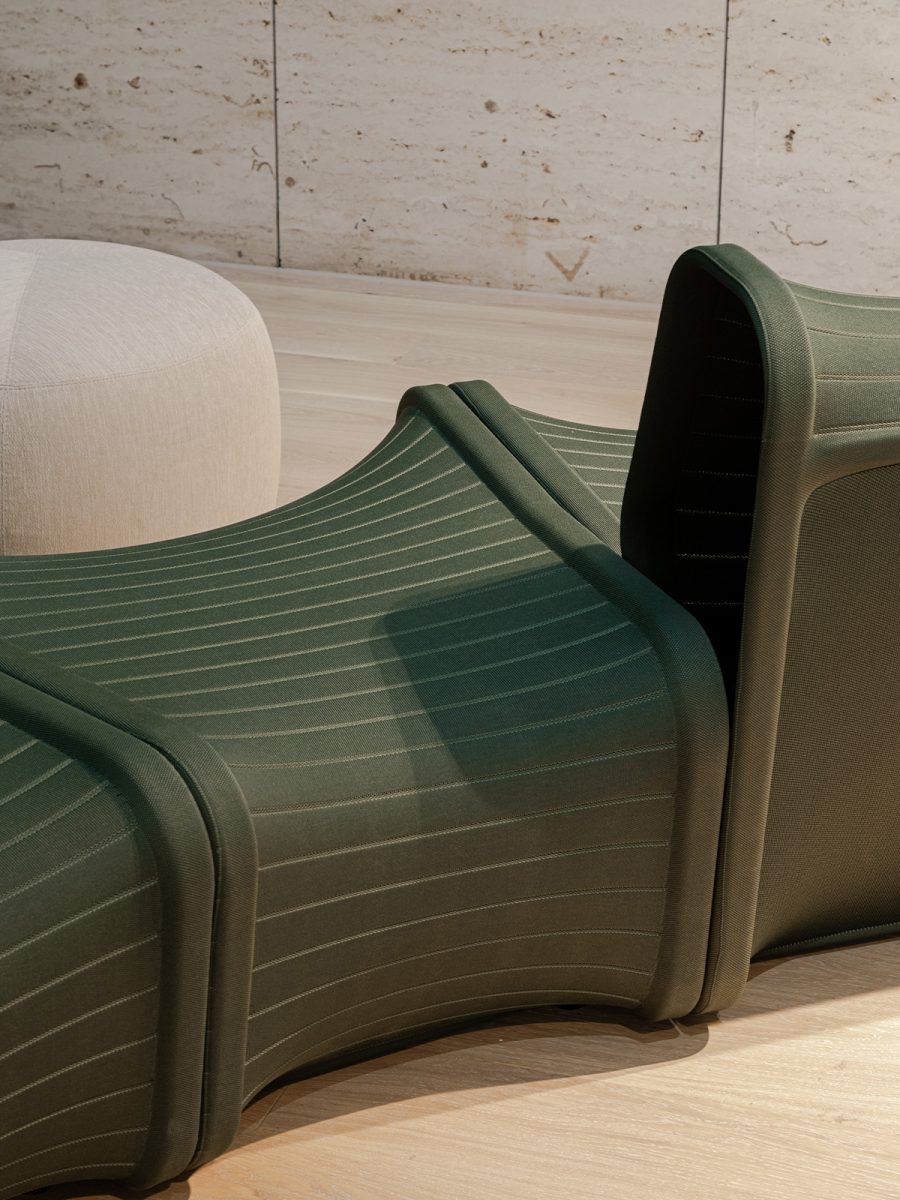
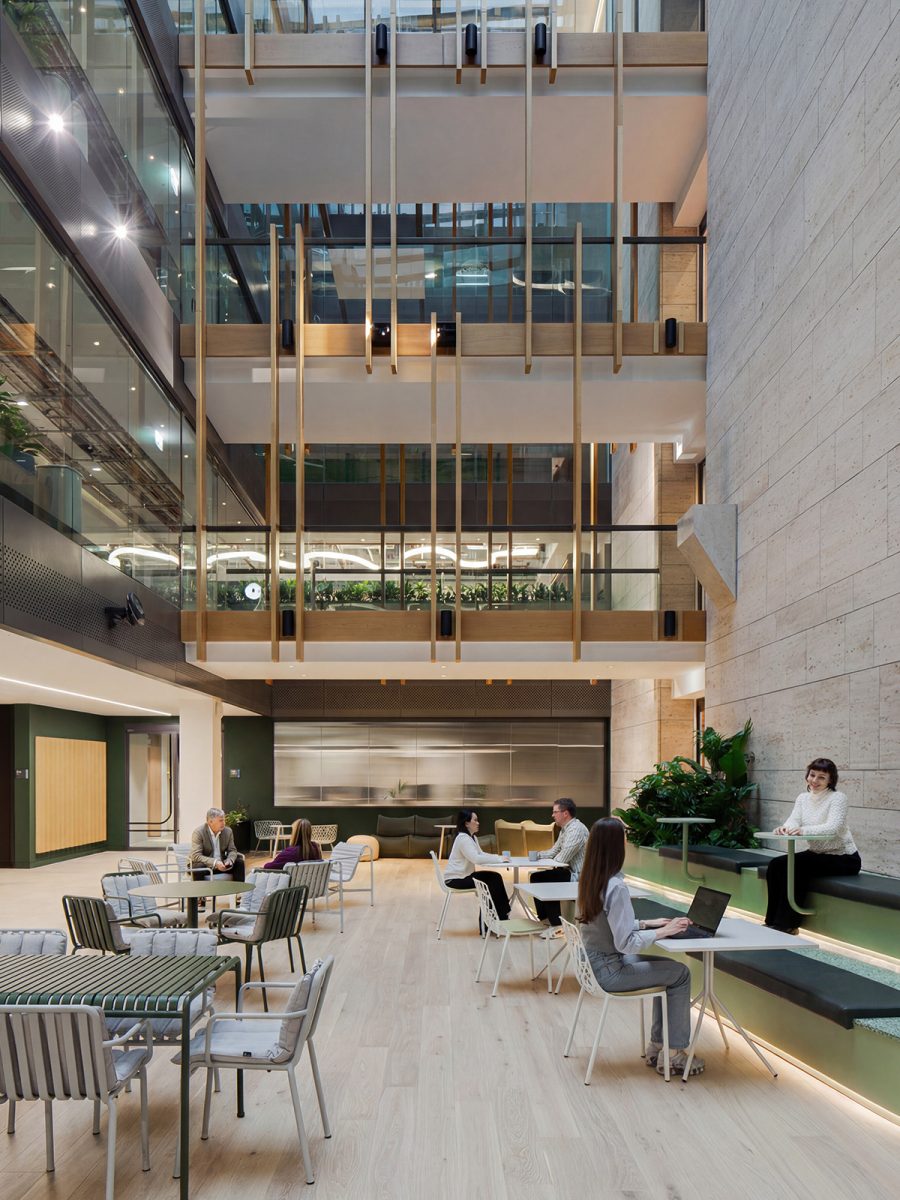
Working within an existing headquarters required careful decisions about what to retain, rework or replace. This approach focused investment where it delivered the greatest impact.
Where furniture was no longer suitable, we advised on reuse strategies and supported audits alongside the client’s sustainability and waste management teams. As a result, teams redistributed surplus furniture, reducing waste and avoiding significant embodied carbon impacts.
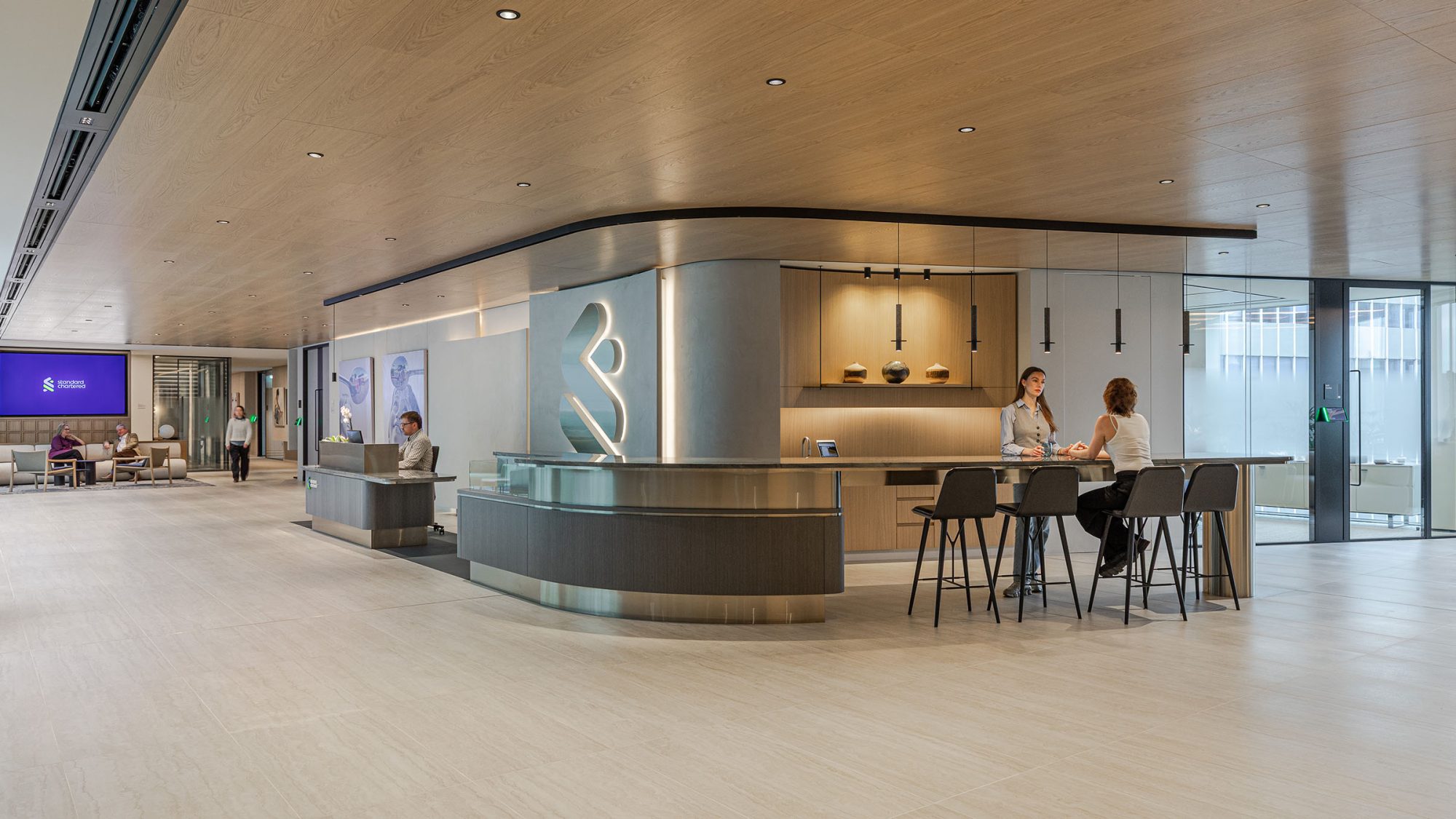
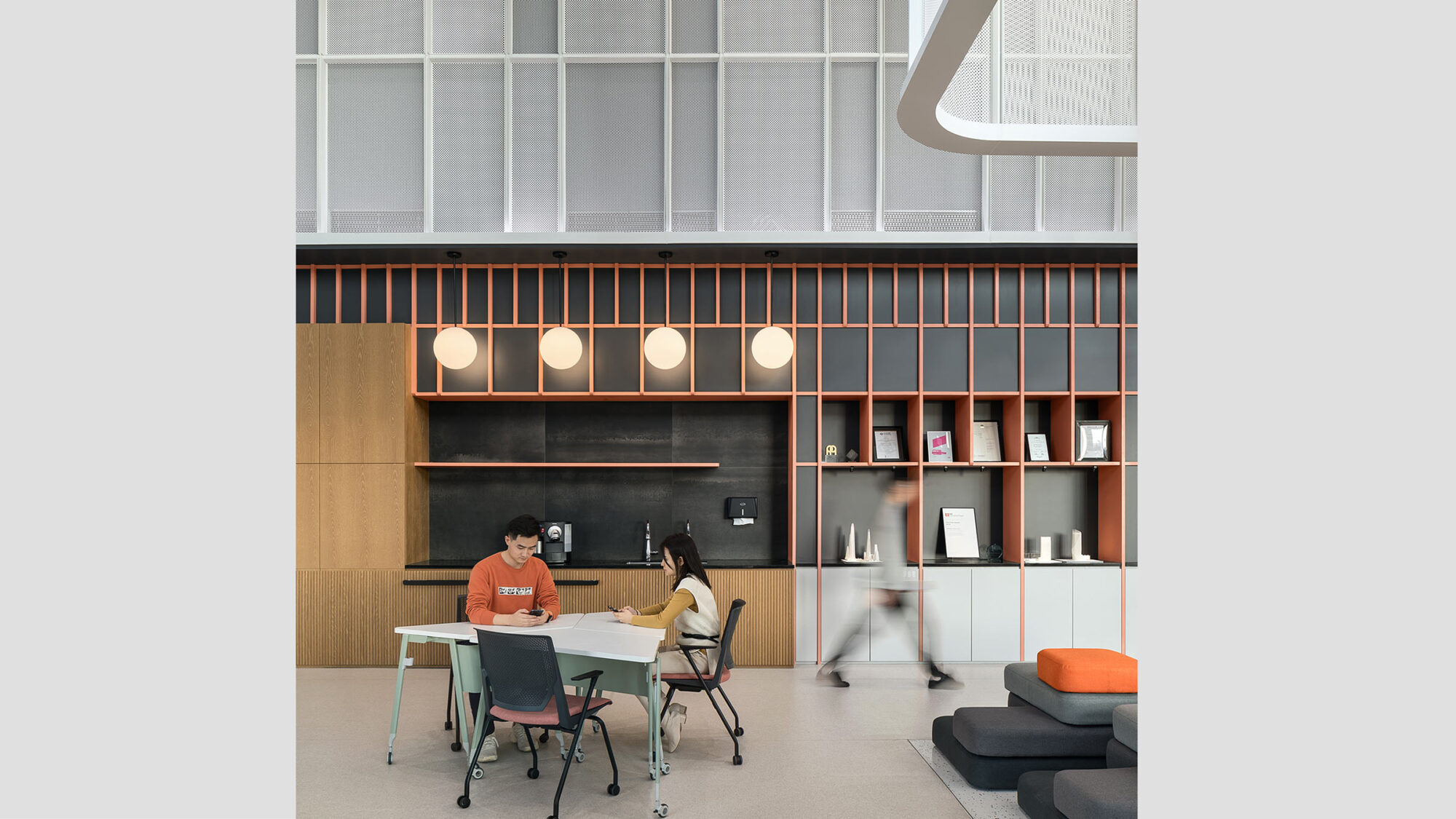
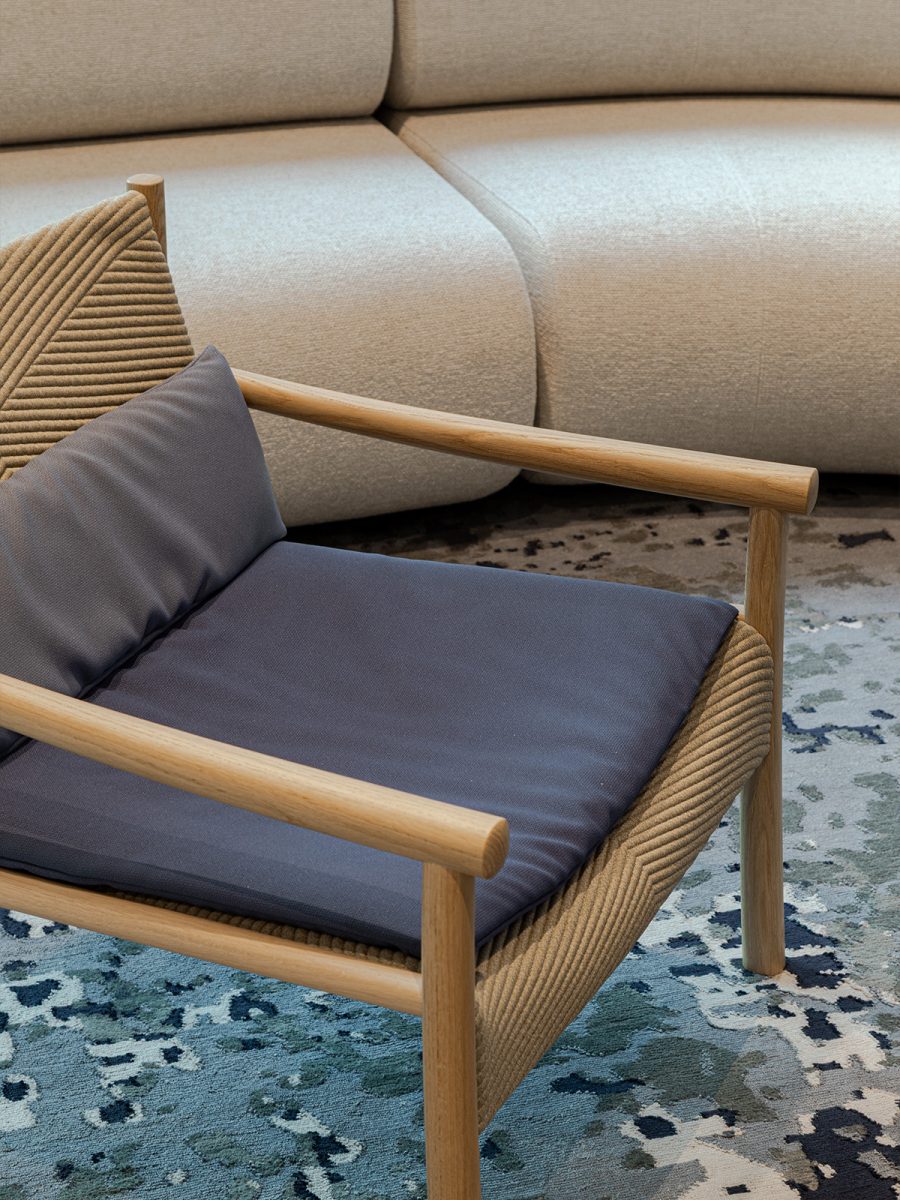
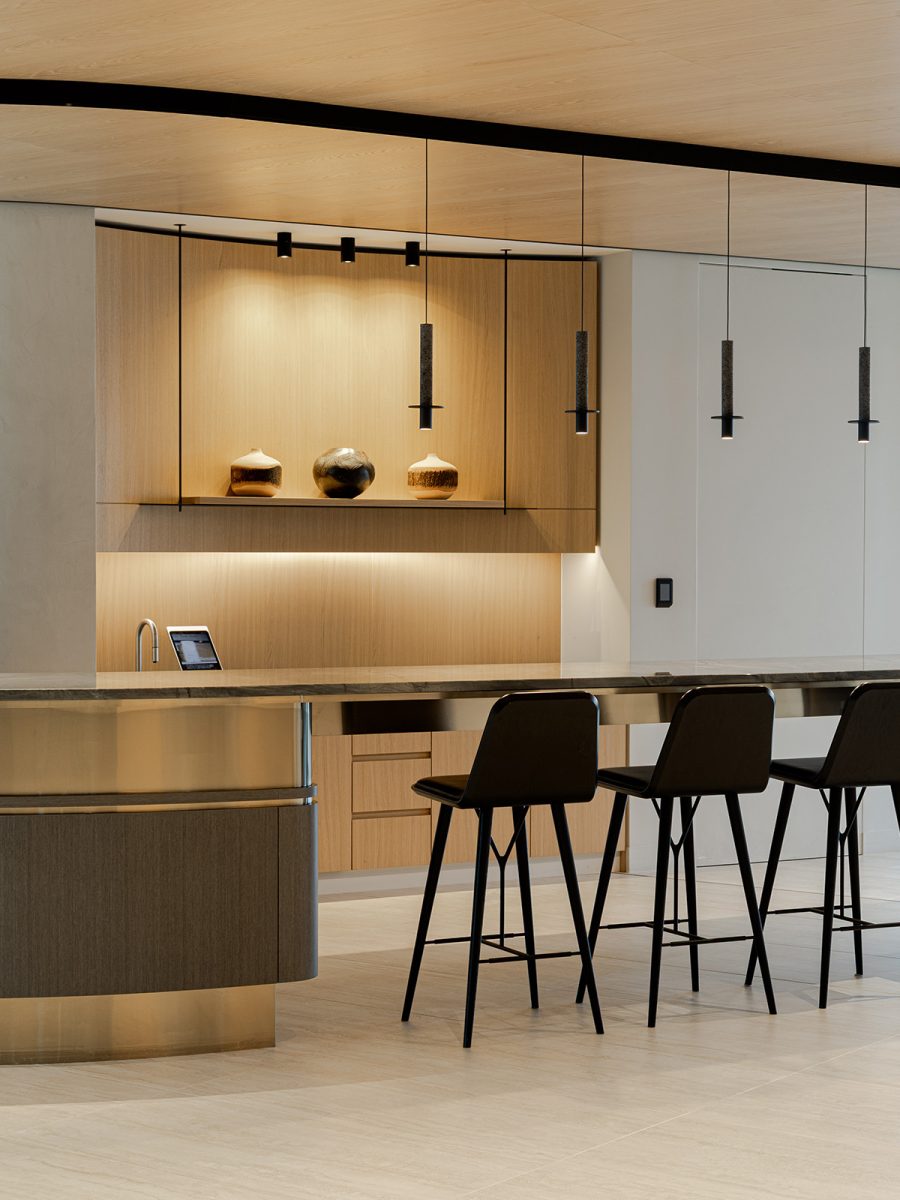
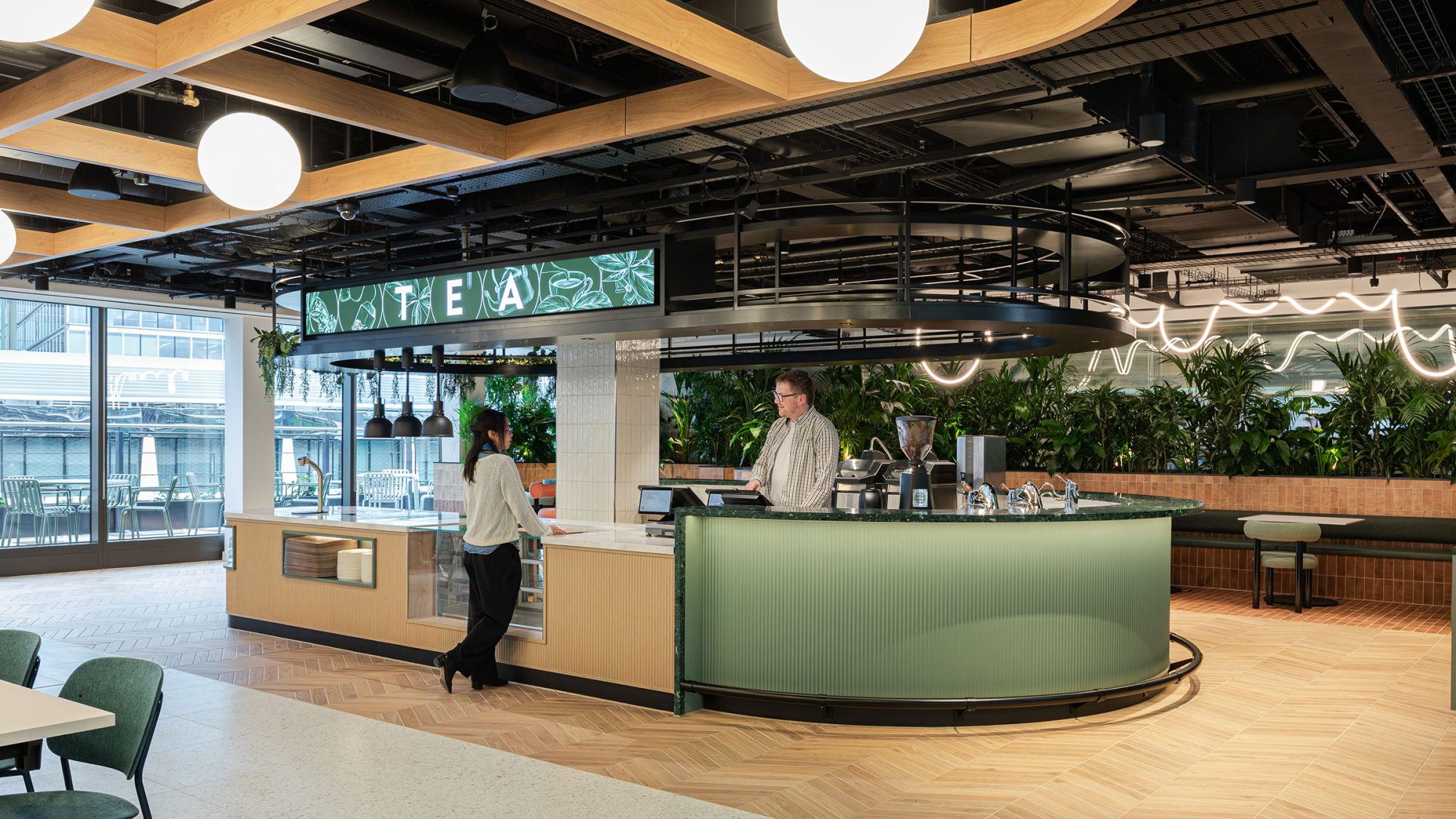
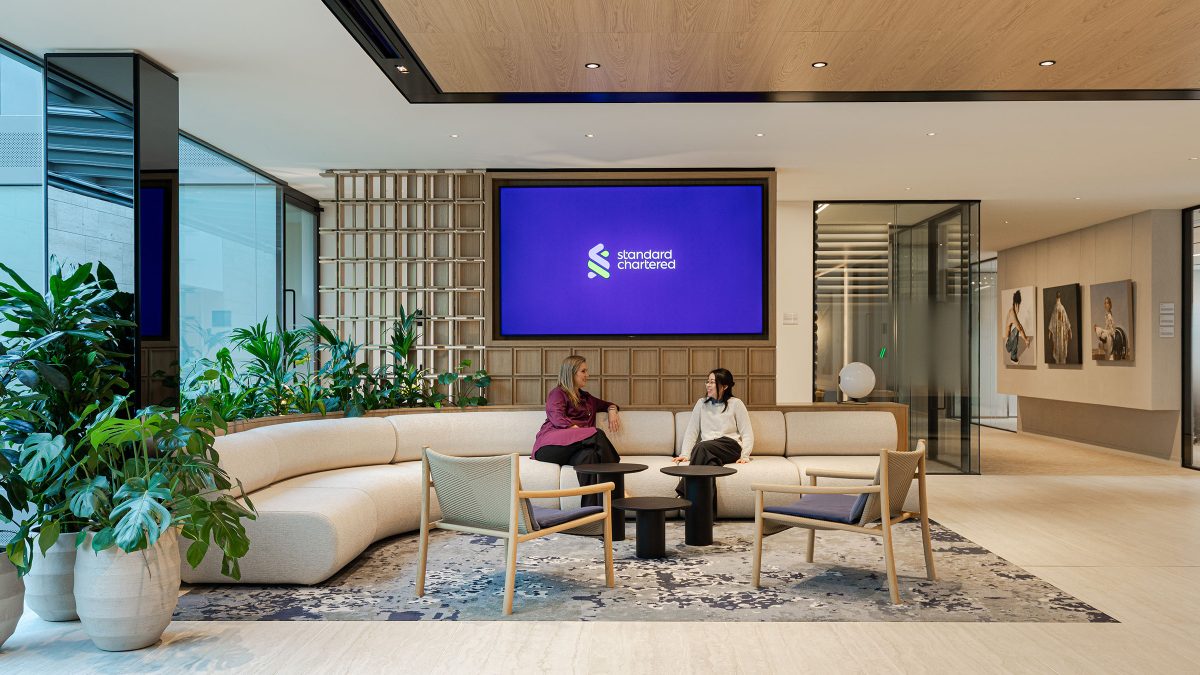
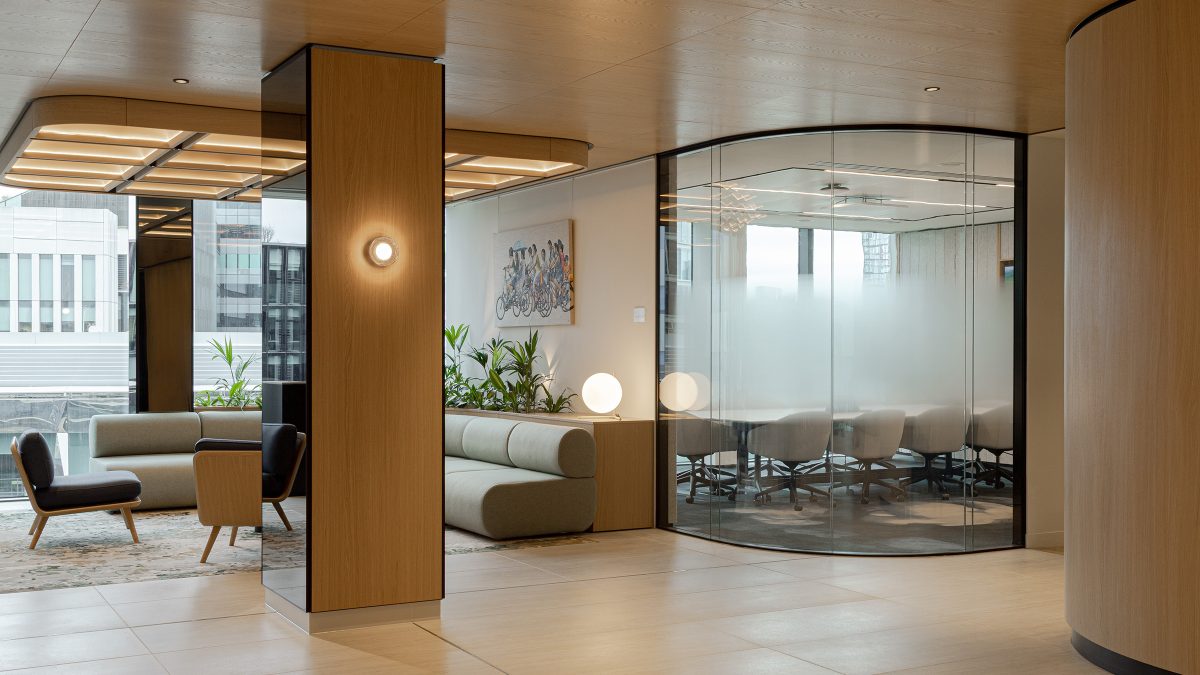
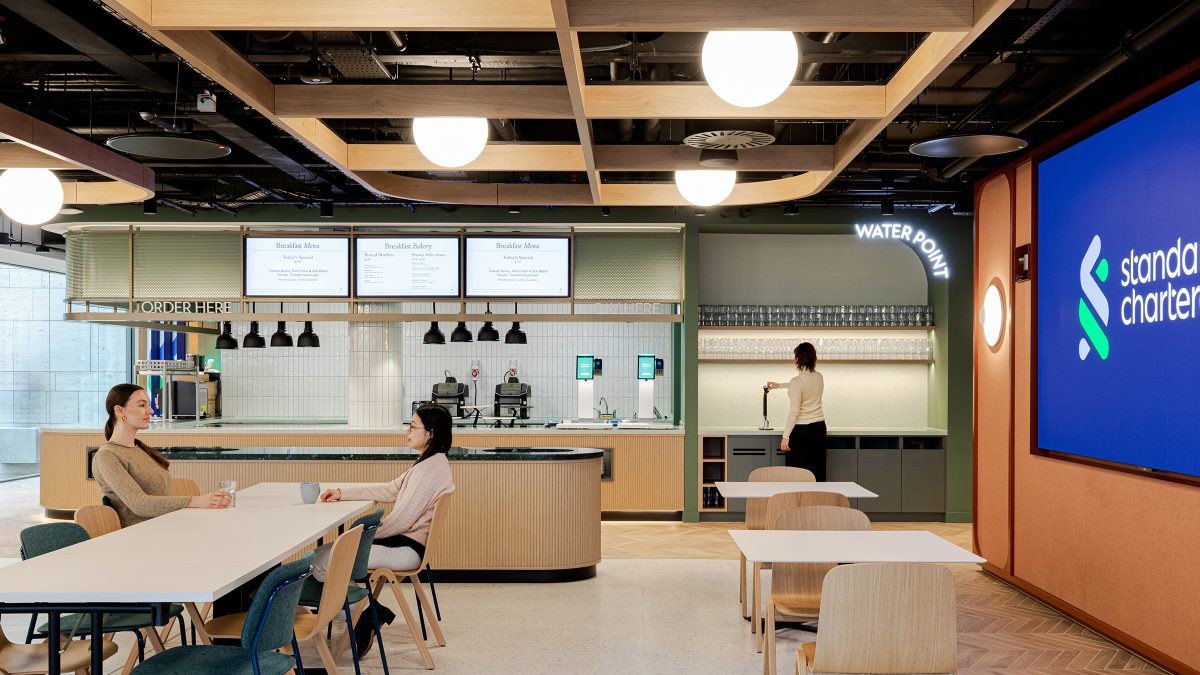
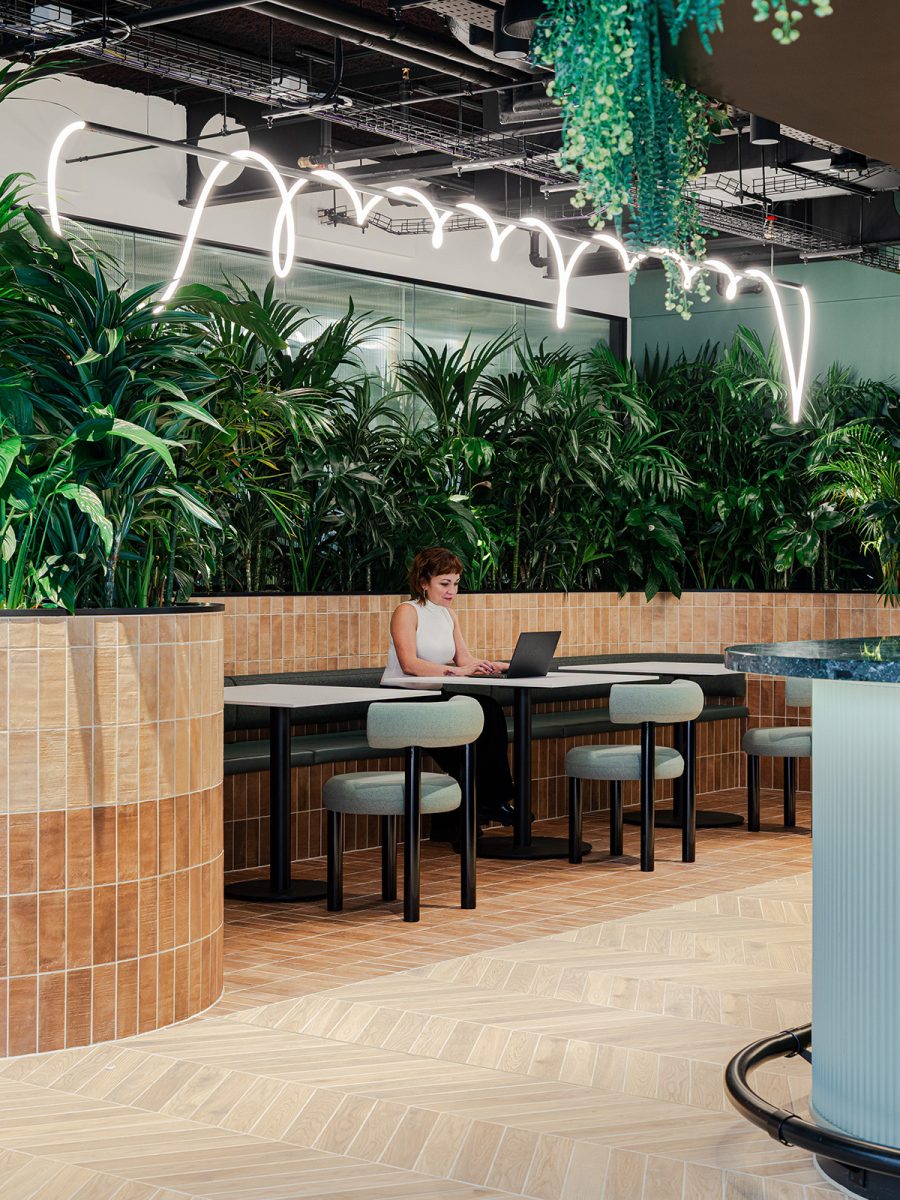
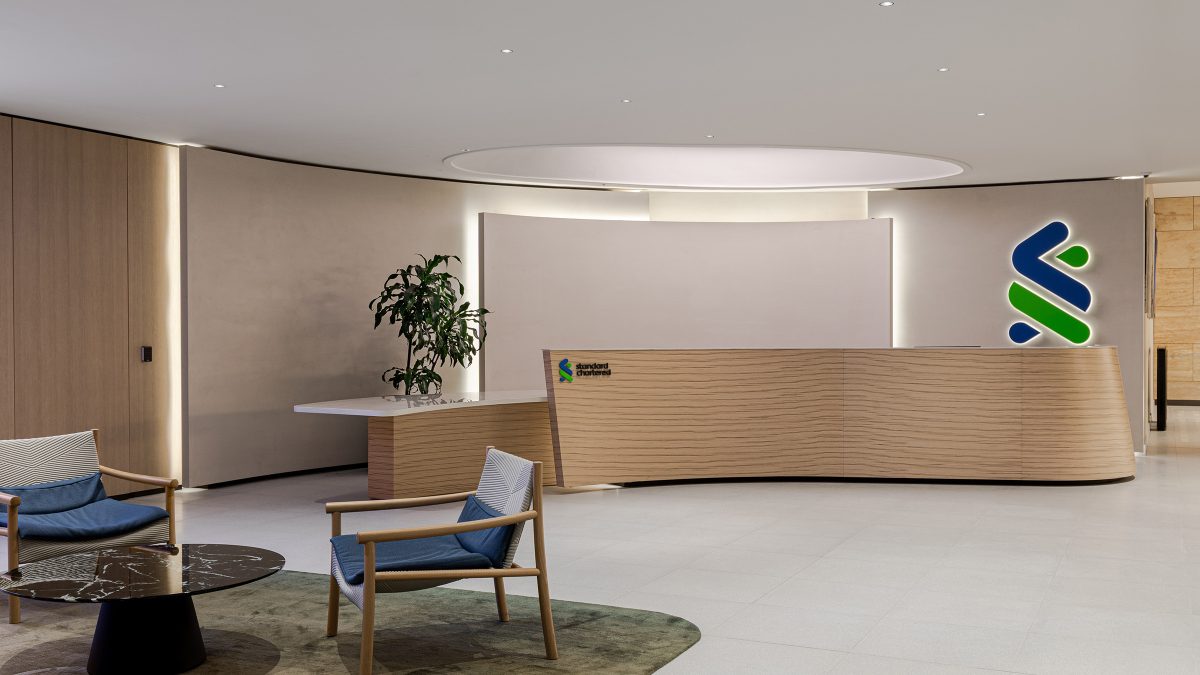
The reconfigured headquarters now supports a broader range of activities aligned with how teams work day to day. We replaced desk-dominant layouts with a mix of settings for focused work, collaboration and informal interaction. This enables all business units, including executive, trading and support teams, to use the space in ways that reflect their operational needs.
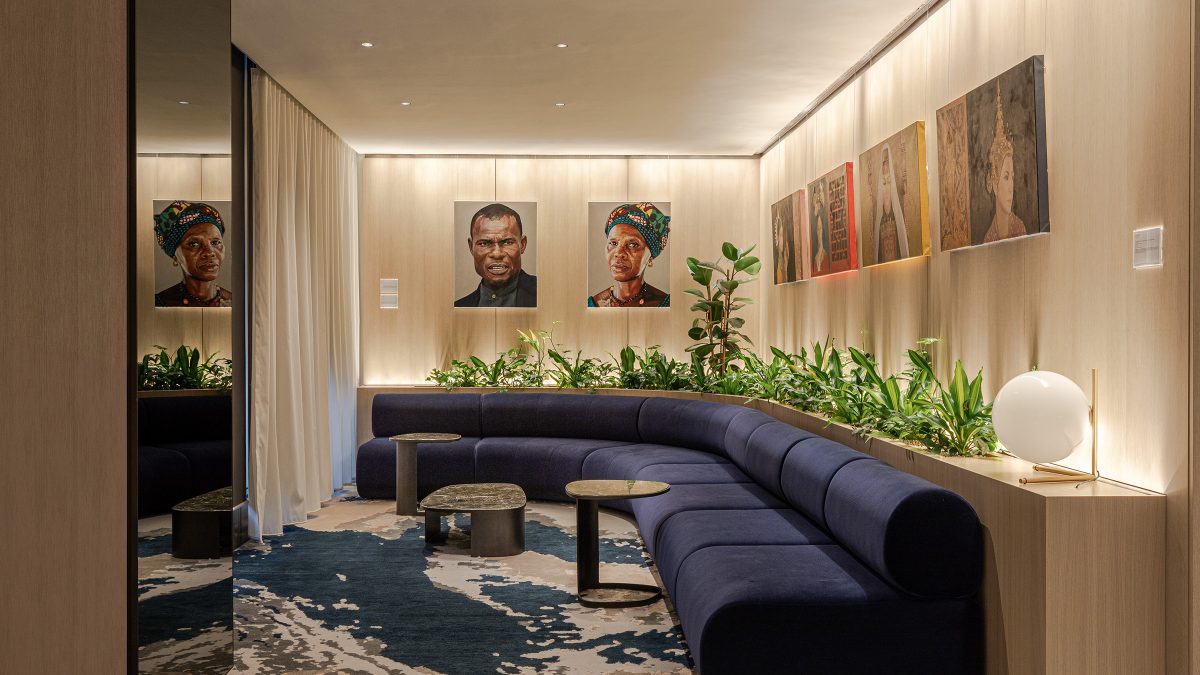
Strategically positioned shared amenities and collaboration spaces support regular interaction and collective use. This helps the workplace function as a natural point of connection for people.
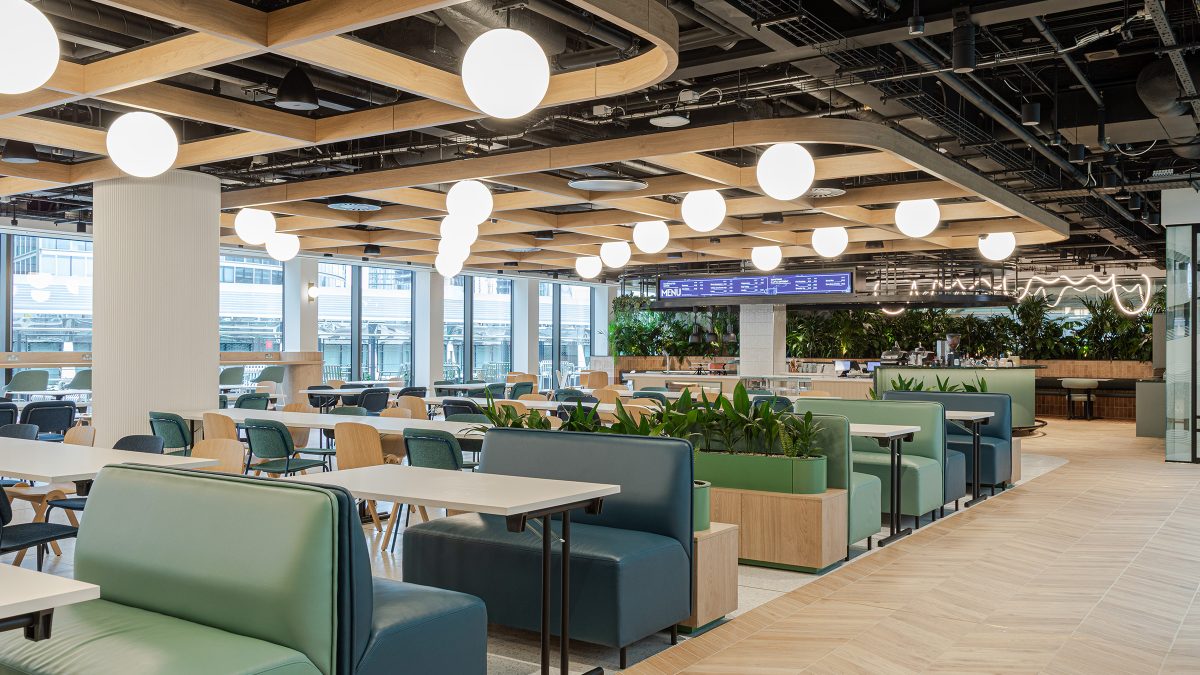
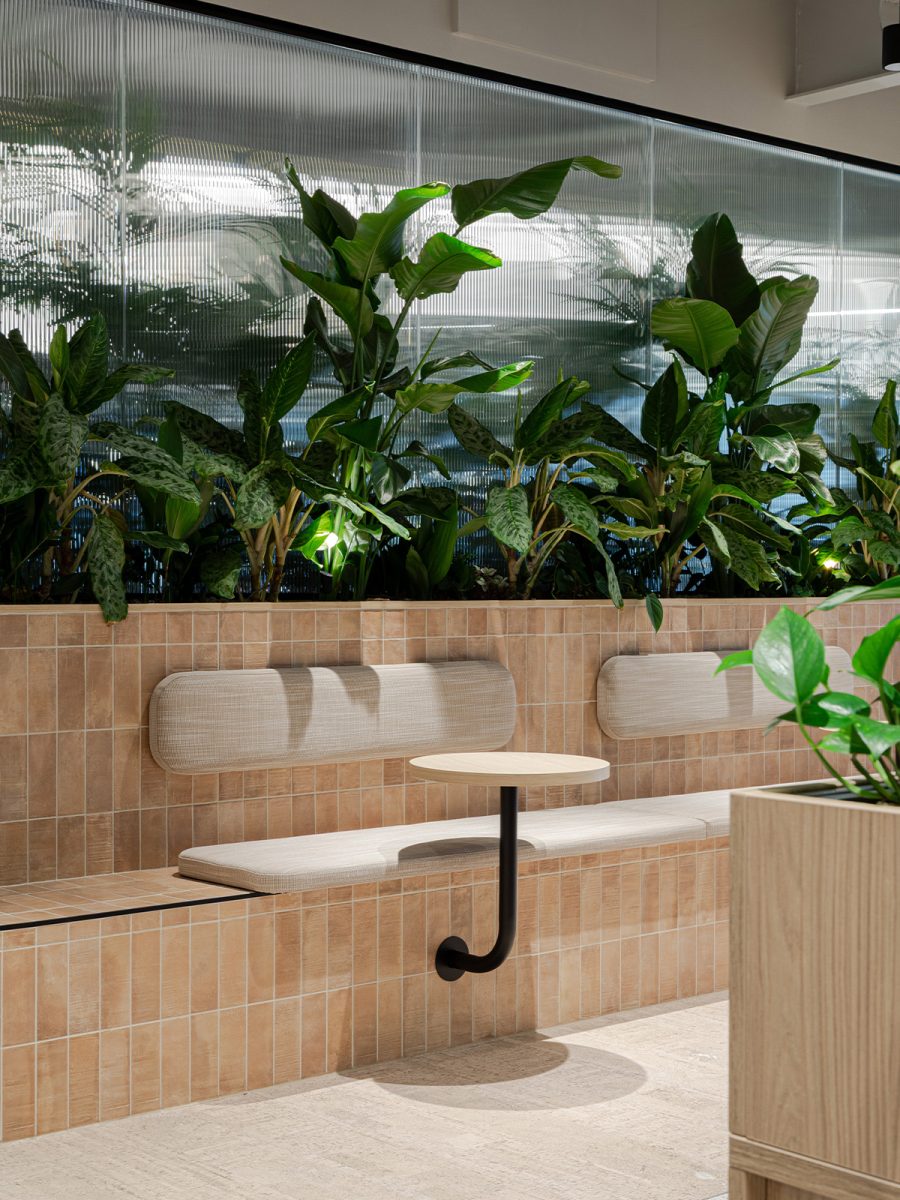
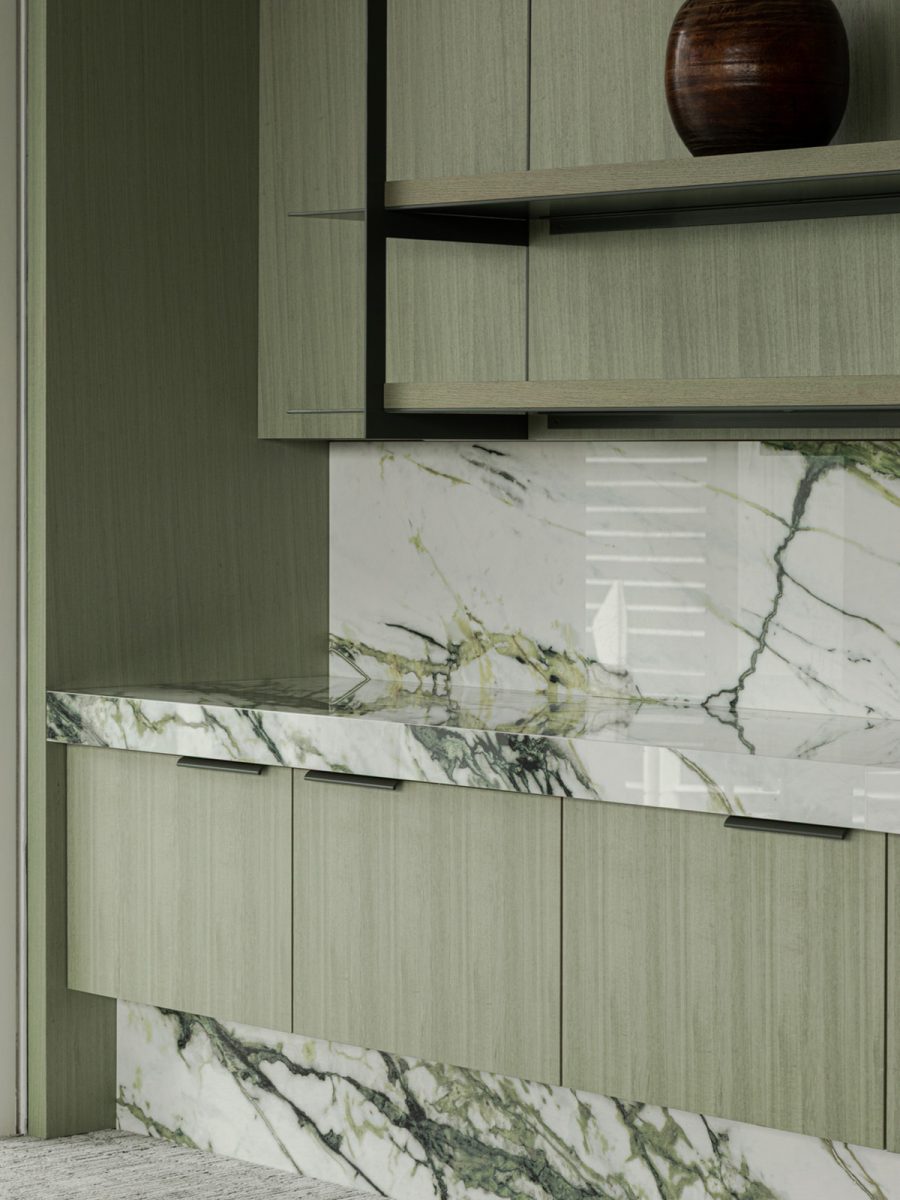
The project demonstrates how a fully operational headquarters can be successfully transformed into a premium workspace through clear strategic direction, strong project leadership and phased delivery.
By embedding flexibility into both the spatial model and technical infrastructure, Standard Chartered’s London headquarters will continue to evolve alongside the business, allowing the bank to best deliver its strategic goals and embody a premium brand for both clients and colleagues.
Completed
2026
London
13,006 sq m / 140,000 sq ft
Chris Wharton