
From the first dot-com garages to today’s AI-powered labs, the tech sector has always treated the workplace as a testing ground. Each era has rewritten the rules of how we gather, from tearing down walls to building mega campuses. Today, we’re entering a new phase, designing environments built to withstand constant change.
The tech industry has never been static, and neither has its workplace. Over the years, environments have evolved alongside shifts in technology, talent and business ambition. Design elements that began to test corporate convention became a global experiment in culture and collaboration. Now, it stands to be redefined once again.
This article explores the tech workplace. Where it’s been, where it is now and where it’s going. As we trace this evolution, we’ll examine how the workplace remains a unique tool in helping technology companies move faster, think better and adapt to what comes next.
Tech has always been the proving ground for new ways of working. So many things we consider standard today started in tech years ago. Tech moved first and everyone else followed.
Chantal Frenette, Director, M Moser AssociatesIn the ’90s, tech was alive with a constant hum of activity and possibility. Ideas were born in garages instead of boardrooms. Offices were wired, improvised and electric with ambition.
The dot-com boom launched a new economy and culture that reprogrammed what an office could be. To reduce cost and increase interaction, the cubicle gave way to the open plan. Space was iterative, democratic, endlessly adaptable. Work was fast, flat and fueled by innovation. Collaboration became a design principle extending far beyond the meeting room.
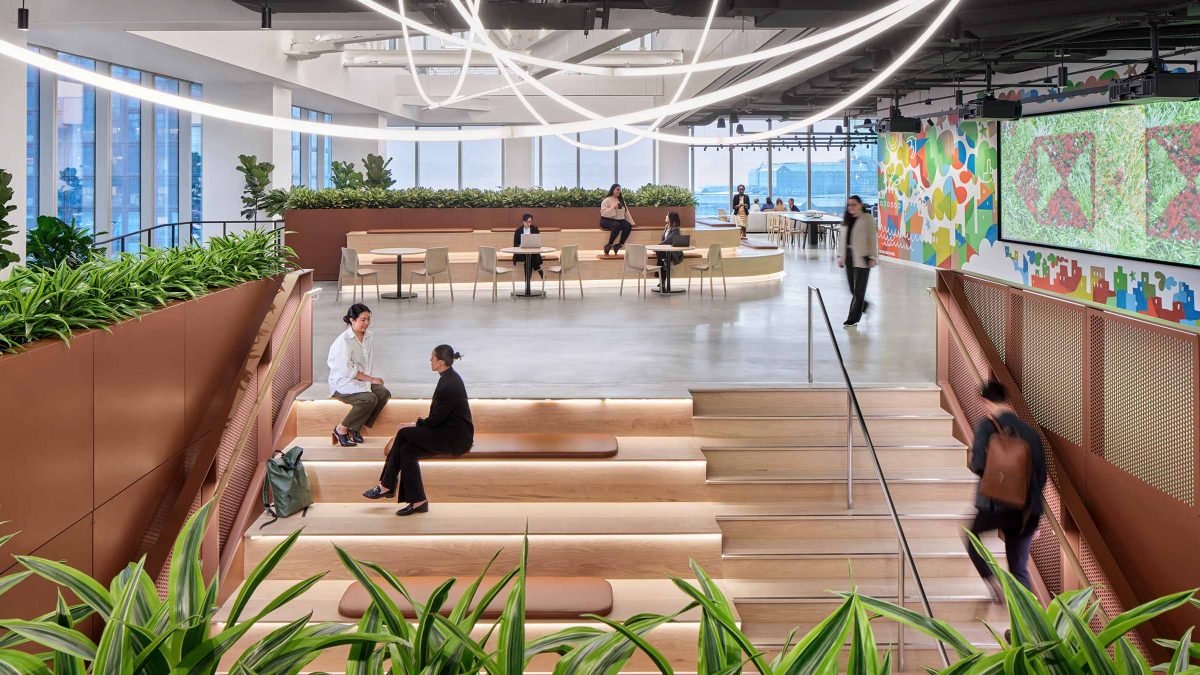
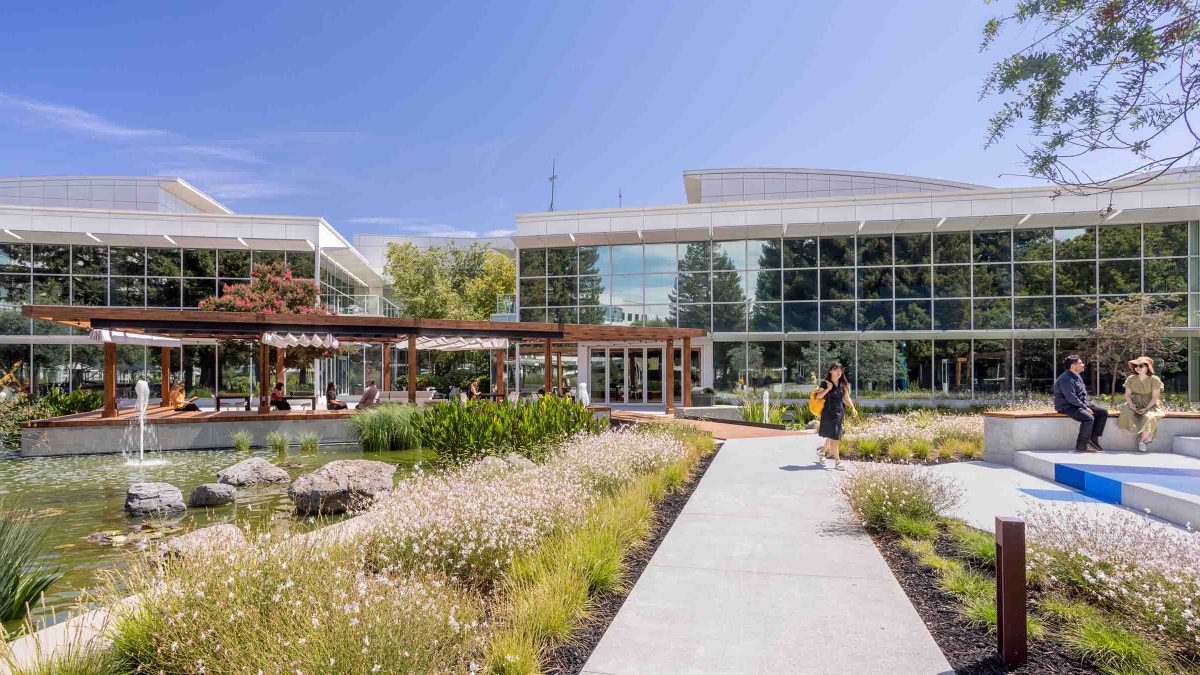
As startups turned into global players, their workplaces scaled with them. The garage grew into the mega campus, complete ecosystems with fully stocked and serviced cafés, ‘down time’ and recreation areas, gyms and bike paths. Google, Apple and Meta built ‘cities within cities’, places where work and life morphed together. You could code, do laundry, grab sushi all within walking distance of your desk.
But by the late 2010s, fatigue had set in. The once thrilling self-contained campus had become a golden cage, convenient but isolating. Burnout was rampant due to blurred work/life boundaries and the intensity of long hours and a high-pressure work culture. People longed for freedom, mobility and time to think. Then came the pandemic and the pendulum swung hard. Our homes became offices and our lives flattened onto screens.
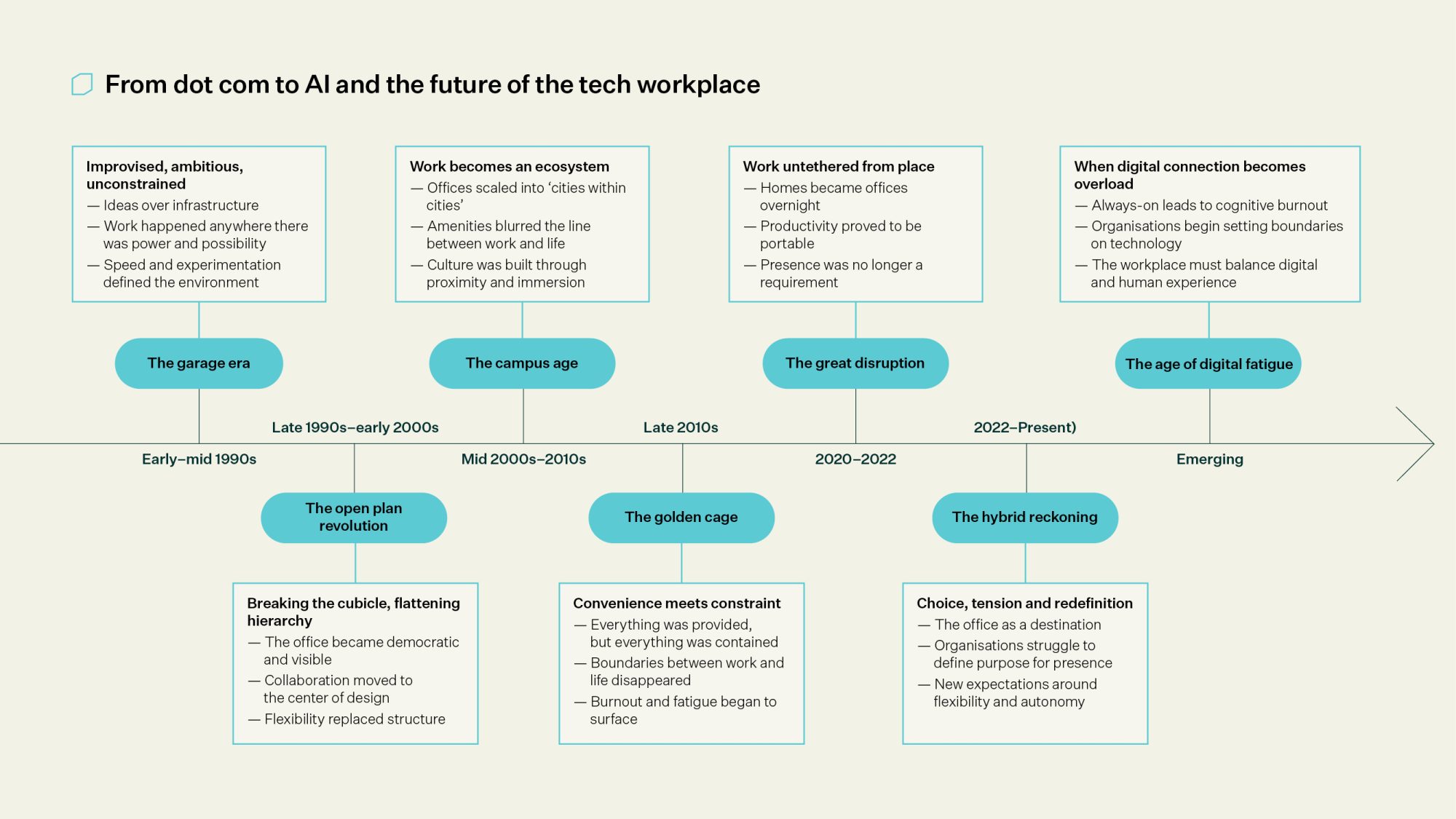 We’ve moved from spaces that housed work → to spaces that shape how work happens.
 Every technological wave has rewritten the workplace:
The dot-com era = openness
The campus era = comfort
The hybrid era = flexibility
The next wave must give us balance through environments that help us feel and think better, not simply work faster. So, if the last decade stretched the workplace to its limits, today’s question is simpler (and harder): what is the office actually for now?
Remote work proved that parts of productivity were portable, but it also revealed what we’d lost; social connection, spontaneity, belonging and alignment.
Nabil Sabet, Group Director, M Moser AssociatesWhen hybrid work first took hold, the future seemed inevitable. Work would be distributed, digital and largely untethered from place. The office would become optional, a backdrop rather than a stage. For a moment this became our reality. Productivity didn’t collapse, teams adapted and technology filled the gaps.
But something else surfaced just as quickly. Connection weakened, learning slowed and culture became harder to sustain. The informal, in-person moments that once shaped how worked happened (the collisions, conversations, shared context) became hard to replicate through a screen. What followed was redefining the purpose of the workplace, re-establishing its place as a driver of business success.
Today, even the most remote work-forward companies are rediscovering the power of physical presence. And, as evidenced in commercial real estate markets across North America, tech’s new rising star, AI, is driving a new leasing boom. Recent reports document these firms took nearly 500,000 square feet of Manhattan office space in 2025, almost double 2024’s total. More than half of that sits in Class-A buildings.
In San Francisco, AI companies are rapidly reshaping the office market and driving demand for premium office space. In the first quarter of 2026, the city recorded more than 2.2 million square feet of positive net absorption, its strongest quarter in years. Vacancy fell to 30.4%, signaling that the market’s recovery is increasingly being led by AI-led occupiers rather than traditional technology firms.
The reason? The power of proximity.
When work moves fast, proximity becomes infrastructure. The hallway conversation, the whiteboard epiphany, the question across the monitor screen, they’re collaboration’s real-life algorithms.
“Hybrid work is not disappearing, but it is maturing. The best workplaces design for presence with purpose and spaces that make showing up a sought-after experience. That’s the atmosphere that draws people in.” Sam Farhang, Director, M Moser Associates
The analogue comeback
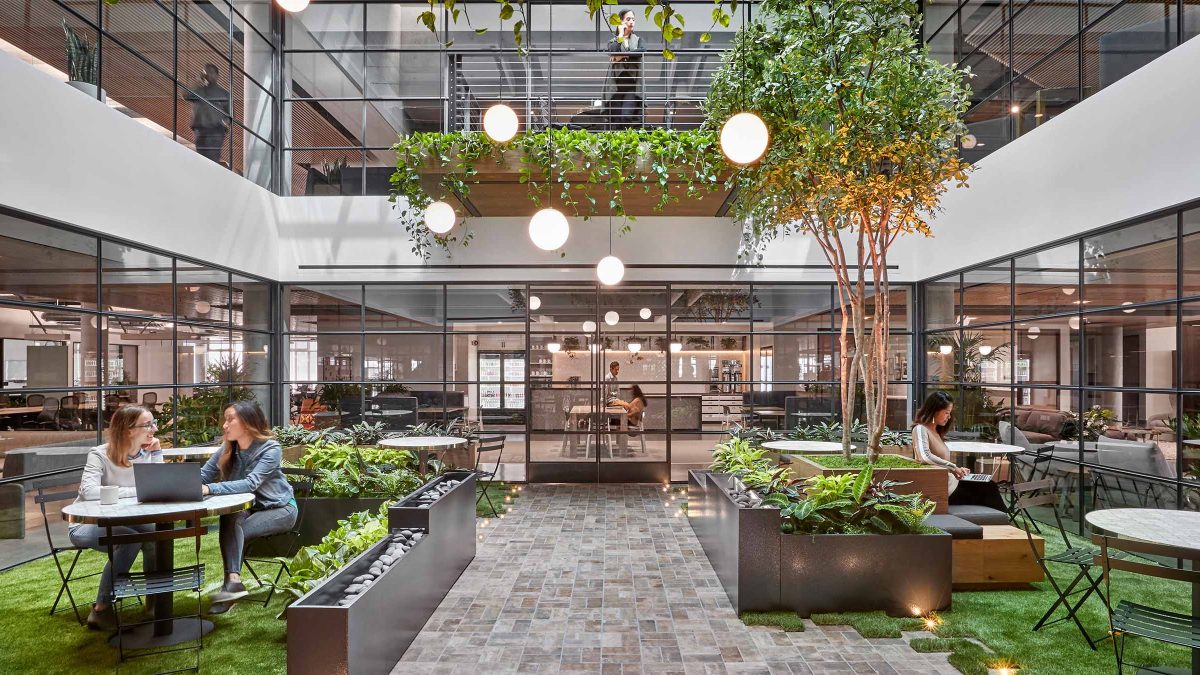
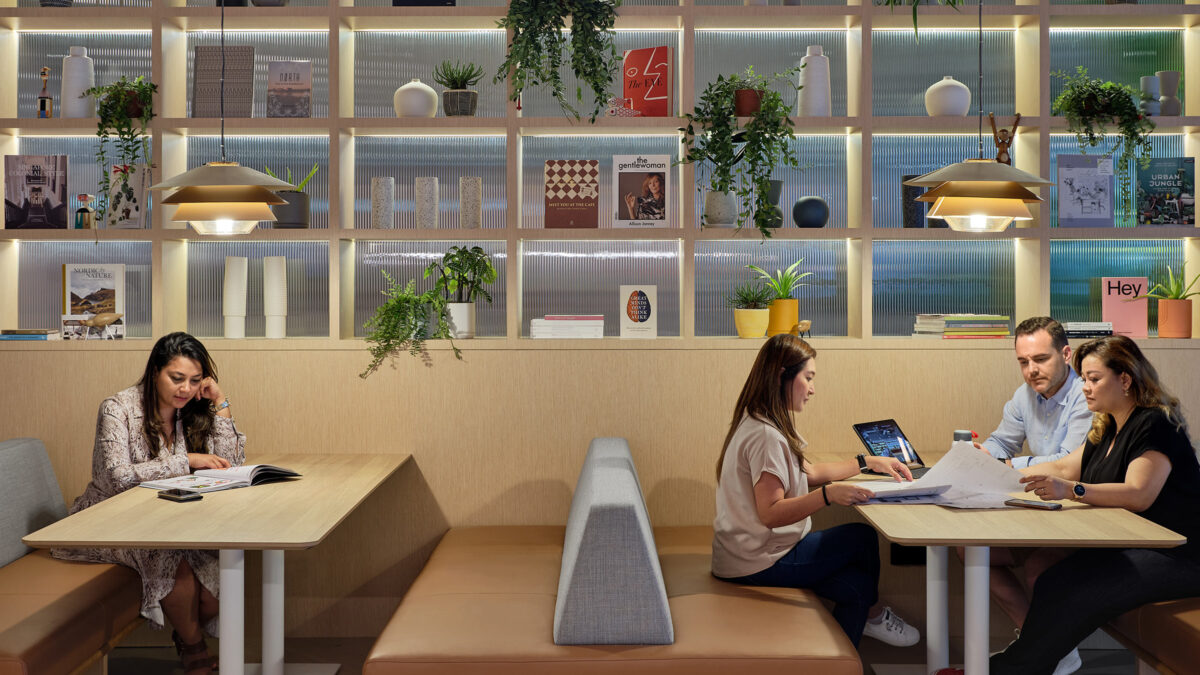
As AI accelerates the digital world, we’re craving its opposite, the analogue touch. Human brains aren’t built for endless input. We need friction, downtime and physical context to make sense of complexity. The most effective workplaces are beginning to reflect that by creating space for recovery and reflection.
Research on cognitive restoration shows that offline, tactile experiences, note-taking, walking, face-to-face dialogue, improve retention and creative problem-solving. Leading tech firms now carve out unplugged rooms, outdoor meeting routes and reflection zones. With all this in mind, workplaces should be measured by how well they help people think, connect and recover.
“Pauses are fuel. They’re the mental exhale before the next idea.”
Sam Farhang, Director, M Moser Associates
But designing for how people think is only half the equation. The systems powering these environments are evolving just as quickly.
The next generation of technology workplaces will be adaptable and built to evolve.
As AI accelerates product development, business models and decision-making, the workplace must keep pace. Success will depend less on creating a perfect office and more on creating an environment that continuously adapts to changing business needs.
AI-ready infrastructure: Tomorrow’s workplaces require a digital backbone as adaptable as the companies they support. Higher-capacity bandwidth for connectivity, flexible technology and AI-enabled building operations will allow organisations to integrate new technologies without costly disruption. Buildings must be designed to upgrade as quickly as software.
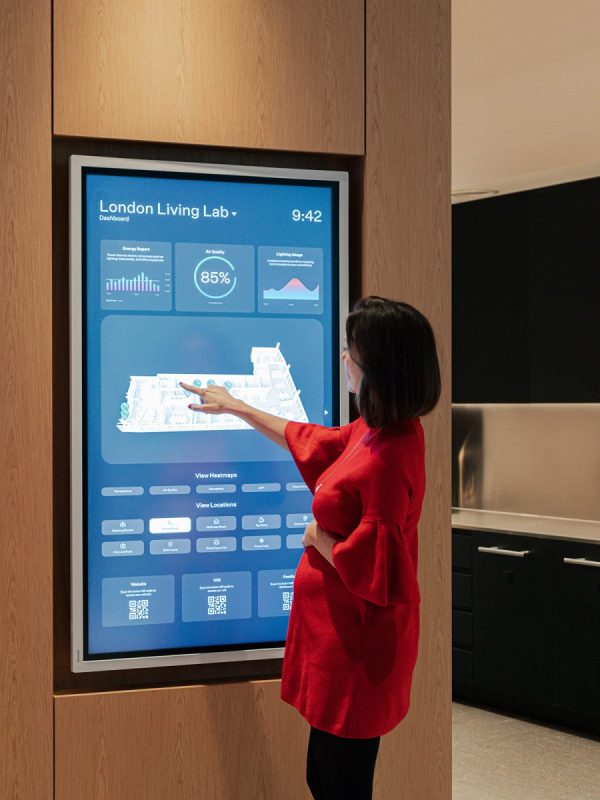
Buildings that learn: Static workplaces are giving way to responsive environments. Through digital twins, real-time occupancy insights and environmental sensing, buildings can continuously optimise energy use, space utilisation and occupant experience. Rather than relying on periodic reviews, the workplace becomes a system that learns and improves every day.
Human-first environments: The most successful spaces will balance digital capability with cognitive wellbeing, offering spaces for collaboration, deep focus and reflection. AI should remove friction, not create it, giving people the conditions to think more clearly, connect more meaningfully and perform at their best.
Technology companies don’t stand still, their workplaces shouldn’t either.
The organisations leading the next decade will be creating workplace systems capable of adapting alongside their business, supporting rapid growth, new technologies and changing ways of working without starting from scratch every few years.
At M Moser, we believe these principles define the next generation of tech workplaces:
Adaptable
Designed to evolve alongside the business. Flexible planning, modular environments and resilient infrastructure enable workplaces to respond to changing teams, technologies and business priorities without requiring major capital investment or disruptive renovations.
Future-ready
Built with intelligent infrastructure that supports emerging technologies, data-driven operations and the evolving needs of the business, without requiring continual reinvention.
Connected
Workplaces that bring people, ideas and disciplines together. Every environment is designed to strengthen collaboration, accelerate co-creation and facilitate meaningful connections across employees, clients and partners.
Experiential
Purposeful destinations that people choose to be in. Hospitality, wellbeing, brand and workplace experience work together to create environments that attract talent, strengthen culture and inspire innovation.
Intentional
Every space has a clear purpose. From focused work to learning, collaboration and social connection, the workplace is designed to support how people perform best while remaining flexible enough to evolve over time.
The tech workplace has always reflected the ambitions of the industry it serves. From garages to campuses, from hybrid work to AI, each generation has redefined what the workplace can do. The next chapter will also be different.
Success will no longer be measured by the size of an office or the number of amenities it offers, but by how well it helps organisations adapt, innovate and perform in an environment of constant change.
The future workplace is an evolving business platform. Those who build for change today will be the ones best positioned to lead tomorrow.
Authors, Nabil Sabet, Chantal Frenette, and Sam Farhang, lead strategy, design and experience at M Moser, where technology and human performance meet in the built environment.
Explore how tech workplace priorities change across every stage of growth, from seed to global enterprise, and how we help leaders create workplaces that adapt, scale and grow with the business. Download our Tech workplace playbook.